

Using A Third-Party Charger Can Have An Unexpected Effect On Your Devices
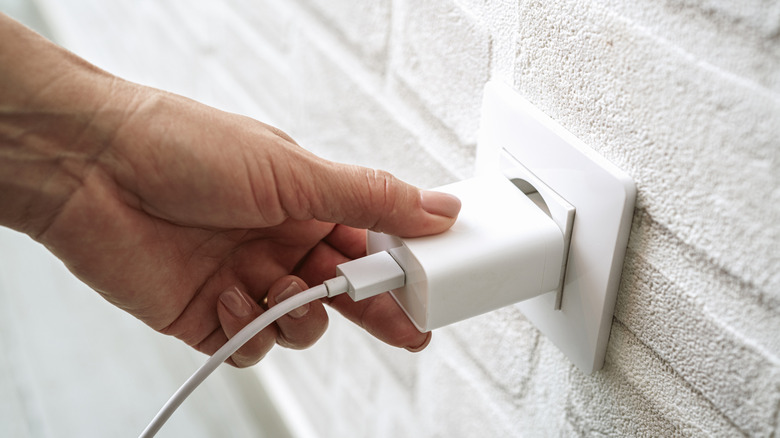
If you're in the market for a charger, buying one from the original equipment manufacturer (OEM) is usually the safest bet. However, you might not want to, for example, drop $39 for a 40W Dynamic Power Adapter from Apple or even $24.90 for the 45W Super Fast Charging mode from Samsung. Not when you can get a super fast third-party charger for less than $5 at your local supermarket, gas station, or even eBay that can juice up your phone to 50% in 30 minutes or less. Yes, that charger, whether fast or slow, will probably do its job, but there's also a chance it will be so terrible at it that it's not worth the risk.
The biggest problem with these ultra-cheap chargers is that they lack the fundamental components that charge your device safely and consistently. Because of this, they can do all sorts of damage to your phone, from speeding up the battery's rate of degradation to damaging components on the motherboard. They might even be a danger to you and your home. So, if you're going to buy a third-party charger, make sure to choose one from a reputable brand that meets safety standards, like those from Underwriters Laboratories (UL), USB Implementers Forum (USB-IF), or Made for iPhone (MFi). It will cost more, but a good charger is one of those tech products you should never cheap out on for a good reason.
Ultra-cheap chargers just aren't safe
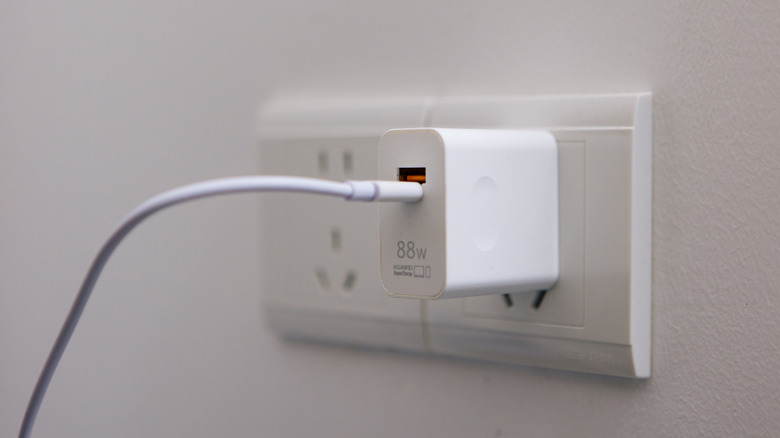
Ultra-cheap chargers usually fail to deliver a consistent current since they're made from low-quality materials. They're constantly fluctuating between high and low current, which can stress the lithium-ion battery, speeding up the rate of chemical degradation and leading to decreased capacity. Also, to keep costs down, these manufacturers often don't equip the chargers with the necessary chips that support communication protocols like USB Power Delivery (USB-PD). USB-PD allows the charger and phone to negotiate safe charging levels, and without it, a fast charger, for instance, will constantly send high currents that can overheat the phone and hasten the battery's rate of thermal degradation.
Certified chargers are subjected to a battery of safety tests, ensuring that they pass each one before they hit the market. Manufacturers of these ultra-cheap chargers, on the other hand, make chargers that might fail those same tests. Which?, a consumer protection organization in the UK, bought 15 cheap chargers on marketplaces like Amazon, eBay, Shein, and Temu. They found that nine of them carried a risk of electrocuting you, while eight of them also were prone to exploding or catching fire.
One fake Apple charger in particular, which was presented as a genuine product, was found to be filled with modeling clay to make it feel premium. Which? also found that it made arcing sounds after 10 seconds. This likely means there are tiny sparks happening inside the unit that can damage a phone's charging port over time.
Use only certified, high-quality third-party chargers
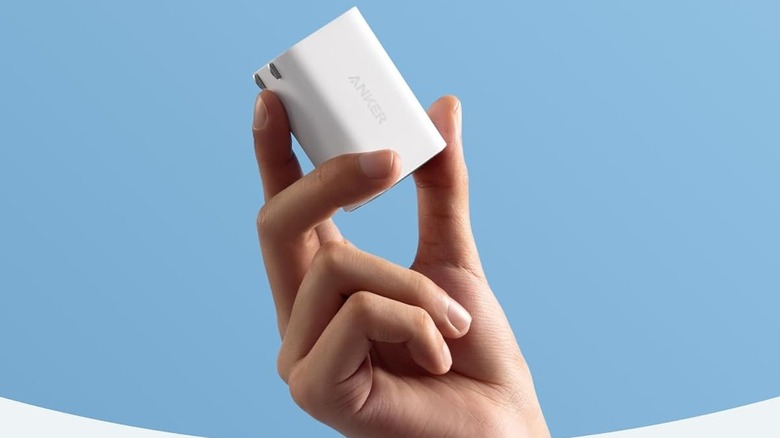
There are many reputable brands that make high-quality wall chargers. One well-known brand is Anker. It has a certified charger that can juice up all your devices called the Anker Nano Laptop 100W Charger, and it costs $35.99. As the name indicates, it has an output of 100 watts and can fast-charge a laptop like a MacBook M2 or a MacBook Pro M1 (or later models). Since it uses the USB-PD charging protocol, it's also safe to use with your phone.
This Anker model also comes with a USB-C-to-USB-C charging cable, which facilitates the necessary communication between the charger and the device (cheap USB cables might not do this). Furthermore, it uses Gallium Nitride (GaN) for its internal circuitry instead of silicon to conduct electricity more efficiently, meaning less excess heat generation. An on-board temperature-control mechanism slows down charging or stops it completely, depending on how hot the charging process gets.
Another good option is Ugreen, with its $54.99 Ugreen Nexode 100W 4-Port Charger that also supports USB-PD charging, GaN technology, and temperature control. Its four ports include three USB-C ports and one USB-A port for older devices. INIU is another well-known brand, with the INIU 100W 3-Port USB-C Charger having similar features to the Ugreen charger but with one fewer USB-C port. They are all highly rated chargers, with a minimum rating of four out of five stars from Amazon customers. All these chargers have good safety features, such as overtemperature and overcurrent protection.