

Is It Safe To Charge Your Phone With A Cheap USB Cable?
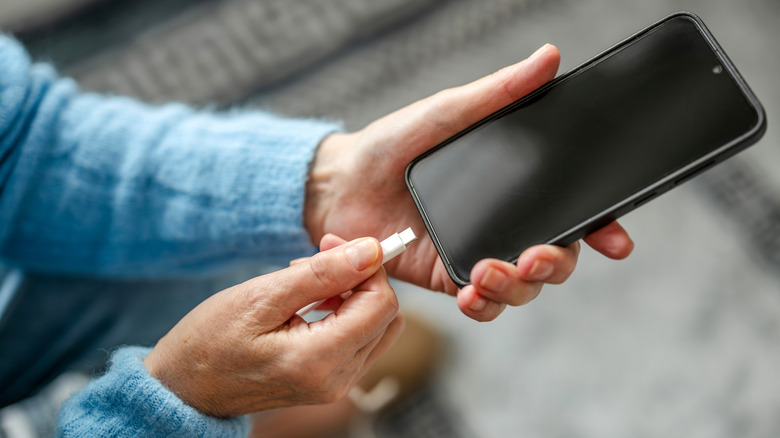
When you need to charge your phone, it's easy to think that any USB cable will suffice. As long as it transmits the current from the wall outlet to the phone, even a cable bought at a gas station, supermarket, or dollar store at an ultra-low price will technically work. But voltage and consistency matter when charging a phone. These are the things these cheap, unbranded USB charging cables fail at the most. You might be saving a few dollars by cheaping out on this important accessory, but the wrong one can damage your device, leading to costly repairs and replacements. It's simply not worth it, especially considering how the AI-driven chip shortage is making phones more expensive.
Cheap, unbranded USB cables can cause your phone's battery to charge more slowly or overheat (which increases the chance that it could catch fire). They can even damage your phone's charging port or cause the motherboard to short-circuit, bricking your phone in the process. If you're using a cheap USB cable to transfer data between your phone and computer, it can lead to data loss due to corruption or damage to the device. Also, regular USB cables may produce small electrical tingles when you touch the metal connector, which are usually harmless. But if you feel a sharp and painful zap, it's not normal and points to a faulty or uncertified power adapter.
Why a cheap USB cable is not safe to use
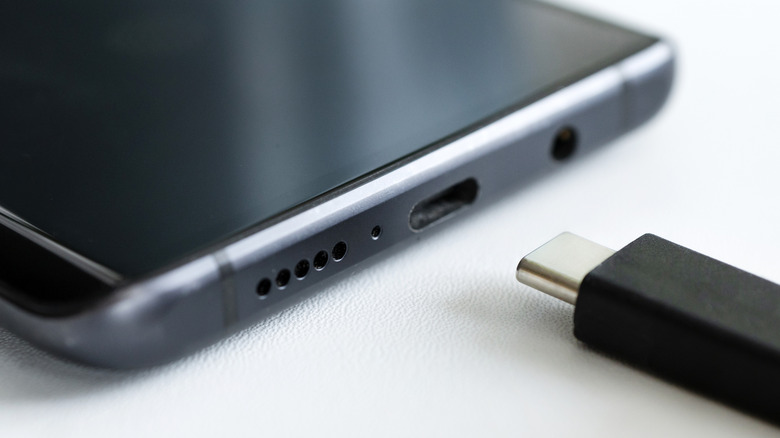
Cheaply-made USB cables just don't know how to handle voltage. To safely charge, your phone and charger need to communicate via the USB cable. In a USB-C to USB-C cable, the Power Delivery protocol allows this to happen thanks to an E-marker chip in one or both connectors. Basically, the phone asks the charger to send it current, and the charger checks with the cable to ensure it can handle it before sending it. In a USB-C to USB-A cable, there is a 56-kilohm resistor embedded in the USB-C connector that stops the phone from requesting more current than the cable can handle.
Many cheap cables remove these components, causing a breakdown in communication. The charger ends up sending uneven power, which stresses the battery, leading to excessive heat generation. Excess heat is the enemy of lithium-ion batteries since it can cause irreversible changes within them, which can lower their capacity to keep a charge over time. It can also stress the phone's internal components, like the charging port, speeding up their rate of wear. Phones with overheating protection reduce the amount of current they request, slowing down the charging process. Even worse, if the current is too much for the cable, it can start to degrade due to the cheap materials. You may even see it start to fray, or it could also short-circuit, sending a surge of electricity that can fry the phone's motherboard.
How to spot a cheaply-made USB cable
Spotting a cheaply made USB cable has increasingly become difficult because manufacturers and sellers are getting sneakier. For instance, it's advisable to look for some type of certification, like the USB Implementers Forum (USB-IF). This shows that the USB cable has passed the necessary safety and compatibility standards. However, these can be faked. Fortunately, you can check the USB-IF product search page to verify if the USB cable is really certified. Also, check the packaging for typos, blurred logos, missing serial numbers, and any other imperfections.
Still not sure? You can inspect the cable itself. A high-quality cable usually has an outer layer made from materials like thermoplastic elastomer (TPE) or nylon braiding. It should feel thick and sturdy instead of thin and flimsy. Since USB ports have precise measurements, the connector should fit perfectly on both the phone and charger without feeling loose or misaligned. If you are already charging your phone using a cheap charger, it might overheat and slow down charging. When buying cables from online marketplaces like Amazon, take a moment to look at user reviews. You will want to choose a cable with a rating of four out of five stars based on hundreds of reviews or more.