

Why Do USB Cables Always Fray?
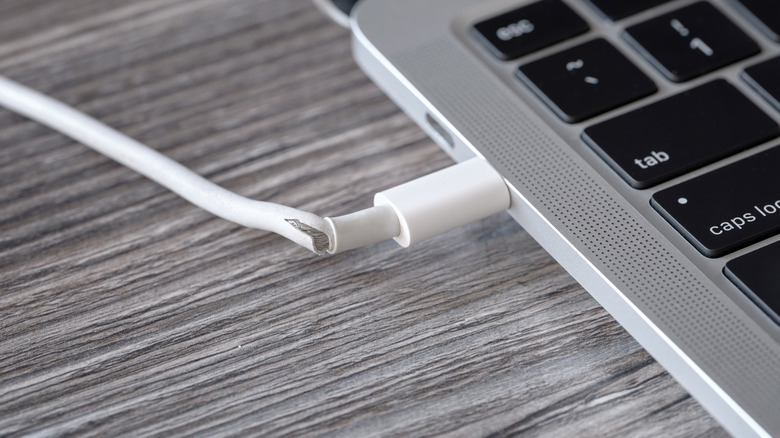
Once a USB cable starts to fray, it's on the way out. Fraying happens when the cable's internal wires, braiding, or shielding start to show because the jacket has broken down. These cords usually fray where the cable and connector meet, which is a major weak point due to the amount of strain that typically occurs here.
After prolonged bending, twisting, and pulling, it can easily begin failing, especially when there is nothing to relieve the strain at the connection point. USB cables fray for various reasons. For instance, when using a phone in bed while charging, we might rest the bottom of the phone on our chest or hold it at an angle, putting pressure on the USB cable and leaving you charging the phone wrong in the process.
You might also yank it along the wire when disconnecting, creating a pulling stress at the connector. Also, when we place cables on the ground, they can get pinned, bent, and crushed by furniture. No matter how these cords start to come apart, the problem needs to be addressed once it happens. There are ways to save a frayed USB cable if it hasn't completely failed, however, the fixes are temporary.
Frayed USB cables can be dangerous
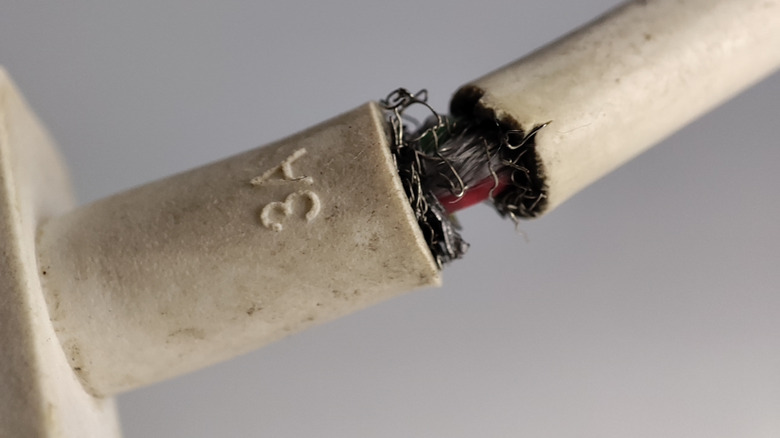
A frayed USB cable might still work, but there are a few good reasons why you need to take it seriously. Depending on severity, the cable may lose its ability to deliver a stable current to your device. In the best-case scenario, the voltage drops, meaning the device gets insufficient current and can take longer to charge. At worst, they can short-circuit, which could heat up the USB port on the device and fry a component on the motherboard.
In some scenarios, your lithium-ion battery could catch fire due to overheating (although, this is rare). So if you find yourself constantly trying to adjust the frayed cable by bending and twisting it so that it works, you might want to consider a replacement. Device damage is the least of your worries, though, as the exposed wires and metal connectors can shock you as well. There is also a risk of starting a fire, and though the chances of this happening are small, it's still non-zero and not worth the risk.
Preventing and fixing USB cable fraying
Once you know why USB cables fray, preventing it comes down to good habits. Avoid any scenario where the cable will end up excessively bent. These cables do have a minimum bend radius, which is typically 10 times the diameter of the cord. When you exceed this, that is when the jacket, shielding, braiding, and internal wires become stressed. Also, instead of yanking the cable, grab the connector and pull it out. This is the part that can withstand constant pulling.
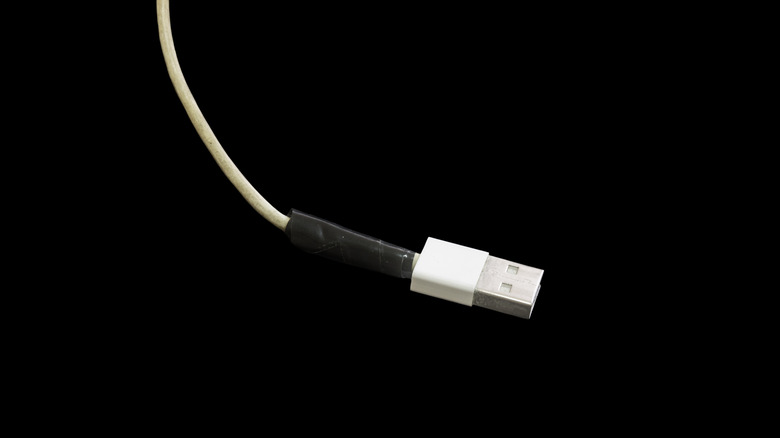
Also, when storing your USB cables, roll them up lightly to prevent tangling with other objects, like when you keep the cable in a bag. Should fraying occur, you can wrap the affected area with electrical tape or remove the spring of a ballpoint pen and hook it around the cable near the connector for reinforcement. Another method is to wrap heat-shrink tubing around the frayed section and heat it up to create a tight cover. For longer-term fray prevention, consider getting a braided USB cable and should you be in temporary fix mode, look to replace it with some of the best USB-C cables for your devices.