

Almost 40% Of Americans Own A Video Doorbell - But Are They Worth It?
We may receive a commission on purchases made from links.
Need a quick boost to your home's security? A doorbell camera is a good idea. The biggest perks of installing a video doorbell are the ease of use, theft deterrence, and the ability to interact with visitors or couriers. This is why nearly 40% of American homes have a video doorbell. But while the gear itself is cheap, the subscription costs with popular models like Ring will creep up on you. Many homeowners believe that this is one of the key disadvantages of video doorbells: a bunch of stuff is hidden behind a paywall, including the clips themselves.
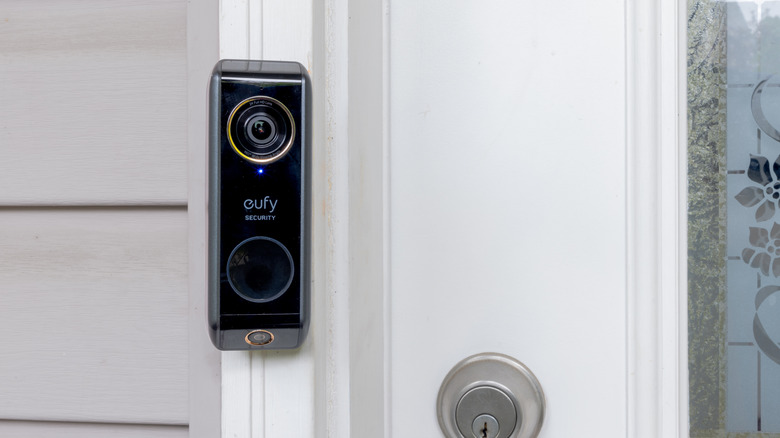
Say you purchase a Ring from Amazon. That $59 may seem like a reasonable price, but if you want to record and store videos, you need to pay at least $4.99 per month (adds up to $49.99 in a year). Then, if you want some of the more advanced features like so-called 'Familiar Faces' (self-explanatory how that works), be prepared to cough up $19.99 per month. Personally, if I wasn't as concerned about the cybersecurity repercussions of having the videos stored in the cloud (I particularly don't trust Amazon and its data-sharing practices), I wouldn't have a problem with paying the basic subscription for something like Ring or Arlo. But since storing data locally is a non-negotiable for me, I prefer doorbell cameras that won't spy on me, like the Eufy Video Doorbell E340.
How to store data locally
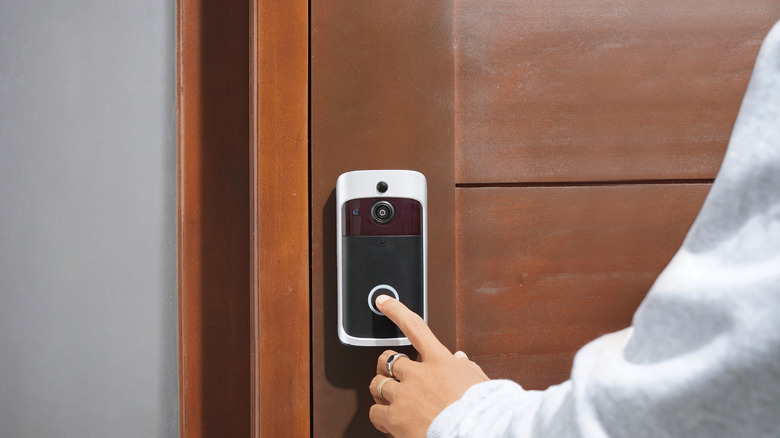
It's simple. Some video doorbells don't require an ongoing subscription. Instead, the doorbell records videos on device, generally on a microSD card. The card can go directly into the doorbell, or for some extra security, you can purchase a home base device for storage. A good example is anything equivalent to the eufy Security that combines two video doorbells with a HomeBase 3 for around $200. Alternatively, you can purchase an anti-theft mount to stop anyone from stealing your camera and the SD card. Don't think you're losing out on features, as both Eufy and other manufacturers like Tapo (if you can look past the fact that this company is owned by TP-Link) allow you to access the footage remotely via a mobile app.
These options will help you escape Ring's endless subscription cycle, but if you're good setting up those payments (Ring equipment is easy to use, after all), you can store videos locally with Ring Edge and Ring Alarm Pro. For this, you'll need a $19.99 Ring Pro subscription and the full Ring Alarm Pro system (which includes its own router) that goes for $300 or so. This is a full security system that can also manage your video doorbell, but of course, running with this may be overkill for most, especially if you don't want to cash out around $200 for the subscription annually.
Is a video doorbell worth it for renters?
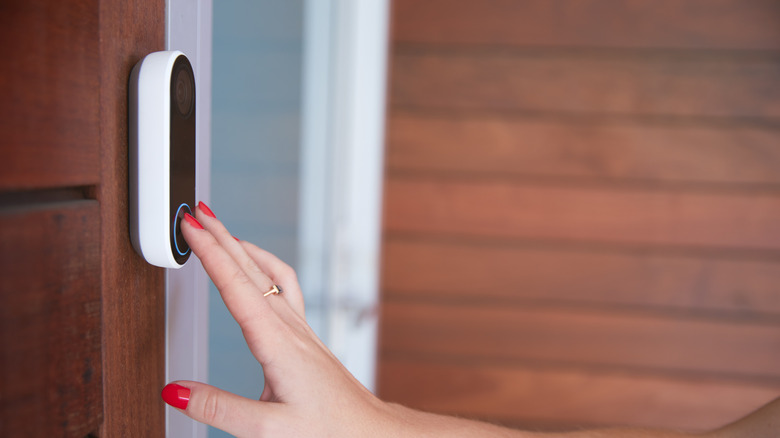
Homeowners have the freedom to install anything they want, and drill until their heart's content. Renters? Good luck convincing your landlord to let you install a Ring or any other video doorbell. This is a huge problem (in addition to all the privacy concerns if you're living in an apartment or a condo) that technically makes video doorbells not worth it. Still, there are a few ways to get around this. No-drill mounts are renter-friendly, more so for houses where a doorbell camera won't get you in hot water with neighbours. You're also not throwing money into the wind, as you can take the doorbell with you when you move out.
A peephole camera is another good alternative. You can install it with minimal hassle and no drilling, so it's perfect if you're renting the place. Again, you're not limited to the famous Ring peephole camera. There are other manufacturers that provide pretty much the same thing without requiring a subscription, like Brinno SHC1000W. It stores data on a microSD card and sends it to your email, while also featuring all the necessary bells and whistles like motion detection. Most importantly, it's low-profile enough for your landlord.