

5 Disadvantages Of Using Video Doorbells
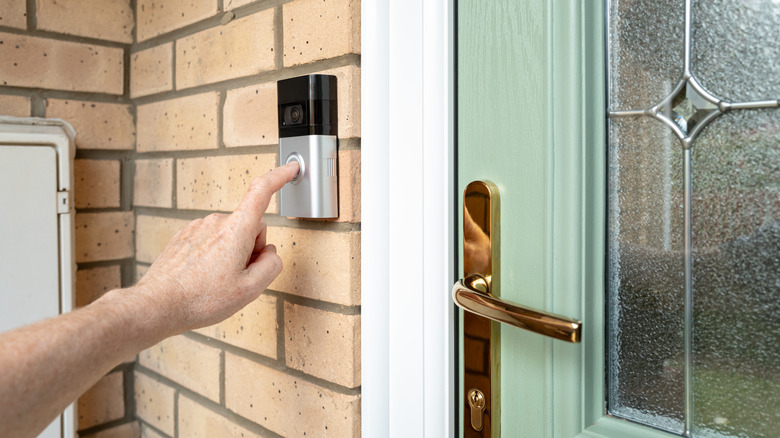
Video doorbells were quick to become one of the most ubiquitous smart home devices on the market. From the suburbs to city apartment complexes, it seems like almost every front door now sports a camera-toting rectangle. They promise peace of mind, after all, letting you screen visitors from the comfort of your couch or keep a watchful eye on your porch while you're away from home. But while these devices offer a layer of convenience and security that's hard to say no to, they're far from flawless and actually have several downsides.
To clarify, these doorbells are not inherently bad investments, especially if you opt for a nicer 2K video doorbell. For many homeowners, they quickly pay for themselves by making it easier to catch a package thief or see when the kids get home from school. But as these devices have evolved, so, too, have the unforeseen complications that can come with mounting an always-on camera to the front of your house.
While video doorbells offer an easy and fairly straightforward upgrade in your home's security, they bring with them some concerns that manufacturers don't exactly advertise, like creeping privacy issues and annoying technical hurdles. Ultimately, relying on a smart doorbell means making a few noteworthy compromises. So if you're thinking about adding one to your smart home ecosystem, here are the biggest disadvantages of using video doorbells worth your consideration.
Privacy problems extend far beyond your property lines
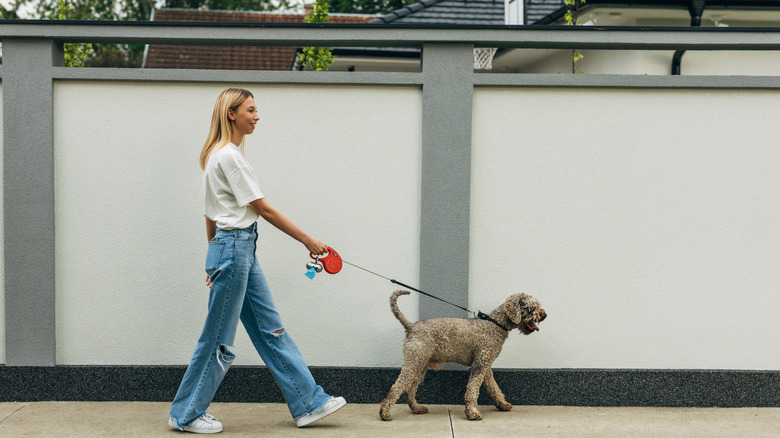
During the early days of the smart home tech boom, nobody was thinking much about the ethical implications of smart doorbells. Everyone was sold on being able to see who was at the door, and that was that. Unfortunately, the reality of strapping an always-on, high-definition camera to your front door is that it inevitably captures much more than your own property.
Depending on where you live and how your front porch is oriented, video doorbells can likely record your neighbors' daily movements, pedestrians walking their dogs, and every car that drives down the street. This casual-seeming surveillance net has raised huge privacy problems over the last few years. While you might feel safer, your neighbors may not appreciate being unknowingly recorded every time they step out to check the mail. Beyond local neighborhood dynamics, however, there are far bigger concerns regarding how the companies that manufacture these doorbells handle your video data.
Big company names like Ring have faced enormous backlash for sharing user footage with law enforcement agencies without getting explicit user consent or a warrant from the people who own those video doorbells. Furthermore, because these devices are internet-connected, they'll always carry the ever-lurking risk of being hacked. A compromised video doorbell can give malicious actors direct access to the audio and video feeds of your family's daily routine, turning what was supposed to be a private security device for your family into a potent surveillance tool working against you.
Reliability is largely at the mercy of your Wi-Fi quality
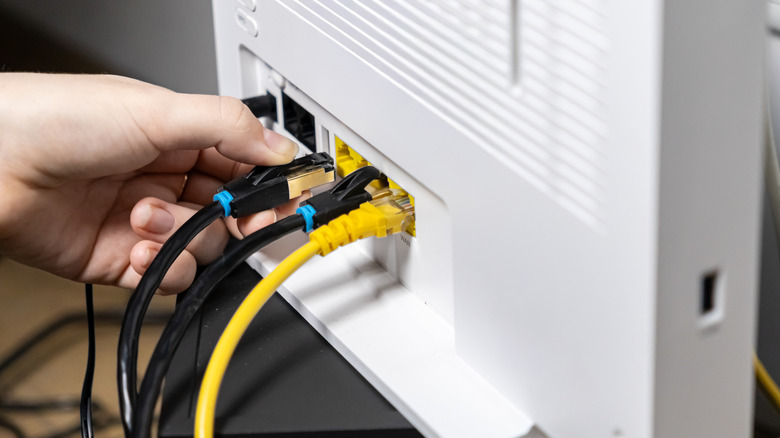
A traditional, old-school doorbell is delightfully simple: you press the button, the circuit closes, and the chime rings to alert you of a visitor. And better yet, it works every single time, without fail, for decades. If you look at some of the best smart home gadgets on the market, many try (and often fail) to match that fundamental reliability, and video doorbells are no exception. The gaping issue here is that these devices are dependent on the strength and stability of your home's Wi-Fi network.
This might not seem like a massive hurdle on the surface, but your front door is one of the toughest areas in your home for wireless signals to pierce through. Thick exterior walls, metal doors, brick facades, and the like can all combine to create a dead zone right where you need connectivity the most. So when the Wi-Fi signal drops or fluctuates, so, too, does your video doorbell's performance. You might get a notification that someone is at the door, but when you open the app, all you can see is a spinning loading wheel or a heavily pixelated (and, thus, useless) feed. And by the time the video finally resolves, the person has already walked away.
While that's fine for handling door-to-door salesmen, it's more than annoying when it's a friendly neighbor or repairman. Additionally, battery-powered models suffer drastically in extreme weather; both freezing winter and scorching summer temperatures can shorten a doorbell's battery capacity, leaving you completely blind until you unmount, recharge, and remount it.
Camera and hardware limitations leave behind blind spots
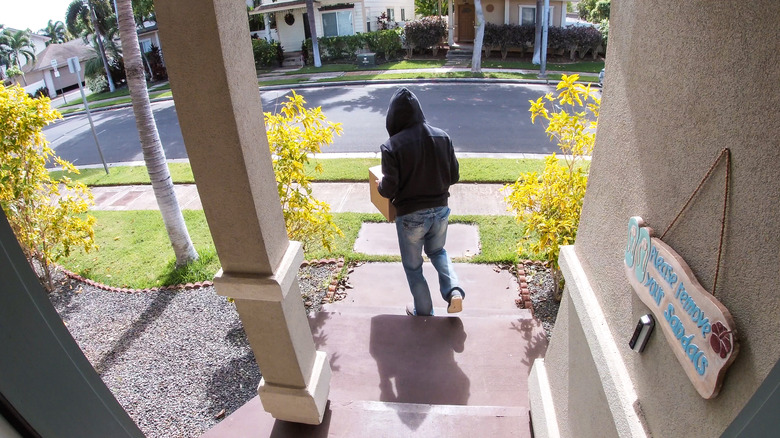
As camera lenses and sensors have improved, manufacturers have boasted about ultra-wide viewing angles and crisp 4K resolutions for their video doorbells. While these devices can effortlessly capture a sweeping view of your front yard, physics still gets in the way of complete security. A major downside of these devices is their fixed position, which can create blind spots. No matter how advanced the lens is, a camera mounted at standard doorbell height is going to have those blind spots. That's something that can render them less than effective at the one thing they're supposed to be doing: letting you see what's happening around your front door and yard.
The most common victim of this shortcoming is delivered packages sitting on your porch. Delivery drivers are known for placing boxes on the ground right below the camera's field of view or tucking them behind a nearby planter to hide them from the street. Because the camera on these doorbells looks outward rather than down, package thieves can potentially sneak in and swipe your deliveries without ever really showing their face on camera.
Some newer models have even added secondary downward-facing cameras to combat this exact issue. The only remaining issue is at night, as there's lower visibility; even infrared sensors used for night vision have the potential to wash out an image and make it hard to see much detail, let alone faces beyond a few feet. It's a frustrating hardware limitation that leaves obvious gaps in your home security.
The hidden costs of often-mandatory usage subscriptions

Although there are several security cameras that don't require a subscription, video doorbells definitely lie within the realm of software-as-a-service models that do. Regardless of whether you stayed budget-friendly with a sub-$100 video doorbell or you splurged on a higher-end $250 model, it's reasonable to expect it to be fully functional right out of the box. However, this initial hardware purchase ends up being more like a down payment for your video doorbell: for the most part, unlocking their full utility almost always ends up with you getting strongarmed into paying a monthly or yearly subscription fee.
Though there are subscription-free doorbells, they often have limited functionality, in comparison. They might still send you a live alert when someone rings the bell, but they won't let you do anything like save or review recorded video clips. So if your motion sensor goes off in the middle of the night and you sleep through the notification, you can't check the app the next morning to see what happened; that footage is instantly gone unless you are paying the company to store it in the cloud so you can see it later on.
Beyond that, some brands lock their most useful intelligent features (like the ability to tell between a human being and a passing car) behind these paywalls, as they typically need cloud computing to work. Over the lifespan of the device, you'll easily end up spending more money on the accompanying subscription than you ever did on the video doorbell hardware itself.
Notification fatigue and false alerts reduce usefulness

Normally, a security device is supposed to help you feel safe and calm, but an overly sensitive video doorbell can quickly become an all-day source of anxiety and annoyance. The final major disadvantage of installing one of these devices is the sheer amount of notifications they can send you. While you absolutely want to know when someone's at your door, it's possible to adjust the sensitivity and zones for motion sensor alerts, but getting them dialed in just right can be tough, as a video doorbell's default alert sensitivity can be too high and end up sending you a bunch of false alerts.
This might mean your phone buzzes every time a car drives by in your neighborhood, or your tree moves in the wind on a sunny yet breezy day. The constant stream of pings makes it easy to end up with notification fatigue. After jumping to check your phone for the billionth time just to see a stray cat walking across your lawn, you might start ignoring alerts altogether. And once you stop paying attention to the notifications, the device loses almost all of its preventative security value.
Though you can spend hours tweaking the sensitivity sliders and drawing activity zones in your smart doorbell's companion app, finding that perfect balance between missing real events and being spammed by false ones might feel impossible. Swiping away incoming alerts from fatigue can all but render your doorbell an expensive, useless gadget. And given that video doorbells can last several years, that's a lot of money out of your pocket you're potentially handing away.