

Where Are Unihertz Phones Made?
As smartphone makers go, Unihertz is something of an outlier. The design of its handsets is a little on the unusual side compared to those churned out by major rivals, and the way it brings them to market is different, too. The manufacturing side is a little harder to pin down, however. Unihertz says on its website that it has its "own smartphone manufacturing plant with a complete production line," but it doesn't say where the facility is located. Regulatory filings for a number of Unihertz phones do, though, name Oblue Communication Technology as the manufacturer of many of its handsets, with the facility listed as being in the Chinese city of Shenzhen, a massive tech hub and center of electronics manufacturing.
Oblue describes itself as the "creator and developer" of Unihertz, saying it provides everything from hardware and software development to manufacturing. It's not clear if the Oblue facility is the one Unihertz is referring to, but Oblue's listing as the maker of various Unihertz handsets, including the Jelly, Titan, TickTock, and Tank models, strongly suggests that many, and possibly all, of the company's phones are made in China.
Chinese tech firms enjoy something of a head start in the smartphone business because they operate inside the world's most complete phone-related supply chain with numerous component companies, large-scale manufacturing facilities, and a large pool of skilled assembly workers. They also benefit from a huge domestic market that funds and propels rapid product cycles and innovation. And while many companies like Apple have diversified to other countries in recent years, China's enormous manufacturing ecosystem is one reason why non-Chinese tech firms still use Chinese manufacturers for their devices, with cost efficiency an added bonus.
Unihertz's unusual lineup
Unihertz has been steadily gaining prominence ever since its Jelly phone debuted in 2017. With a tiny body and diminutive 2.45-inch display, the Android phone positioned the newcomer as a maker of niche handsets. Unihertz took a less typical path to market, too, turning to Kickstarter in a bid to fund the device. The campaign reached its $30,000 target in only an hour before raising an impressive $1.25 million. Unihertz returned to the crowdfunding platform with more handsets, some of which revived features that had mostly disappeared from mainstream smartphones.
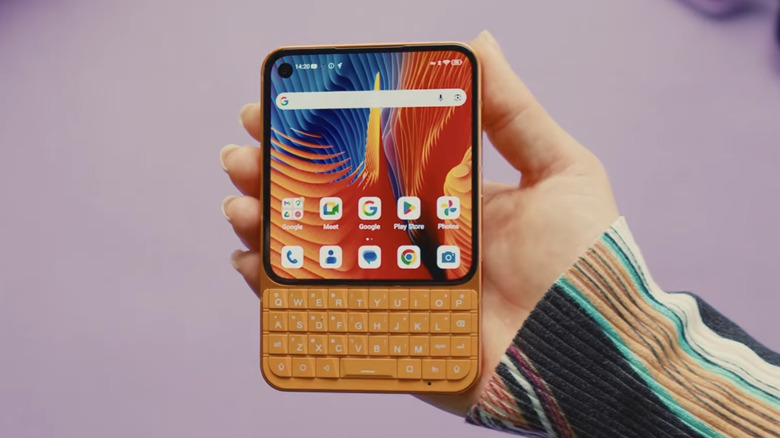
The Titan series, for example, launched in 2019 with a physical, BlackBerry-style keyboard. Four iterations later, it came up with the Titan 2 Elite. Landing in 2026, the warmly reviewed device features the familiar physical keyboard along with a four-inch, 120Hz AMOLED touchscreen display, a 50-megapixel main camera and 32-megapixel front camera, decent battery life of around two days, 12GB of RAM, and up to 512GB of storage.
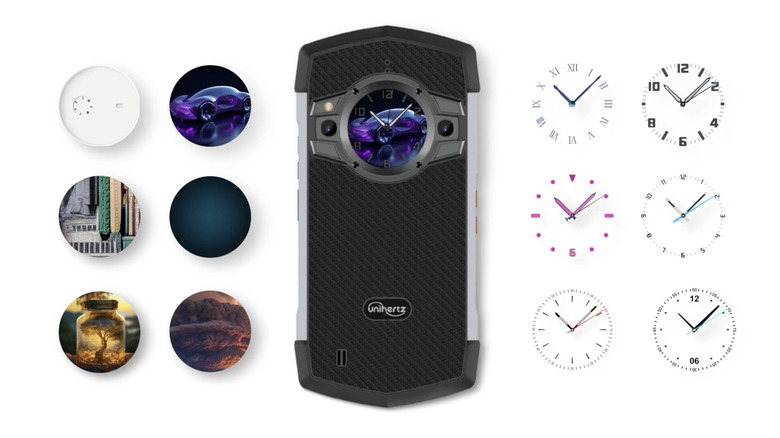
Other designs, like the TickTock series that landed in 2021, are far less conventional, with a secondary, watch-like display built into the back, marking it out as a dual-screen smartphone unlike any other. And then there's the Tank from Unihertz's sub-brand, 8849. The latest model, the Tank 5, launched in 2026, continues the series' extremely rugged design while adding a brighter 1080p projector, a powerful 17,600 mAh battery, and 120W charging. Unihertz's formula of spotting a niche, validating it via Kickstarter, and then iterating the device seems to be working well for the company, helping it to create unusual, fun handsets for folks interested in an alternative to the more predictable mainstream offerings. If you're a fan of unusual design, check out these other handsets that you probably never knew existed.