

5 Weird Android Phones You Probably Didn't Realize Existed
When Android hit the scene with the HTC Dream in 2008, smartphones were a burgeoning market in the West. The iPhone was still new, many smartphones were still running Windows Mobile, and HTC was the king of smartphone manufacturing, so it was no surprise to see the company manufacture the first Android handset. Of course, the HTC Dream (better known as the T-Mobile G1 in the US) was a weird-looking phone in its own right with a chin that juts out, housing a physical trackball, perhaps setting the stage for all of the strange designs we saw in the following years, and boy, were there some wild phones back when Android was still an experimentation playground.
These days, Android keeps adding cool new features all the time, but manufacturers often seem risk-averse in their modern designs. But this doesn't mean we can't look fondly back on the absurdity that once defined Android, its open platform, and ultimately its freedom that allowed for ample trial and error. From phones that offer rotating screens, physical keyboards, cameras galore and actual screen projection, all the way to oddities like backward flipping screens. If you could dream it, there was likely an Android smartphone that could do it.
Android is still an incredibly exciting platform, not only bringing all kinds of useful software features but also all manner of fun hardware that fills a wide range of niches, from dedicated gaming devices like handhelds to modern gaming phones that literally have a built-in physical cooling fan. If you know where to look, there are still some exciting manufacturers out there. However, today we're here to take a trip down memory lane, exploring Android's weirdest phones you likely didn't realize ever existed.
LG Wing 5G
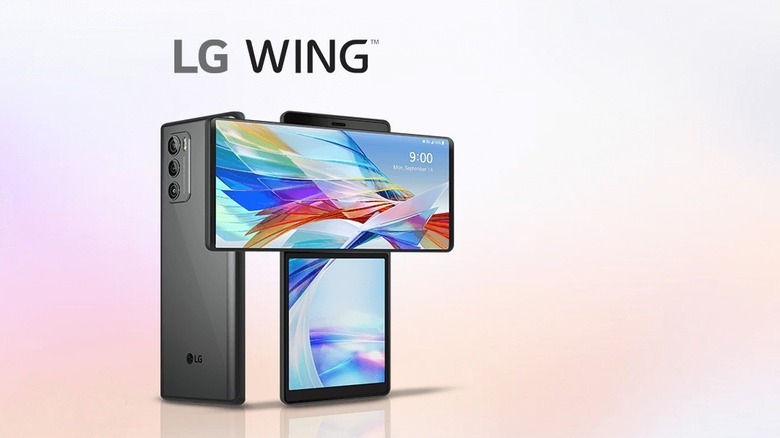
Android has seen plenty of handsets that beg the question of why such a gimmick needed to exist, and the LG Wing 5G takes the cake. As the most recent device in this roundup, it landed in 2020 with a front screen that rotates sideways to reveal a second screen underneath, all so you can hold your phone in portrait while viewing the bigger screen in landscape. The idea behind this design was to appeal to content creators, affording them room to work. But really, the appeal of the Wing the entire time was its novelty, even though it didn't sell very well.
Essentially, the LG Wing 5G was for productivity before folding phones went mainstream. The intention was that you could use the extra screen space on the Wing when the top screen was rotated out, for navigation or viewing/creating media, all while using the other screen for whatever else you needed. You could play a game and watch a tutorial at the same time, thanks to the dual screens. And in instances where you only need one normal portrait screen, simply rotate the top back into place, and you're using a single-screen device once again.
The LG Wing 5G offered a bold design that bucked trends so it could do its own thing, complete with a motorized slide-out camera, but the demise of LG's mobile division was well underway, and the expensive LG Wing 5G got the short end of the stick with discontinued support a year into its life, once LG left the mobile market in 2021. This was one of LG's last smartphones, and to this day, it's still one of the weirdest designs Android has seen.
BlackBerry Passport
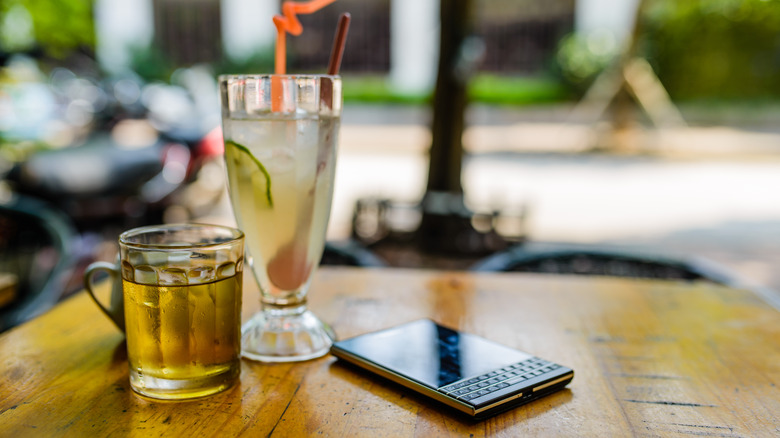
For a time, BlackBerry was the proto-smartphone, a device that could do more than a featurephone while offering a proprietary email system and a hardware keyboard, which took the corporate world by storm. Sadly, BlackBerry was unable to adapt to the shifting consumer market. It was losing to competitors like iOS and Android, which had touchscreens, even though there are plenty of BlackBerry features that users still miss. Beyond this, BlackBerry's app store lacked major apps that competitors offered, which is why the company added Android support to the BlackBerry OS via an emulator. One of the phones to offer this weird mix of BlackBerry and Android app support was the BlackBerry Passport, which landed in 2015.
The BlackBerry Passport deviated from a traditional design, introducing a strange square-like form factor, forgoing the trackball/touchpad BlackBerry was known for and opting for a 4.5-inch touchscreen for navigation. The physical keyboard was built in but offered only three rows of keys (rather than four) and lacked punctuation. This created a sleek look, but software had to be used to make up the difference, which made punctuation awkward in practice. While BlackBerry's follow-up, the Priv, solved most of these issues with a slide-out keyboard and full Android OS, the Passport earned its place in history as a weird Android phone.
Even though the BlackBerry Passport unsuccessfully bridged the gap between BlackBerry OS and Android, failing to offer the best of either platform, we can at least recognize the smartphone for straying from the norm in an effort to carve out its own niche. But as we've seen, niche can often be a death sentence in Android land, and the Passport is one such casualty, ushering in BlackBerry's full move to Android with its very next release.
Amazon Fire Phone
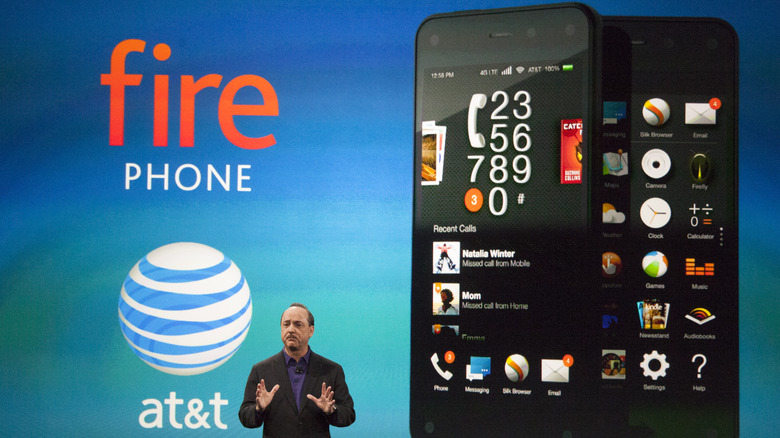
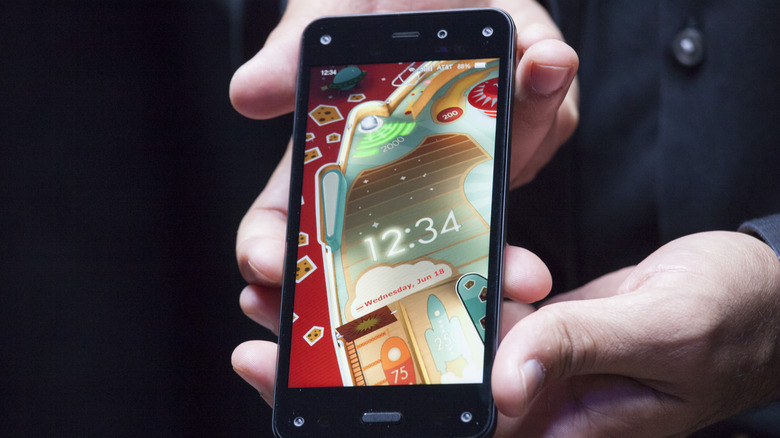
Thanks to the success of the Nintendo 3DS, a few smartphone companies jumped on the bandwagon of offering 3D effects with their screens, using a similar dynamic perspective in combination with front-facing cameras. The HTC EVO 3D was one such device, released back in 2011, but Amazon decided to beat this dead horse three years later with the Fire Phone. What set it apart was that it housed four front-facing cameras, which enabled it to produce a 3D effect on its screen by tracking your eyes. In other words, the phone was always watching, and even back then, this was considered pretty creepy. It was also exclusive to AT&T, creating another roadblock that kept consumers away.
While the device offered solid specs, with a Snapdragon chip that was competitive with flagships on the market, the lack of a Google ecosystem (this was a Fire Phone after all) and a high price at launch saw the phone sitting on shelves unwanted. As a matter of fact, out of the 300,000 originally manufactured, it's estimated that only about 35,000 Fire Phones were sold in the first twenty days, leaving Amazon holding the bag for $83 million in unsellable inventory. Ouch, Amazon clearly failed to read the room.
At the end of the day, the Amazon Fire Phone was a weird device filled with unnecessary cameras, including a 3D gimmick that consumers clearly did not care about. Had Amazon done its research and found that only an estimated 28% of 3DS users actually used the 3D screen function, perhaps it could have skipped the gimmick and just made a good Android phone sold at a fair price.
Samsung Galaxy Beam i8530
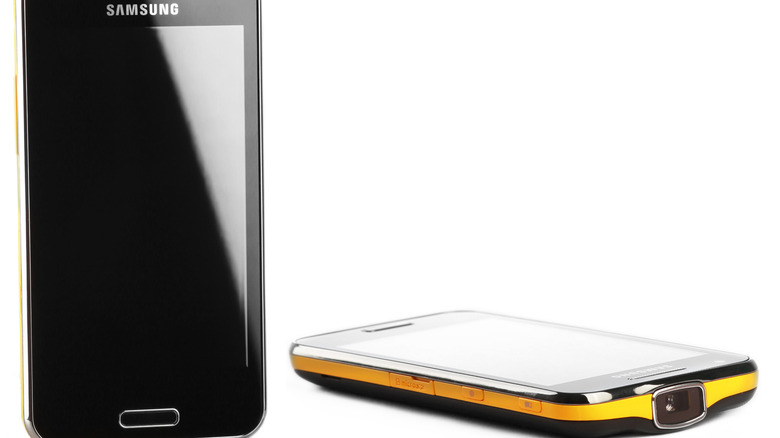
Back in 2012, consumer projectors were best experienced in very dark rooms, and tended to top out at 1080p, with 4K mostly on the horizon. Now imagine trying to stuff a projector into a phone back then, and how poor its image would be. Well, you don't have to. Samsung released the Galaxy Beam i8530 in, you guessed it, 2012, and it wasn't even the company's first Android projector phone; it was its second. Despite its failure, Samsung even dared to release a third model in 2014, the Beam 2. Despite so many models, the Beam i8530 is the model that received heavy marketing. Even then, it's likely another Android phone you probably didn't realize ever existed.
Samsung's ambition to bring a series of projector phones to market is respectable, but in hindsight, it's clear the tech was underbaked and constrained by a low brightness of 15 lumens, whereas there are plenty of projectors for bright rooms these days. Sure, the novelty of a portable projector in your pocket was pretty nifty. Under the right conditions, you could watch a full movie thanks to the 2,000 mAh battery, which offered three hours of continuous projection, which explains why the phone was so thick.
Smartphones like the Galaxy Beam i8530 failed to find an audience, as Samsung almost instantly dropped support a year later with a single update after the phone failed to gain any traction. Still, looking back, there is no denying the handset is pretty unique in design; it's also one of the few, to this day, that offered a built-in projector. So even though you are unlikely to recognize the Samsung Galaxy Beam i8530, it's still an Android phone that qualifies as weird, and then some.
Motorola Backflip
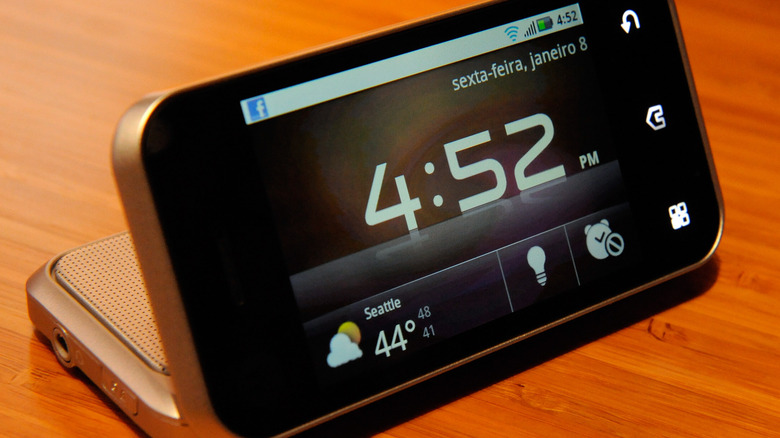
In an age where gimmicks were used to stand above the competition, the Motorola Backflip was born. Yes, the phone offers a sliding keyboard, and it wasn't even that bad, but its real claim to fame is that you could lean the screen backward when the keyboard was out. By placing the keyboard on the rear of the hinged device, the keyboard could be placed face down on a table, with the screen tilted toward the user, like a stand. It was essentially a gimmicky gimmick, and consumers weren't buying it; literally, the phone was a flop.
While it's hard to blame Motorola for trying something new at a time when phones that stuck to the wall were what sold, many designs failed spectacularly, including the Motorola Backflip. For one, when the phone is closed or the screen is folded backward, the keyboard faces outward. Out in your pocket, out on top of every surface you lay it on, it was left unprotected. This not only looked silly but also significantly increased the risk of excessive wear and tear.
Worse, the phone only ever received a single software update, five months after launch, despite its solid hardware, sporting a 1380 mAh battery and a fairly decent 5-megapixel rear camera. Still, the AT&T carrier lock doomed it to a fixed audience, and at best, the rear folding feature of the screen could be used as a bedside clock or photo frame. Alas, the Motorola Backflip's weird design and lack of sales have left it in the dustbin of history as an Android phone you probably didn't realize ever existed.