

European Students Just Made The World's First Solar-Powered Ambulance
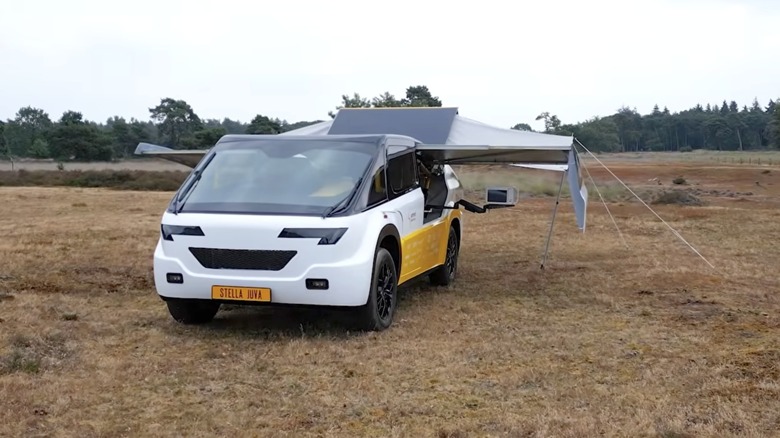
While the vast majority of solar panels are fixed in place on rooftops and solar farms, a niche but growing application is solar-powered vehicles. A good example is a team of enterprising students from the Eindhoven University of Technology (TU Eindhoven) in the Netherlands, which has created what's purported to be the world's first ambulance powered by solar energy. Developed by Solar Team Eindhoven and called Stella Juva ("helping star" in Latin), the solar-powered ambulance is designed to bring healthcare directly to people in need of assistance in remote areas instead of taking them immediately to the hospital, which is likely to be a considerable distance away.
Rather than converting an actual ambulance to solar power or transforming an existing solar vehicle into an ambulance, the team built the vehicle from scratch, working on everything from the chassis to the suspension and the electrical system. The solar power comes from 542 solar cells placed across the roof and trunk, as well as two flaps that fold out when the ambulance is stationary. Energy gathered from the sun is stored in an onboard 50-kilowatt-hour battery, which powers the vehicle's electric drivetrain as well as the all-important medical equipment.
The system is designed to allow Stella Juva to drive 444 miles (715 km) in favorable conditions, with solar energy helping to reduce its reliance on external charging facilities, while the vehicle is able to provide a range of essential diagnostic, screening, and maternal healthcare services using its onboard equipment. The broader goal of the ambitious project is to demonstrate how sustainable technology can improve people's lives, particularly by making healthcare more accessible.
A successful real-world test
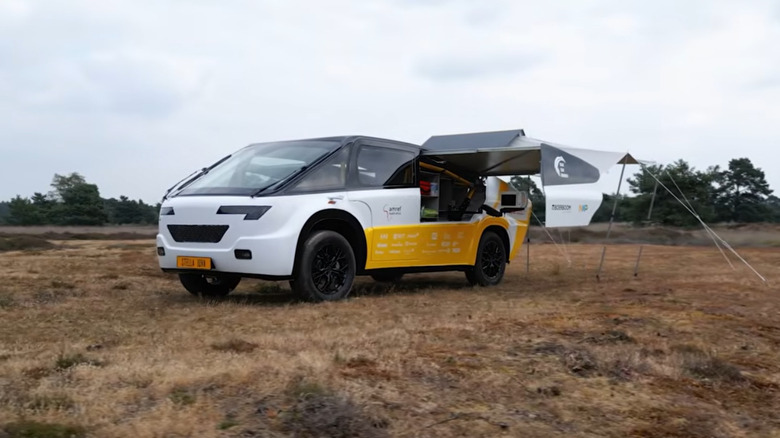
Members of Solar Team Eindhoven tested Stella Juva in Kenya in August 2026, giving them a chance to assess its performance in real-world conditions, in places where effective medical care is hard to come by. The team drove Stella Juva about 500 miles (800 km) across Kenya to a remote health clinic in Mosiro in the southwest of the country. The journey was designed to test not only whether the solar-powered vehicle could handle challenging terrain, but also whether its solar-based setup could provide enough energy to operate its medical equipment once it reached communities far from conventional infrastructure.
The trial produced encouraging results, according to a report by CNN, with Stella Juva dealing with the rough roads better than expected. In another win, the team discovered that the vehicle is capable of sustaining its own energy requirements while parked, producing surplus energy even while using its onboard equipment, thereby eliminating the need for external power sources.
Although the trial didn't involve actual patients, the team calculated that the vehicle could have helped around 200 people across a period of two days. For areas where clinics lack reliable electricity, Stella Juva's combination of mobility and self-generated power looks incredibly valuable. Indeed, the successful test has proved to be an important demonstration of how the concept performs out in the field, though funding is seen as a hurdle if Stella Juva and other vehicles like it are to stay on the road full-time.
Solar power at work
Engineers have been experimenting with solar-powered vehicles for decades, with General Motors making headlines in 1955 with the demonstration of Sunmobile, a miniature solar-powered machine. The first drivable solar car was unveiled in the 1960s, while a breakthrough came in 1982 when Hans Tholstrup drove Quiet Achiever across Australia in a trip of around 2,538 miles (4,084 km). While it's true that solar-powered vehicles have been held back by engineering challenges such as solar-panel weight and bulky batteries, advances are being made that have paved the way for some interesting uses.
Long-endurance solar drones, for example, can stay airborne for weeks by harvesting sunlight and storing excess energy in onboard batteries. They're currently being tested and developed for things like environmental monitoring, wildfire detection, mapping, surveillance, and communications. Their ability to stay aloft for long periods could make them well suited for missions requiring continuous monitoring over large or remote areas, and there's even research into a design that means they'd never have to land.
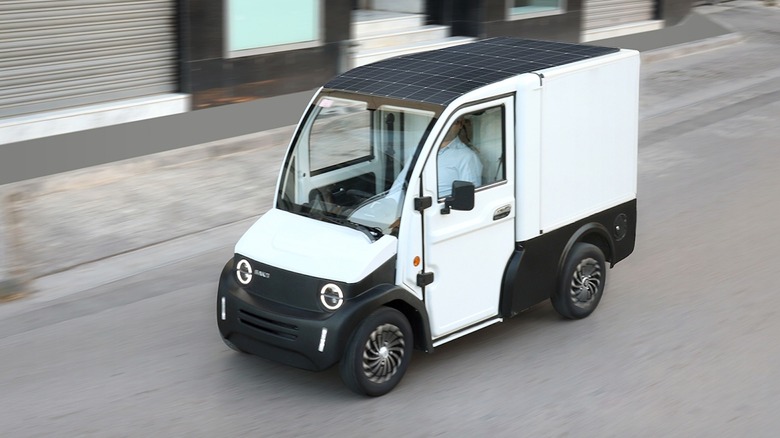
Back on land, solar-assisted delivery trikes and micro-vans are another emerging use, with onboard solar panels serving to extend the range of the last-mile delivery vehicles. Bako Motors, for example, has developed a solar-powered delivery vehicle (pictured) for use in Africa, where limited charging infrastructure can make onboard solar particularly useful, just as in the case of solar-powered ambulances. As Solar Team Eindhoven and other groups around the world continue their work, it seems likely we're on the verge of even more breakthroughs in the use of solar energy to help solve real-world problems.