

Can Rooftop Solar Panels Survive A Hurricane?
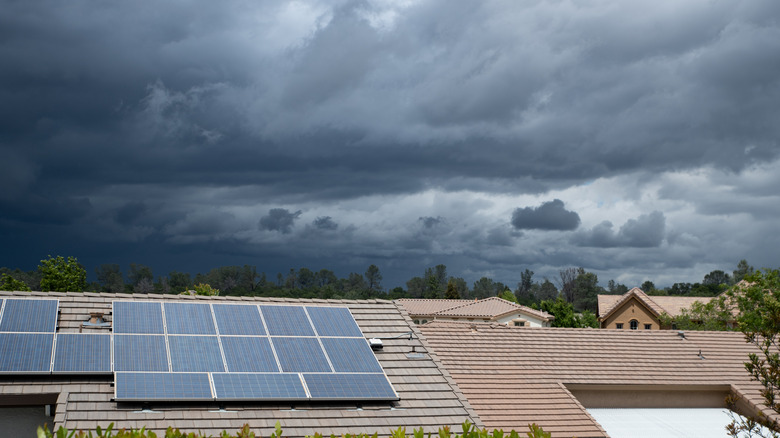
For many people, rooftop solar panels are a fantastic investment as they lower energy bills and maybe even boost your home's value. Plus, their rooftop design means that they are out of sight and out of mind most of the time. However, their position on top of your home means that they are often hit by everything storms can throw at them. Wind, rain, snow, and hail can abuse them over time. People in hurricane-prone areas with rooftop solar panels likely know this well. While these panels are designed to hold up against extreme weather, hail and wind can be especially problematic, leading to expensive repairs that may or may not be covered by your insurance.
Today's standard rooftop solar panels are waterproof and can withstand winds of up to 140 miles per hour. They are also supposed to tolerate high-velocity hits from hail up to 25 millimeters in size. States with high hurricane activity sometimes have even higher standards, such as Florida's requirement that rooftop solar panels be able to withstand up to 160-mile-per-hour winds. As for snow, most panels are rated to hold over 100 pounds per square foot, with some being capable of holding over 160 pounds per square foot. So, if you have high-quality panels installed correctly, you should have no worries about leaving them out in rain or snow.
Category 5 hurricanes have wind speeds of 157 miles per hour or higher, which about maxes out solar panel durability. Luckily, a storm still being a Category 5 when it hits land is extremely rare, occurring roughly only every 30 years. Hail is also rare in hurricanes, crossing off another major potential damage cause. Even so, rooftop solar panels are not immune to the ravages of hurricanes.
What happens to rooftop solar panels during hurricanes?
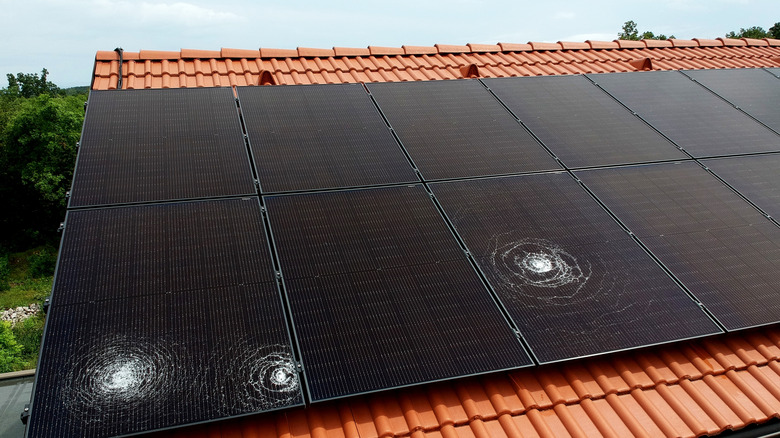
When you look at actual hurricane damage to rooftop solar panels from recent years, a few things stand out. First, there is the importance of proper installation. While the panels themselves may be rated to withstand certain wind speeds, the mounting equipment must be installed correctly and inspected to ensure it is also able to withstand the weather. With the right panel and mounts properly installed, your solar power setup should be just as durable as the rest of your home.
In an analysis of 2017 hurricanes, researchers from the Rocky Mountain Institute found a list of differences between the rooftop solar panels that survived the storms in the Caribbean and those that did not. Failed systems often involved poor connections to the roof, failure of the roof itself, and objects hitting the panels. While the panels should hold up against hail, larger windblown objects like tree branches and dislodged solar panels or solar panel parts can easily cause significant damage.
On the other hand, panels with secure and strong connections, recorded structural calculations, vibration-resistant modules, and through-bolted module connections or four top-down clips per module survived the storms. So, when solar panels are properly attached to the roof, as long as nothing blows into them, they should survive even hurricane conditions. And when they do survive, solar panels can play an important role after the storm by providing electricity even while the power grid is off. You may want to know if a house can run on 100% solar power before trying this long-term, but it's certainly helpful post-hurricane (or after another power-sapping catastrophe).
Preventing damage and repairing rooftop solar panels
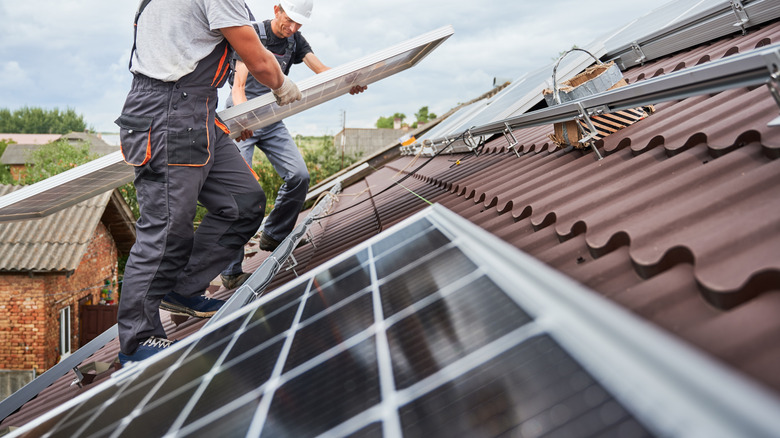
If you want to prevent hurricane damage to your solar panels, the best course of action is to have a professional check that your panels are securely attached to your roof. Also, choose solar panels that meet the requirements to be used in hurricane-prone states to ensure that you get a weather-durable option. Keep nearby trees trimmed, as well, to reduce the number of branches that could snap off and hit the panels. If you can't do that regularly, at least try to take care of it just before storms, especially now that scientists want AI to help predict dangerous hurricanes with more accuracy.
If your solar panels are damaged in a hurricane, the good news is that repairs can often be done quickly, and homeowner's insurance often covers repairs. In fact, rooftop solar panels are more likely to be covered by insurance because they are attached to your home, unlike ground models. On average, solar panel repairs cost between $100 and nearly $5,000, so insurance coverage can be incredibly helpful. Even so, after assessing the damage and considering the age of your existing system and how long solar panels last with proper maintenance, you may want to consider replacing the panels completely.
It's understandable to worry about putting a glass panel on your roof, especially if you live in an area with extreme weather, like hurricanes. However, there are steps you can take to make sure that your solar panels have the best possible chances of surviving the weather.