

Can A House Run On 100% Solar Power?
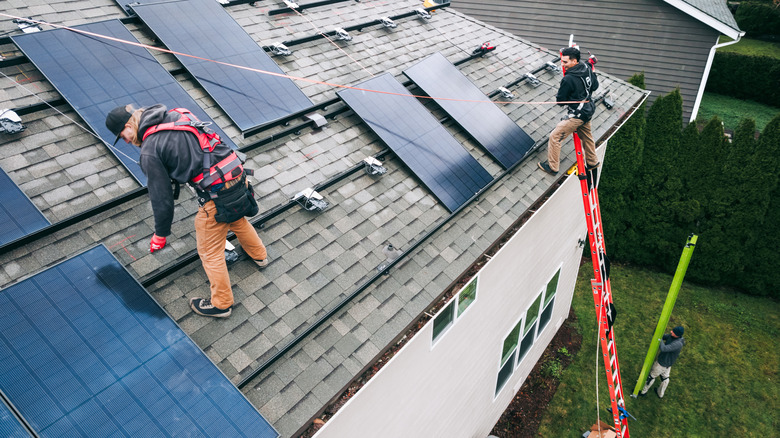
Renewable energy is an excellent way to reduce your carbon footprint, and the use of solar power is one such example. Beyond just environmental benefits, solar power can help offset your monthly utility costs, which are steadily rising in today's landscape. If you're wondering if it's possible to run a house on 100% solar power and nothing else, the answer is pretty simple. Technically, yes, you can run a house entirely on solar especially if it's off-grid or remotely located.
That being said, to do so would require more than just solar panels, you also need a reliable battery backup solution for when solar power isn't available. Another solution is net metering, which allows households to sell excess electricity back to the public grid, by earning credits you can use later, such as when you have to draw from the grid at night or during off-peak hours. While there is currently no official limit on the number of solar panels you can have installed or the total capacity of the system, some states or utility providers do limit the size of net metering eligible systems.
Having a solar energy system beyond that would make you ineligible for net metering benefits and would mitigate a big reason for even owning and installing solar in the first place. So, yes, you can go 100% solar, but it may not be worth the cost, as some benefits like net-metering may be lost.
Solar panel systems have legal and practical requirements
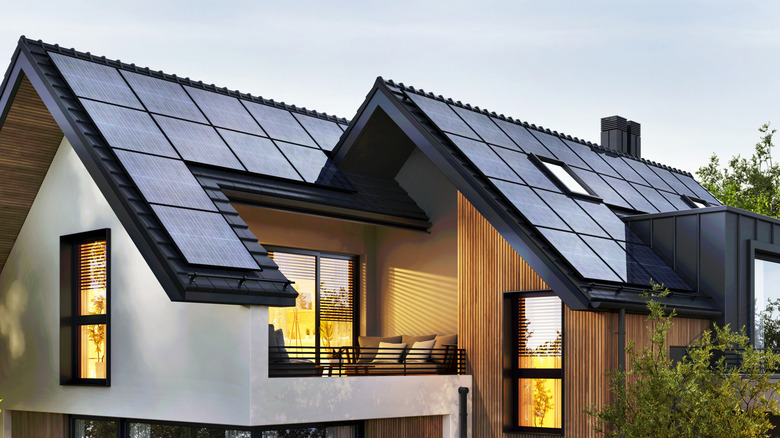
Before you decide to go solar, know that there are rules — both jurisdictional codes and industry best practices — to consider for the panel configurations. For starters, the 33% rule for solar panels is a state or local building code to help safely manage the structural load of solar panels installed on a roof. Each solar panel you install adds heft or weight and too much could be detrimental for your home. Ultimately, if you are looking to achieve 100% solar capacity, you'll have to install panels on the ground, to avoid compromising your home's roof.
There's also the 120% rule for solar panels, which is a National Electrical Code (NEC) regulation that helps determine the maximum amount of power that can be safely fed into a home's breaker panel without failure occurring. An electrical load that's too high can cause all sorts of nasty scenarios, and a 100% solar-run home would definitely need to consider the maximum-rated handling for incoming power. These rules don't address some of the disadvantages of switching to home solar either, like still losing power when the grid goes down, if you're not off-grid, or local regulation limits.
Finally, the 20% rule for solar panels is a best practice for sizing guidelines that helps to address natural efficiency loss over the long-term. While these rules touch on the capabilities and safety of residential solar-driven systems, they don't take into account the investment costs of these solutions.
Off-grid solar power is typically more expensive
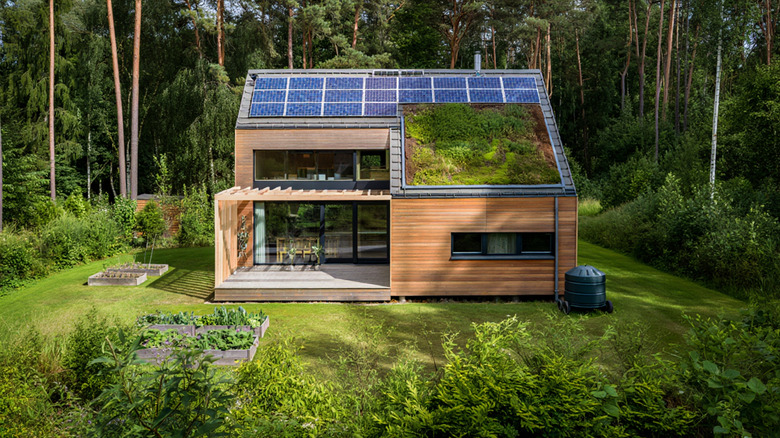
Dollar-for-dollar, off-grid solar panel systems are largely considered to be more expensive than a grid-based net-metering-capable solution. It's important to note here they're not automatically more expensive and with the right planning, you can keep off-grid and private solar costs down, but it also depends on where you live and what equipment is available to you. The main reason for the higher cost is that the homeowner will need to pay for all necessary equipment out of pocket with no subsidies or credits, which expired in 2025.
Buying all the components to install your own solar panels — and maintaining them — it is costly. Per This Old House, it can cost on average between $45,000 to $65,000 to install an off-grid system. Comparing that to grid-connected homes, a system could cost anywhere from $27,000 to $34,000 before incentives. In other words, an off-grid system could cost you twice as much, because on-grid systems are generally smaller and aren't meant to be the only power source, with the average cost of panels more than half as expensive.
Your location and climate also determine the cost and lifespan of solar equipment. For example, solar panels don't work well during a heatwave, which could further reduce their efficiency, limiting your return on investment. That would greatly reduce your average 20 to 25 years savings, meaning it takes longer for the total investment to pay off and show some financial incentives.