

What Is The 120% Rule For Solar Panels?

Not to be confused with the 20% rule for solar panels – which is a sizing guideline — the 120% rule is a National Electrical Code regulation that dictates how much solar power a building's main electrical panel can safely handle.
This regulation is enforced in all 50 U.S. states and is critical for safe solar system and solar panel installations, ensuring a home's electrical panel can manage both grid energy and solar energy without becoming overloaded, which could lead to breakers tripping, overheating, or even electrical fires. But it's not the only potential risk with solar-powered systems, so read the fine print when signing any home solar panel contract.
Fortunately, the 120% rule provides a straightforward formula that uses the electrical panel's busbar rating and main breaker rating to determine its maximum solar capacity. Below, we break down what the 120% rule stipulates and how to use its formula to calculate a building's maximum solar capacity.
The 120% rule and the National Electric Code (NEC)
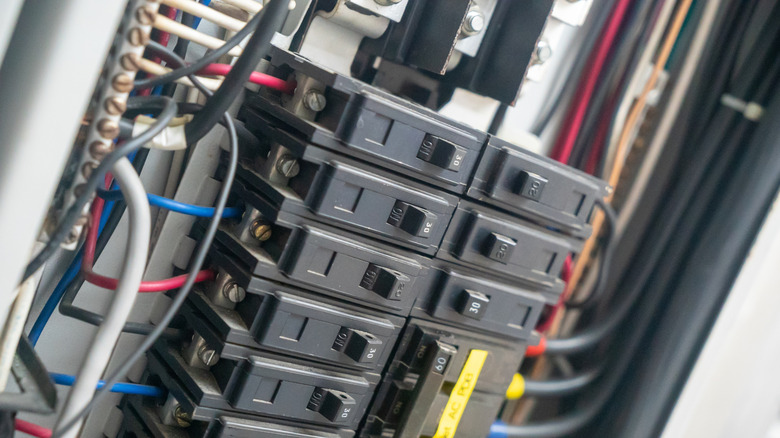
In the U.S., the National Electrical Code (NEC), also known as NFPA 70, sets guidelines and standards for safe electrical design and installation to prevent electrical hazards. The code is updated every three years, and while it's not federal law, breaking its regulations can lead to safety hazards, costly repairs, hefty fines, or possible legal action.
Solar-powered systems are typically connected to residential homes via a load-side source connection, where energy storage connects through a solar breaker on the same side as the building's loads and appliances, after the main breaker disconnects. The 120% rule dictates how much solar power can be safely fed into a home's breaker panel, as overloading it can cause overheating or even an electrical fire.
Definition of the 120% rule can be found in section 705.12 (B)(2)(a) of the NEC — which outlines the guidelines for electric panels handling solar — which states: "Where two sources, one being a primary source and the other another power source, are located at opposite ends of a busbar that contains loads, the following shall apply: the sum of 125 percent of the powersource output circuit currents and the rating of the OCPD protecting the busbar shall not exceed 120 percent of the busbar ampere rating."
The 120% rule formula
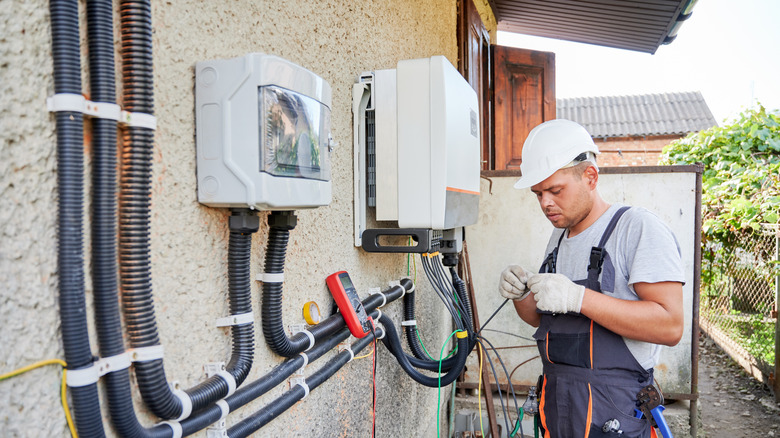
The 120% rule lays out a strict formula that lets you calculate the maximum solar capacity an electrical panel — simultaneously managing solar and grid electricity — can safely handle. This primarily comes down to your panel's busbar rating. A busbar is the solid metal strip inside your panel that collects and distributes electrical power to the breakers, with its rating dictating the maximum current the internal connections in your panel can manage.
To work out the maximum solar capacity for your panel, multiply the busbar rating by 1.2 (120%). Then, subtract the main breaker rating, which is the maximum current your home can draw from the electrical grid. You must then divide that number by 1.25 (125%) to account for solar's continuous load requirements.
So, for example, if you had a busbar rating of 200 amps, you would multiply 200 by 1.2 to get 240 amps. If your main breaker rating was also 200 amps, you would subtract 200 (main breaker) from 240 (the busbar multiplied by 120%). That gives you 40 amps, which, divided by 1.25, gives you a maximum solar capacity of 32 amps (or 7.68kW) without upgrades. This, in turn, dictates the size of the solar breaker and inverter your system can use.