

Nvidia Finally Breaks Back Into The Chinese Market, But There's A Catch
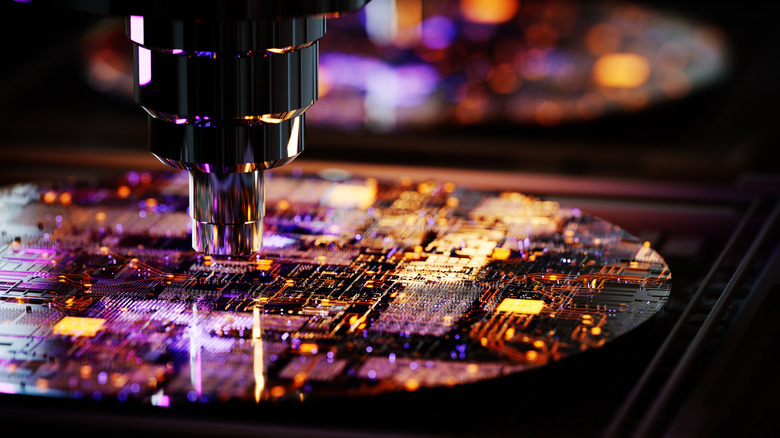
The tension between China and Nvidia has been palpable for the better part of 2026. Though the Trump administration allowed Nvidia to export H200 chips to China, the country meanwhile cracked down on Nvidia by imposing heavy limits, likely to boost domestic chip production. Finally, after months of back and forth, Nvidia made the first shipment to China, but with a major catch: the gear can go as far as Hong Kong, which technically still doesn't fall under China's customs border. In addition to that, the processors can only be used in Hong Kong.
In August 2026, two companies, Tencent and ByteDance (the latter being the owner of TikTok and CapCut), each received shipments of 10,000 H200 chips. This small quantity is only the beginning, one could say. The U.S. has allowed Chinese companies to acquire 100,000 of these processors each, meaning that Nvidia, a company with nearly zero market share in China, can finally expand into another market. It's impossible to tell how long the floodgates will remain open, as China remains adamant about keeping Nvidia's best AI chip out of its mainland, after all.
How is China developing AI without Nvidia chips?
The rest of the world may be hooked on Nvidia, but Chinese companies got by just fine without its chips. In fact, the lack of H200 stock inspired quite an innovative streak. Case in point, China built a supercomputer called LineShine that runs entirely on CPUs, which is a stark contrast to other supercomputers that require GPUs to divide tasks into smaller cores. In fact, LineShine was the first supercomputer in the world to reach speeds of over 2 exaflops.
Data centers also found a way to thrive. For instance, Zhipu opened a 1-gigawatt AI data center running multiple computing clusters. Most importantly, each cluster contains 10,000 chips, and surprise, surprise, there's absolutely no Nvidia stuff. Though it's unknown which domestic chips Zhipu used, it's been speculated that it's either Huawei, Alibaba, or Cambricon.
These examples aren't monolithic. The domestic chip ecosystems in China are thriving. In the automotive industry, a robovan startup going by the name of Zelotesch deployed 25,000 vehicles, and it used only local chips. Same with BYD, an electric car company with driver-assist systems that run on its in-house semiconductors. There are far too many stories like this that prove China may not even need Nvidia in the long term. Can domestic chipmakers dethrone the tech giant? Impossible to predict, but if they continue this stride, the leadership in the AI race could eventually tip to the East.