

5 Sci-Fi Movie Sequels That Should Never Have Been Made
If catching lightning in a bottle was so easy, then there wouldn't be a single movie franchise with a bad installment. "Rocky V" would be a masterpiece, "Son of the Mask" would be the movie Jim Carrey wishes he'd have gone back to, and we'd have the same amount of love for "Jaws 3-D" as the film that first made us afraid of the water. Unfortunately, that just isn't the case, and film series over the years have suffered dearly by failing to get out while the getting was good. That includes some staples of science fiction.
You'd think that, given the liberties allowed in sci-fi because of the genre's time and space rule-breaking possibilities, there'd be more franchises that could get away with sequels actually being worth a watch. Unfortunately, that simply isn't the case, and a bunch of big-screen films — from "X-Men: The Last Stand" to "Terminator Genisys" struggled to bring in the cash, or even critical reception similar to what they're following on from. The kind of films that we wish the Hollywood powers that be had reconsidered getting to work on, and avoided staining the reputation of beloved box-office hits. With that, we've put together five hellish viewings that should never have come into existence.
Star Wars: The Rise of Skywalker
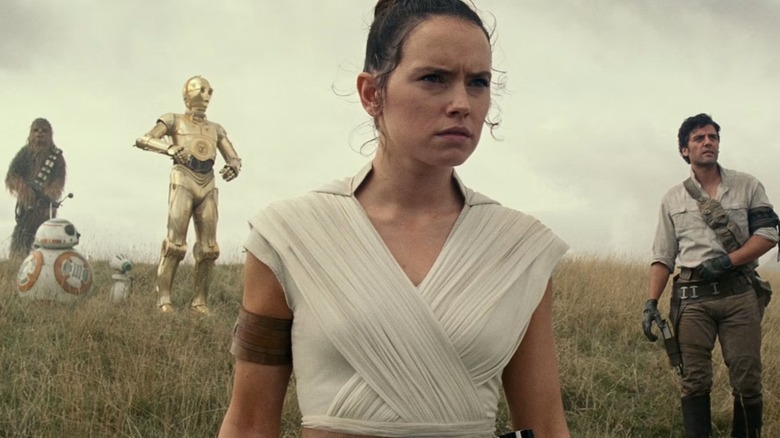
After the divisive reaction to Rian Johnson's middle movie of the new Star Wars trilogy, "The Last Jedi," the pressure was on for the latest chapter of the Skywalker saga to end on a high note. The most damning indicator that we weren't going to get that with "The Rise of Skywalker" could be summed up in five words — somehow, Emperor Palpatine has returned. Barely making a lick of sense, J.J. Abrams desperately tried to tie up loose ends and, in doing so, delivered what is widely considered the worst movie in the entire franchise.
Characters that had been built up with stories of their own were left by the wayside in Episode IX, with all of the focus being on Rey and undoing whatever Johnson had dared to establish in Episode VIII. The girl who was "no one" was in fact the granddaughter of Palpatine, who'd cloned himself and had an entire fleet of ships lying dormant to give galactic takeover another go.
He fails, of course, thanks to yet another villain turning back to the light, only to die in the final moments. Then there's an absolutely criminal final scene of Rey taking on the Skywalker name, which fans feared and cried out against in theaters. No matter how or when Rey returns in the future, our only hope is that her story redeems the absolute dumpster fire she left behind with "The Rise of Skywalker".
Indiana Jones and the Kingdom of the Crystal Skull
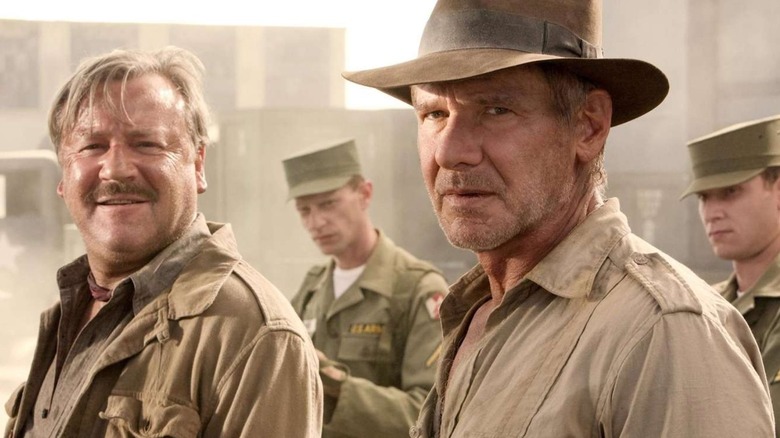
Knowledge might've been treasure in "Indiana Jones and the Kingdom of the Crystal Skull," but we'd have been all the richer having never seen the fourth film in the "Indiana Jones" saga. All the pieces were there to make "Crystal Skull" a hit, with Spielberg back in the director's chair and Harrison Ford returning as the man in the hat. Unfortunately, the film relies too heavily on computer imagery, especially the CGI animals.
Besides a prairie dog kicking things off, there's the face-palming sequence of Shia LaBeouf's Mutt Williams swinging through the trees with monkeys, and Russians getting devoured by ants. Then there's the story on this iffy rollercoaster ride. Putting Dr. Jones into an era that's more focused on science than history is a logical step, with an adventurer of a different time having to get up to speed.
All of that gets undercut, though, with the flat villain in Cate Blanchett's Irina Spalko, Ray Winstone's side-switching Mac, and moments that include a fridge getting nuked, and a reveal that dances around the matter of aliens. There's a lot of potential in "Crystal Skull," and perhaps with a once-over, we could've seen Indy ride off into a sunset worth seeing, rather than returning in "Indiana Jones and the Dial of Destiny." Ultimately, all this proves is that, in the case of Dr. Jones' adventures, he should've listened to his dad in the third one and just let it go.
X-Men: The Last Stand
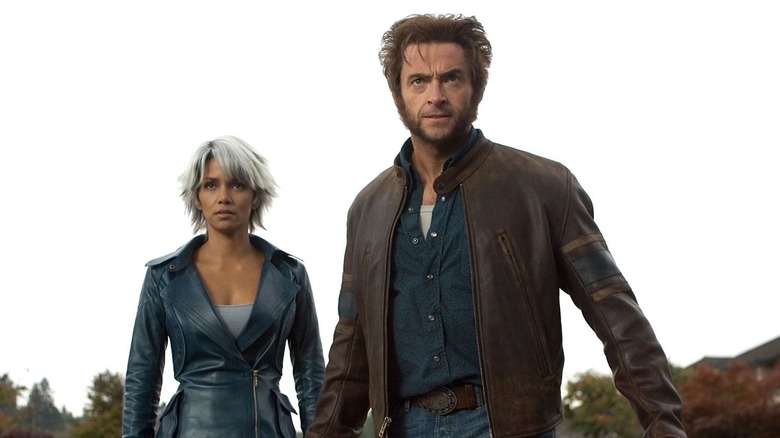
"X-Men: The Last Stand" was a project stuck in development hell before it saw the silver screen, and it shows. After the massive success of "X2: X-Men United," "The Last Stand" tried to top its predecessor with a kill count, heroes becoming villains, and creative choices that have aged like milk. After teasing that the Phoenix saga was going to get some attention following the events of the previous film, Brett Ratner's run at the mutant superteam leads him to snuff out fan-favorite characters left and right.
Cyclops gets a pitiful death halfway through the film, and Magneto, one sci-fi villain who was actually right, turns his back on longtime ally Mystique just because. Credit where it's due, there are some decent set pieces that include Magneto hitching a ride on the Golden Gate Bridge, and Wolverine getting chucked across soundstages by Colossus. There's also Iceman's full transformation going up against Pyro. Unfortunately, as would become a common trend in some of the worst X-Men movies that followed, "The Last Stand" made big decisions that would be undone later with no explanation, which begs the question of why it was made in the first place.
Highlander II: The Quickening
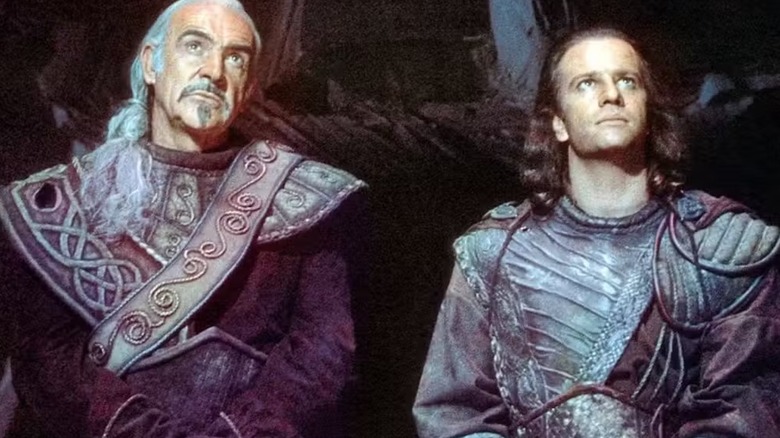
The year is 1986, and Christopher Lambert and Sean Connery introduce us to a stupidly cool world where immortals spend centuries living their never-ending lives, while also having sword fights with one another until "there can be only one." There's little explanation as to why this is, but it doesn't matter because any questions get drowned out by a soundtrack from Queen that absolutely slaps. Of course, fans of this cult hit wanted a sequel.
What they got was "Highlander II: The Quickening," which tried to mix things up by throwing in one wild new element: Aliens. Yup, this franchise, which started out as a sci-fi fantasy, leans more into one genre than the other and doubles down on its nonsense. The biggest win, and bonkers move, is bringing back Sean Connery, who, after getting decapitated in the first film, is revealed to be an alien wizard who somehow makes it back to join the fight on Earth, which has now been ravaged by pollution.
The film has the impressive accolade of earning 0% on Rotten Tomatoes and is widely regarded as one of the worst movies ever made. Not even a "so bad, it's good" movie, "The Quickening" is more like an endurance test and one that we don't blame you for failing. We can only pray that the upcoming "Highlander" reboot from "John Wick" director Chad Stahelski, starring Henry Cavill, avoids this and recaptures the magic of the original.
Terminator Genisys
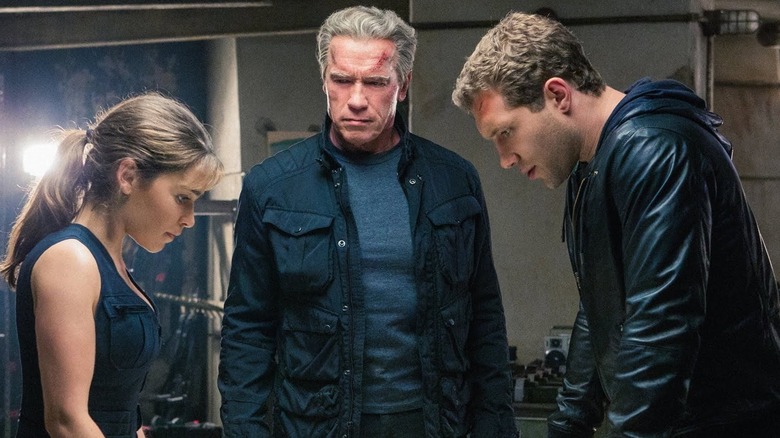
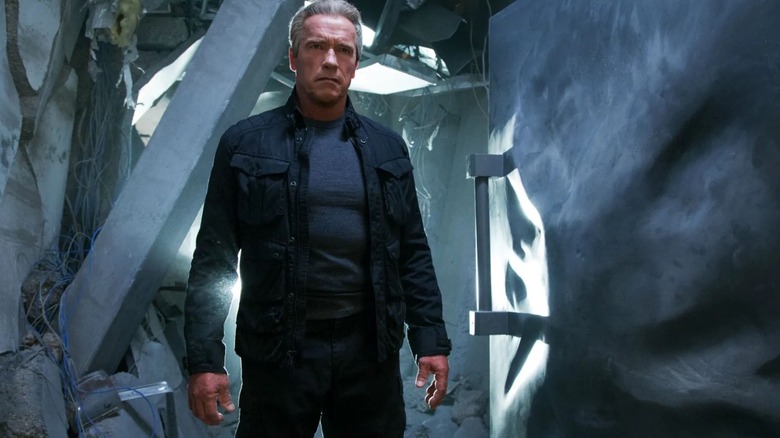
Another cash-grab sequel that tried its best to cling to what was left of a beloved franchise, "Terminator Genisys" was described as a reimagining of the events of "The Terminator," with no connection to the previous movies. That's a strange take, given that the film desperately tries to replicate a handful of signature moments that all fail to hit us in our nostalgic CPUs. Emilia Clarke and Jai Courtney step in as a new Sarah Connor and Kyle Reese, in what has now become an altered timeline.
In this deviation, Sarah was raised by a Terminator (Arnold Schwarzenegger makes an appearance) and joins the battle to fight John Connor himself, who has been transformed into a T-3000 made of nanotechnology. Matt Smith and J.K. Simmons turn up for a bit, too. Just like every other Terminator sequel that followed "Terminator 2: Judgment Day", one of the best sci-fi movies ever made, "Genisys" is a project made from second-hand parts of a more superior machine. Even trying to recapture the magic of what is widely regarded as one of the greatest movies of all time is borderline offensive. Like all the rest, this should never have been brought online.