

Apple Didn't Invent The Tablet - The Real Story Starts Decades Earlier

Many believe that iPads are useless nowadays, but it's impossible to deny what a stir these gizmos created in the 2010s. While the Kindle and iPad may have made tablets popular, the origin of these devices actually dates back to the '80s. Believe it or not, the first successful handheld tablet hit the market the same year Madonna's "Like a Prayer" album debuted. Developed by Grid Systems Corporation, the Gridpad 1900 went on sale in the fall of 1989, weighing 4.5 pounds and costing $2,370 — that's more than double the price you'll pay for the best tablets you can buy in 2026.
This futuristic touchscreen device ran on the MS-DOS 3.3 operating system, and users interfaced with it via a stylus or an on-screen keyboard. Did it succeed? Around 10,000 of these babies were sold, which the company called a mild success. Considering that 21 million personal computers were sold in 1989 alone, the Gridpad was merely a drop in the bucket. For comparison, Apple's iPad sold 300,000 units on its first day in April 2010, and the $499 tablet weighed just 1.5 pounds.
Now, there were previous attempts at creating a tablet, such as the Write-Top by Linus Technologies that preceded the Gridpad by two years. This device weighed 9 pounds — about as much as a gallon of milk — and used a primitive touchscreen that could track a stylus, but it didn't look anything like what we consider a tablet today.
How did tablets become popular, then?
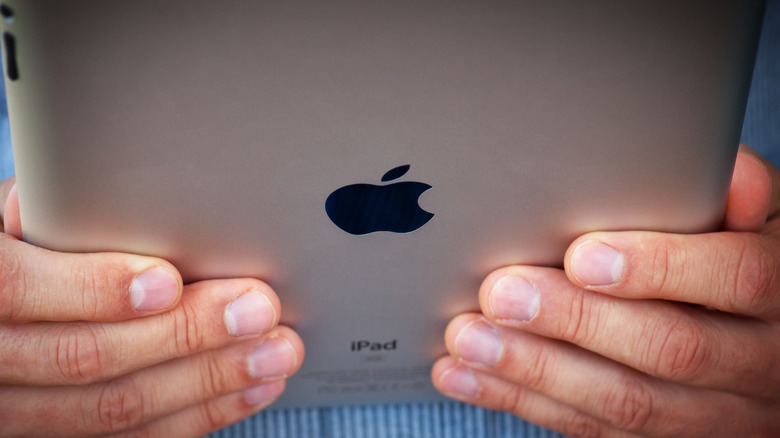
The tablet seemed like a natural progression in computer technology. So why did it take until the 2010s for these nifty devices to become mainstream, and what made the iPad's 2010 presentation so special? A tiny innovation that was actually an elimination of one crucial aspect of previous incarnations of the tablet — the stylus.
When you take a closer look at the history of these devices, they leaned heavily on the Gridpad's use of a stylus. Microsoft did it, as did Nokia with the Nokia 770, which could connect to the internet but still required the non-glamorous "pencil". Steve Jobs was one of the first major tech brainiacs who recognized that the thing holding the tech back was the stylus itself, so he started conjuring up the first version of the iPad. After years of being on the back burner, the iPad was finally presented in 2010 after the iPhone brought Apple's multitouch tech to its zenith.
Apple's ingenious marketing also played a huge part in the success. Steve Jobs positioned it as a device that lies dead straight in the middle between an iPhone and a MacBook. After firing shots at Microsoft and others for running out-of-date Windows software on so-called netbooks with subpar displays, Apple's risk paid off immensely. The iPad drove total tablet sales to over 50 million within a year, while Microsoft canceled its stylus-based booklet device.