

5 Of The Most Unique 3D Printer Filaments You Can Buy
We may receive a commission on purchases made from links.
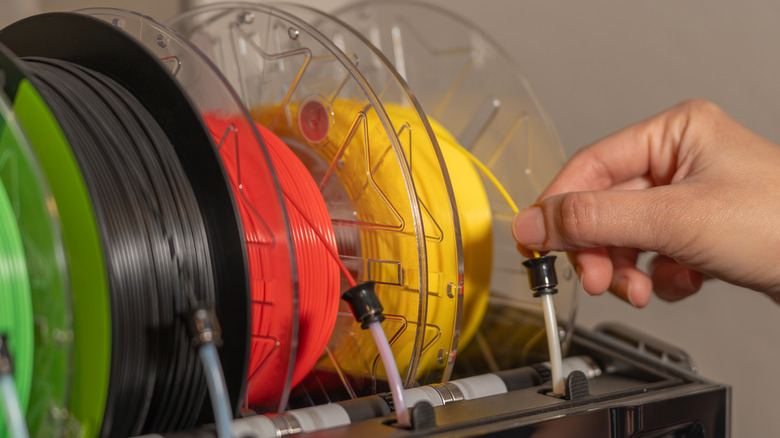
I've tried some cool-looking filaments during my five years going down the 3D printing rabbit hole, and it's not just about multicolor projects anymore. Forget black and white; users can now buy filaments that look like marble, wood, and metal. Oh, and don't forget glow-in-the-dark and temperature-sensitive, color-changing filaments. When you look through material types, you'll see two schools of filament: those that mimic other materials and reactive effects, including conductive and magnetic filaments.
I've decided to go with unique filaments I've used in the past, all easy-to-use PLA that any competent printer can handle. Marble, Wood-fill, Metallic, Glow-in-the-dark, and heat-reactive color-changing filaments are making up this roundup. But just because they're all PLA doesn't mean they react and print the same as standard PLA.
Not every PLA variant is right for every job. PLA is best for decorative purposes rather than practical ones because of its low heat resistance and tensile strength. Plus, some of these filaments are more abrasive than others, especially ones infused with other materials, which require hardened nozzles or higher temperatures. But I have to admit, the wood and marble PLA filaments surprised me the most, and most certainly haven't led to printing out Pokémon gnomes for my garden.
Marble PLA
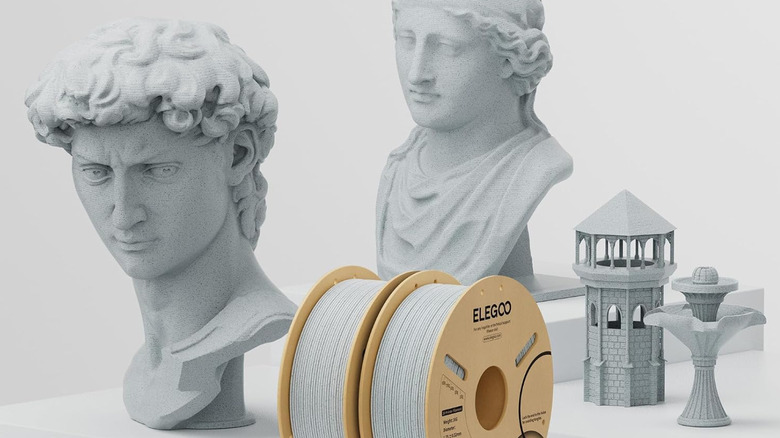
This is my favorite PLA filament in the bunch, thanks to the clean, effective finish Marble PLA produces. It hides layer lines and looks like pale granite or marble from a distance, which is great for decorative home ornaments or garden decor. From experience with Elegoo Marble PLA, the makeshift veins and speckle patterns on a finished print break up surface uniformity, draw the eye away from layer lines, and make simple geometry pop.
I printed a couple of different Pokemon using this filament to hide around the garden to look like stone features, and they look the part. This would also be great for printing wargaming or role-play tabletop scenery, especially castles, big buildings or mountains.
The other solution here is buying the real McCoy, but most would settle for a 3D-printed alternative once they see the price. It's $21.99 for a 1 kg roll, so printing a bed of 10- to 20-inch statues for a couple of dollars each is a solid deal given the results. Because marble PLA contains no other materials, you can handle it the same as regular PLA, which also makes it one of the easiest filaments to use in this article.
Wood-fill PLA
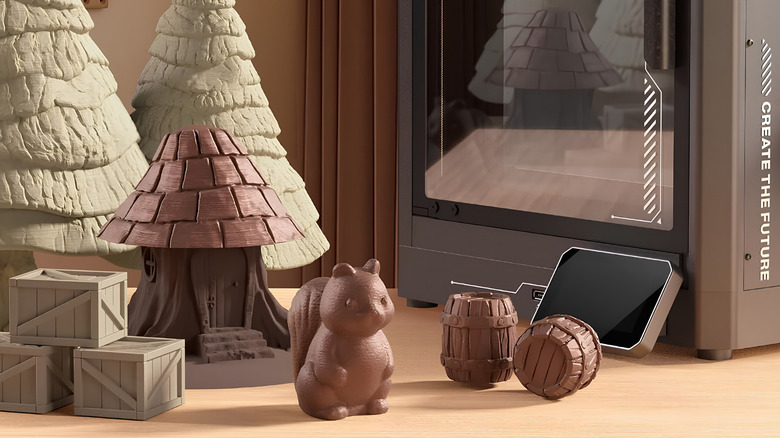
Wood PLA won't print a nice plank of pine, but it does contain real wood fibers; about 20% of the filament is sawdust. This makes prints look, feel, and smell like wood, with finished projects coming out with a matte, earthy texture similar to smooth sandstone that can be sanded and stained. It's not plastic, and it's not wood. It's something in between that looks the part.
Some report they can replicate natural ringing and grain effects with this filament, but that hasn't been the case with Elegoo wood PLA. You can mimic this when designing a project with surface textures and wood-knot designs, like printing a log, for example. For the most part, users will get that clean sandstone look that makes "wood" look great when printing wood scenery such as huts and forts, with the detail ready to go in the STL.
For the odd project using this filament, a standard nozzle will do the trick, but for prolonged use I'd highly recommend buying a hardened steel nozzle that can hold its own against this abrasive filament. It's also worth buying different inks and wood stain to achieve different results depending on the project. Personally, I'd go for inks, as the majority of the material being worked with here is plastic, not wood, so it should give a more uniform finish.
Metallic PLA
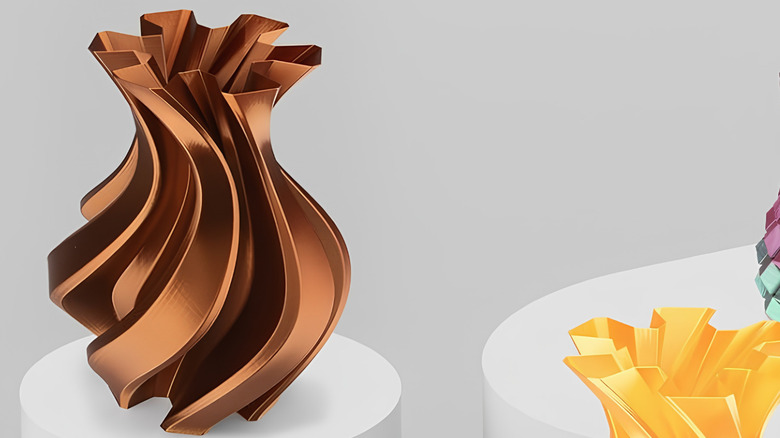
Two kinds of metallic filaments exist: those with real metal powders mixed into the plastic, and metallic-looking silk PLA. The metal-filled filament is very abrasive, so always use a hardened steel nozzle. It's also heavier and will need polishing after it's used in a finished project. This filament is great for practical use, but it also looks great for ornamental projects for those willing to put in the effort.
These filaments can include all kinds of metal powders, but copper is the easiest to work with because of its softness and low melting point. From a practical standpoint, I prefer using silk metallic-colored PLA. It looks great, extrudes like normal PLA, reflects light like real metal, and is easier to finish during post-processing.
I've used Elegoo's metal bronze silk PLA, which costs a couple of dollars more than the marble and wood mentioned above, but the results are solid. I wanted a copper-looking Mandalorian-style gauntlet for Halloween a couple of years back, and this filament looked great. This project also benefited from sanding some scuffs and blemishes, then going over the marks with black ink to emphasize the scoring and wear, which also dulled the shine to make it look worn. Of course, when using a resin printer for detail and metallic paint, the result won't be as durable, which is a trade-off with resin 3D printers.
Glow-in-the-dark PLA

In my experience, Glow-in-the-dark filaments can be very abrasive because of the phosphorescent additives, and many options are PLA/ABS hybrids, so use a hardened steel nozzle and check the optimal nozzle and bed temperatures before starting a project. The Elegoo PLA Glow filament I've used before prints nicely between 190 and 230 degrees; that's from my experience and Elegoo's guidance. I usually stick to either Elegoo or Prusament filament just because I've never had an issue using it, and that's what matters.
Like most glow-in-the-dark products, it looks dull and unappealing in daylight, but if prints are exposed to around 30 minutes of daylight, they pop at night time. This is the perfect filament for Halloween decorations; I printed little spiders and stuck them to the walls last year, for example.
PETG glow filaments, like Sunlu's 4 KG bundle, tend to have cleaner colors during the day but are harder to print. I'd recommend using an enclosure or a contained FDM printer for this and ABS filaments for better temperature control to reduce warping and enable solid layer adhesion. This is where the hardened nozzle comes in: these filaments can be hard work on their own, but with the aforementioned Phosphorescent additives in the mix, it's a necessary purchase.
Heat-reactive color-changing PLA
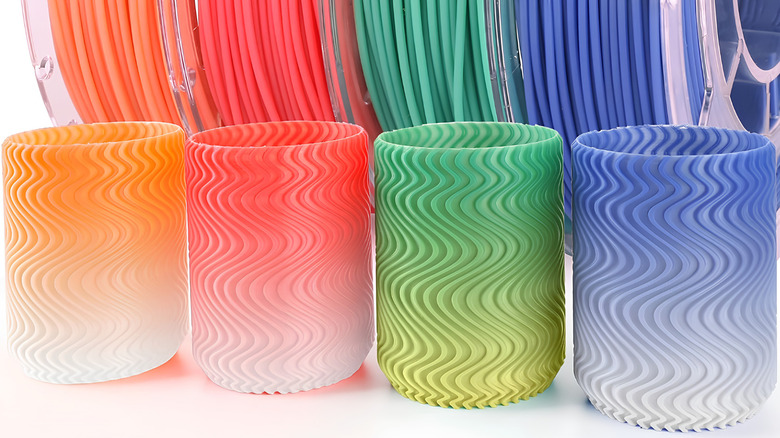
What about filaments that change color after the print has been completed? Well, there are two types: heat-sensitive and UV-sensitive. Both filaments are PLA-based, but some come as a PLA/ABS mix, so make sure to check the recommended nozzle and bed temperatures. They both contain additives that change color when touched or shift into direct sunlight, and are hands down the coolest filament in this article.
Heat-reactive filaments shift color with warmth from a person's hands, beverages, or sunlight. It's great for mugs, coasters, and fidget toys for the kids. UV-sensitive filament shifts color after a few minutes in direct sunlight, making it great for ornaments or statues displayed on a windowsill, or for adding a colorful, shifting twist to a hobbyist's garden. Just double-check what kind of nozzle you need, since even PLA-advertised filaments might be a hybrid of other materials that can be abrasive.
Personally, my favorite filament here is marble PLA. It's very easy to print and gives one of the smoothest finishes I've seen in my five years of 3D printing; taking the time to reduce print speeds and use lower layer heights leaves a fantastic finish with little post-processing needed. For a proper marble finish, add a clear gloss as a final coat to give it a nice shine.