

Resin Vs. Filament 3D Printers: Which Is Better?
We may receive a commission on purchases made from links.
Buyers may have noticed there are two main types of additive 3D printing that can be done at home: one that melts plastic, and one that turns liquid UV resin solid. As for which one is better, it all comes down to what users would like to make, how much they'd like to spend, and the level of maintenance they'd be comfortable with carrying out. So before hopping over to a free STL file website to pick out a new 3D printing project, there are some details to consider.
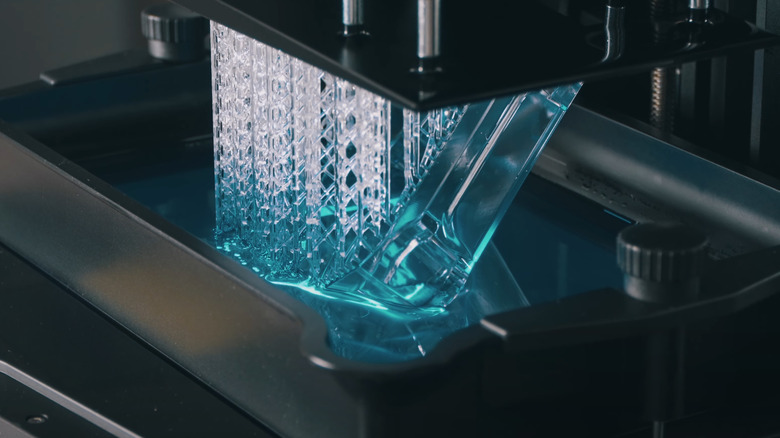
Fused deposition modeling (FDM) 3D printers use a heated nozzle to extrude solid plastics layer by layer, building everything from large terrain pieces for tabletop gaming to durable household tools. Resin 3D printers, which use stereolithography and digital light processing, rely on ultraviolet light to harden liquid photopolymers into highly detailed, smooth prints. This is perfect for printing miniatures, models, statues, and anything ornamental.
Both technologies continue to advance and drop in price, but they serve completely different use cases. A filament printer wouldn't be the best tool to produce the microscopic facial features of a tabletop gaming miniature, and a resin printer wouldn't be ideal for making an impact-resistant cosplay helmet. Makers need to balance their specific creative goals with factors like material strength, setup complexity, and ongoing material costs to make sure they have the right 3D printer for their workspace. Here's how both 3D printer types stack up, using Elegoo's Centauri Carbon 2 FDM and Jupiter 2 resin 3D printers as examples.
Filament (FDM) 3D Printers
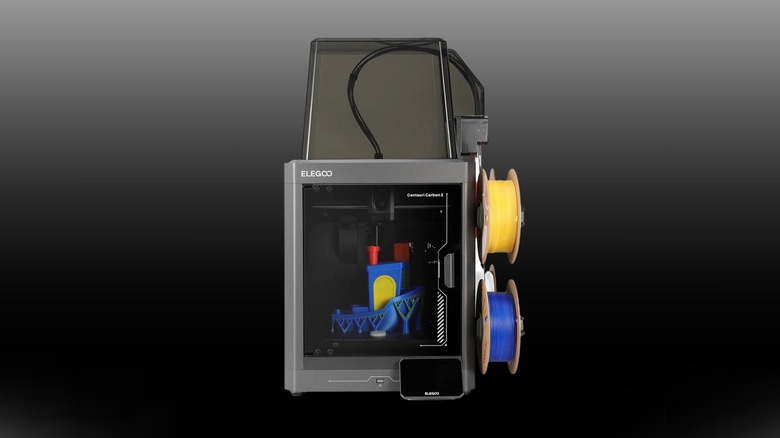
FDM filament 3D printing is the most accessible way to get into the world of making. For users who want to build large-scale items like cosplay armor, prototypes, or functional household tools, filament printers are the way forward. An entry-level filament machine typically costs between $150 and $300, but may require more maintenance and setup. For newcomers, Elegoo's Centauri Carbon 2 Combo is a solid entry point and takes the headaches out of FDM printing with minimal assembly and automated setup so users can print out-of-the-box. It costs a bit more, but it's often on sale for around $399 with an MSRP of $449.
Before downloading a batch of useful 3D printer projects, it's a good idea to think about what kind of filaments will be needed for the job. Material costs are quite low too, with standard polylactic acid (PLA) 1-kilogram filament spools starting at around $12, depending on which brand users are comfortable with. For stronger builds, the Centauri Carbon 2 can handle higher print nozzle temperatures of up to 350 degrees Celsius to use PETG, ABS, TPU, and even stronger engineering filaments such as carbon fiber-infused PETG.
FDM technology does have some limitations, however. Because FDM 3D printers typically use a 0.4 mm nozzle to extrude layers ranging from 50 to 400 microns, the finished project will show visible layer lines. This lack of fine resolution means facial features on small figurines can appear distorted or lose definition entirely. Some FDM 3D printers require some manual preparation before starting a new project, such as leveling the build plate and print head axis or even clearing out jammed filament nozzles.
Resin (SLA) 3D printers
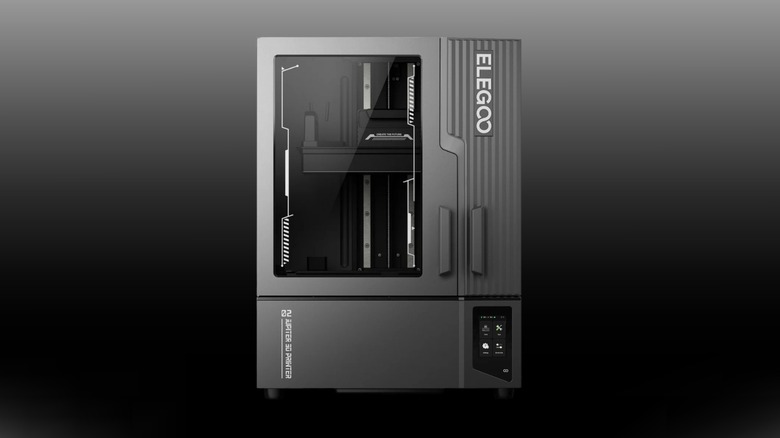
Resin 3D printing is the best choice for highly detailed projects that require a smooth finish. By using ultraviolet light to cure liquid photopolymer resin layers, they can achieve a sharp resolution of 25 to 50 microns per layer. While an entry-level resin 3D printer starts at around $200, it'll require manual setup such as build plate leveling and will lack some core features.
We've found Elegoo's Jupiter 2 to be extremely competent with some great features for printing out obscure 3D models from sites such as Heroforge. It's an expensive bit of kit at $949, but has a massive build plate volume of 302 x 162 x 300 mm, a 16K monochrome LCD exposure screen, automatic leveling, a smart heating resin tank, automatic resin feeding and recycling, plus live monitoring and timelapse features. Elegoo also packs the same technology on a smaller scale without the automatic resin feed into the Saturn 4 Ultra 16K, which often goes on sale for $499 with an MSRP of $649.99.
Resin 3D printing is a messy hobby complete with safety hazards. Both liquid resin and isopropyl alcohol, which are needed to clean up prints, contain toxic chemicals that emit harmful vapors and cause skin irritation. Wearing nitrile gloves, a face mask, and keeping the printer in a well-ventilated space with an air filter is highly recommended. After cleaning, prints need to sit in a UV curing station to harden. Elegoo sells wash and cure stations to make the process efficient, but we would recommend using ABS resin which is far less brittle than standard resin.