

Poco F9 Pro Review: Great Value In A Premium Build
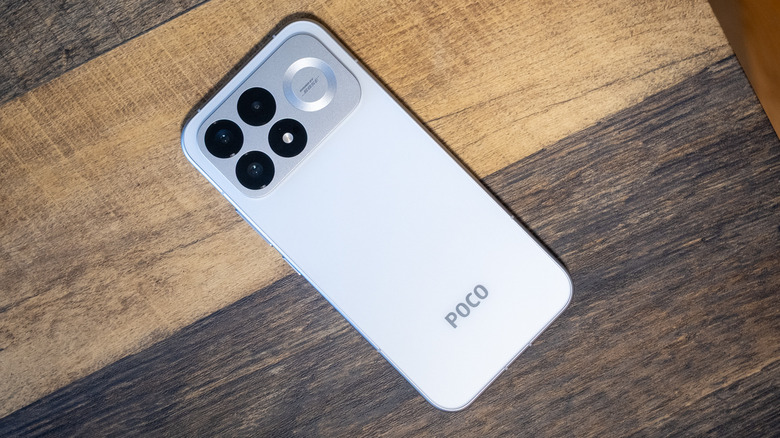
Poco has long offered some of the better phones for the price, but the new Poco F9 Pro might be one of its most aggressive releases to date. The device is built around performance, offering a Snapdragon 8 Elite Gen 5 V Series chipset, a 185Hz display, and a massive battery. Basically, it's built for gamers who want top performance without necessarily paying for an ultra-premium model or a dedicated "gaming phone" that might look a little too much like a gaming phone.
The device is kind of...familiar, though. The F9 Pro is actually a global rebrand of the Redmi K100 Pro — the Chinese-market phone Xiaomi has been selling for a while now — with a few tweaks for international buyers. It has a starting price of $699 for the base 12GB/256GB configuration, though early-bird pricing brought it down as low as $649 at launch.
That's not cheap, but it undercuts the mainstream flagships it's gunning for by a comfortable margin, and seemingly without too many compromises. I've been using the Poco F9 Pro to find out whether the flagship-killer label actually holds up.
Design

The Poco F9 Pro is a pretty large phone, but it's not as big as its sibling, the Poco F9 Ultra. It has a thickness of 8.8mm and weighs up to 206 grams, which is a little lighter than the Samsung Galaxy S26 Ultra, but in a much smaller body. Basically, it's dense — which in some ways helps make it feel more premium. It's not over-the-top, though, and you'll get used to the heft, even if it takes a few days.
Thankfully, the build quality is solid, too. You'll get an aluminum frame sandwiched between a Gorilla Glass 7i front and a glass-fiber reinforced plastic back. Sure, Gorilla Glass on the back too would have been nice, but I didn't really miss it, and the matte material that is there still felt great overall. On the back, it has an elongated rectangular camera island stretching across the top of the rear panel, clearly aimed at imitating the iPhone 17 Pro.
Overall, it looks good — I don't mind the large camera island, and because of the fact that it spans the back of the phone, there's no wobble when you tap the phone's screen while it's resting on a table. Also, I kind of like the dual-color look that the phone has going on with the camera island. The white color itself may not be all that unique, but the silver on white combo is pretty sleek and stylish. And, of course, it leaves plenty of room for that Bose logo.
The phone has an IP68 dust and water resistance rating, which is standard on phones in this price range, but still nice to see. It comes in three colors — white, black, and aurora green, which is the headline colorway but not the one I'm reviewing. I still like the look of the white model.
Much of the rest of the design of the phone is what you would expect. There's a power button and volume rocker on the right edge with a USB-C port on the bottom. The front-facing camera is a punch hole cut out. There are no additional buttons or controls, and that means no extra AI buttons, which I'm kind of glad not to see here anyway. If you have smaller hands or you're coming from a compact phone, expect an adjustment period, but if you're used to big phones, the Poco F9 Pro feels premium rather than unwieldy.
Display

The display is kind of the star of the show here — it's a pretty good one. The device has a 6.59-inch AMOLED panel with a refresh rate of up to 185Hz, which is much faster than the typical 120Hz panels that you'll get on most phones. Is the difference between 120Hz and 185Hz as dramatic as the jump from 60Hz to 120Hz, in terms of perception? No, but it's still noticeable, particularly while scrolling and in games that can actually push those frame rates. Really, the UI feels extremely smooth, and animations are very fluid.
The only limitation is on the other end of the spectrum — it's not an LTPO panel, which means that it can't range down to 1Hz. That doesn't impact how it looks at all — it just impacts how much energy it uses when content on the screen is static. It's perhaps less of an issue given how big the battery is in the first place though.
The rest of the panel is high-quality, too. It has a 2510 × 1156 resolution, which works out to about 419 pixels per inch, and it's plenty sharp enough to make text crisp and images detailed. Poco rates peak brightness at 4,500 nits, and up to 10,000 nits for HDR video. Both figures only hold at small window sizes — the 4,500-nit number is measured at a 25% window size and the 10,000-nit one at 1% — so don't expect to get huge full-screen brightness. Still, in direct sunlight, the phone stayed readable with no squinting, which is more than plenty of pricier phones manage. HDR10+, HDR Vivid, and Dolby Vision are all supported, so streaming apps look their best instead of falling back to SDR.
Performance

The Poco F9 Pro runs Qualcomm's Snapdragon 8 Elite Gen 5 V Series chipset, paired with 12GB of RAM and 256GB storage in the base configuration. In day-to-day use, the phone is more than fast enough for anything you can throw at it in 2026. Apps launch instantly, multitasking never stutters, and the combination of fast storage and the 185Hz display makes everything feel immediate.
As mentioned, the device is targeted at gamers, at least somewhat. The device can easily handle more demanding games, though I did find that the phone could heat up pretty dramatically. That's really only an issue while playing more demanding games, though — it wasn't the case with more casual games or for productivity tasks.
The device performed very well in benchmarks, too. That's to be expected, and to be clear, the F9 Pro didn't perform quite as well as the F9 Ultra, which comes equipped with the higher-end Snapdragon 8 Elite Gen 5, and not the "V" variant. But it still managed Geekbench 6 scores of 3,411 in single-core testing and 10,347 in multi-core. That's solid all around, especially for a phone that costs $699.
Battery and charging

Perhaps one of the best things about the Poco F9 Pro is the battery. The F9 Pro packs a 6,330mAh silicon-carbon battery, which is a modest bump over the F8 Pro's 6,210mAh and far beyond the 4,500–5,500mAh cells in typical flagships that aren't silicon-carbon. In mixed use, the vast majority of users will easily get through a full day of use, and many will be able to stretch into a second day. This is another area where the phone doesn't perform quite as well as the Poco F9 Ultra, but the F9 Ultra is in another class when it comes to battery.
That said, the 185Hz display is a double-edged sword. If you do take full advantage of the high refresh rate and lock the display to maximum, you can expect to burn through battery quicker. On the other hand, if you set it lower, you won't get all the benefits of that super-smooth screen. Still, many won't need to worry about these settings at all. With the default settings active, I still found the battery life to be very good.
The charging speeds are impressive as well. The Poco F9 Pro supports 100W wired charging over USB-PD and Quick Charge 3+, and a full recharge took me a little over an hour, with a 30-minute top-up getting me to 75%. It also supports 50W wireless charging, though to charge that quickly wirelessly, you will need a compatible wireless charger. With a Xiaomi wireless charger, I was able to hit 44% in 30 minutes, which is solid overall.
Camera

Commonly, when it comes to high-performance, reasonably priced phones, the camera is one of the obvious compromises. The Poco F9 Pro, at least on paper, doesn't make those compromises. The primary camera has a 200-megapixel sensor with an f/1.7 aperture, OIS, and 2x in-sensor zoom. That's coupled with an 8-megapixel ultrawide camera and a 50-megapixel telephoto camera with 2.5x optical zoom. On the front, there's a 32-megapixel selfie camera. Compared to the Poco F8 Pro, this is a massive upgrade in main sensor resolution — 50 megapixels to 200. That said, the F8 Pro also had a 50-megapixel 2.5x telephoto.
In good light, the main camera delivers. Daylight shots show excellent detail and robust dynamic range, with highlights and shadows handled well by the HDR processing. Colors are slightly saturated, in typical Xiaomi fashion, but not to the point of looking artificial. The 2x in-sensor zoom comes in handy — it's similar to Apple's "optical quality" zoom in that it avoids digital zoom by cropping into the middle of that enormous sensor to deliver sharp mid-zoom shots.
Low-light performance is acceptable but not incredible. The large sensor and OIS keep most night shots reasonably clean, and Night mode brightens scenes effectively. But in very dark environments, noise creeps in, and the noise reduction gets aggressive enough to introduce a noticeable softness. It's a good low-light camera for the price, but there are better ones.
There are clear strengths and weaknesses when it comes to the other cameras, though. The telephoto is the strength. The 50-megapixel sensor and 2.5x optical zoom produce detailed shots at mid-range distances. Details are strong, and while they fall away when digital zoom is in the mix, it's not more than other phones in this price range. You can push past the 2.5x zoom up to around 10x before the issues are truly noticeable.
The 8-megapixel ultrawide camera is the weak link. It's serviceable for casual landscape and group shots in daylight, but edge softness and distortion become obvious at night, and the low resolution limits how much you can crop. Against the higher-resolution ultrawide cameras on Apple, Google, and Samsung flagships, it's clearly outclassed. Given that the main and telephoto cameras are this good, the ultrawide feels like the one place Poco visibly cut a corner.
The broader point, however, is that while there are some cut corners related to the camera, it could be worse. Much of the hardware is ambitious — the 200-megapixel main camera is particularly good. Shot-to-shot consistency across lighting conditions isn't quite on par with some other phones, and the software occasionally makes odd choices in tricky scenes. If camera output is your top priority, the mainstream flagships still win. If it's second or third on your list, the F9 Pro is more than good enough.
Software

The Poco F9 Pro runs Android 16 with Xiaomi's HyperOS 3 on top. HyperOS has come a long way from the MIUI days, and at this point, it's generally easy to navigate and clean enough. You'll find advanced game modes with frame rate monitoring, granular refresh rate controls that let you decide exactly how the 185Hz panel behaves, and AI-driven performance optimization working in the background. It's a feature-dense Android skin, and some of that density tips into clutter, but it's not over the top.
There is some bloat, though. Apps like Amazon Music, AliExpress, and Netflix come pre-installed, though, thankfully, they can be removed. The real software question is longevity. The likes of Google and Samsung now promise 5–7 years of Android and security updates. Poco has improved here — the F9 Pro is promised to get up to four major Android version updates. But that still trails the commitments from rivals, and the brand's track record on delivering updates on time is mixed at best. If you plan to keep your phone for five years, expect the hardware to still be working fine, but don't count on being on the newest version of Android at the end of it.
Conclusions

The Poco F9 Pro delivers on the flagship-killer premise more convincingly than most phones in this price range. It beats plenty of far more expensive phones on raw performance and has features that you won't find elsewhere, like the 185Hz refresh rate. There are compromises, like the ultrawide camera, but for many, those compromises won't be dealbreakers.
On raw CPU and GPU performance, the F9 Pro competes directly with the Galaxy S26 Ultra, iPhone 17 Pro, and Pixel 11 Pro — and wins on price against all three. That said each of those alternatives offers better camera software and guaranteed multi-year updates.
In the value-flagship space, OnePlus and Realme both offer capable alternatives with high-refresh displays and big batteries, but not many are as full-featured as the F9 Pro. Because of that, if you're looking for a premium-feeling, reliable phone at a reasonable price, the Poco F9 Pro is easily worth considering.