

This Concept Robot Sees Through Touch — Here's The Unexpected Animal That Inspired It
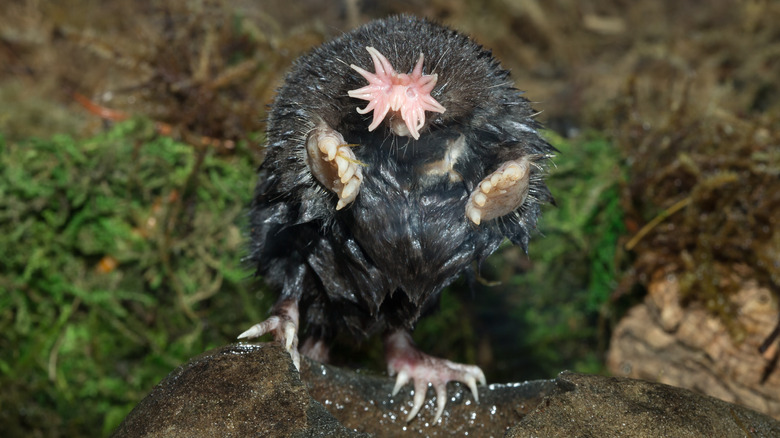
Humans are incredibly reliant on sight to understand the world around them. Navigating the human world without the power of sight is immensely challenging, which is why ocular implants and other vision-restoring technologies are such a vital area of research and development. Our prioritization of vision constrains us in many ways, and one unexpected setback comes in the field of robotics. Engineers consistently design robots with an emphasis on computer vision, processing their environment through images, but those robots in turn suffer from the same sensory limitations we humans do. Now, a team of roboticists at the University of Southern Denmark have come up with a concept that doesn't use sight at all, and it's inspired by nature's adorably weird master of touch: the star-nosed mole.
Star-nosed moles have a complex sensory system that makes them extremely sensitive to slight variations in touch, like the way our eyes perceive changes in light, only much more sensitive than that. The University of Southern Denmark robotics team proposes using 3D printing and silicon molding to create a prototype mechanoreceptor modeled on the sensory appendages of the star-nosed mole's namesake feature. Just like the robots at IFA 2026, this is only a concept at this point, and has yet to make a real debut, but assuming it eventually does, this could mark the beginning of a new chapter in robotics with a much broader approach to the senses. With that in mind, it's worth taking a deeper dive into the weird little critter that inspired this project.
Understanding the bizarreness of the star-nosed mole
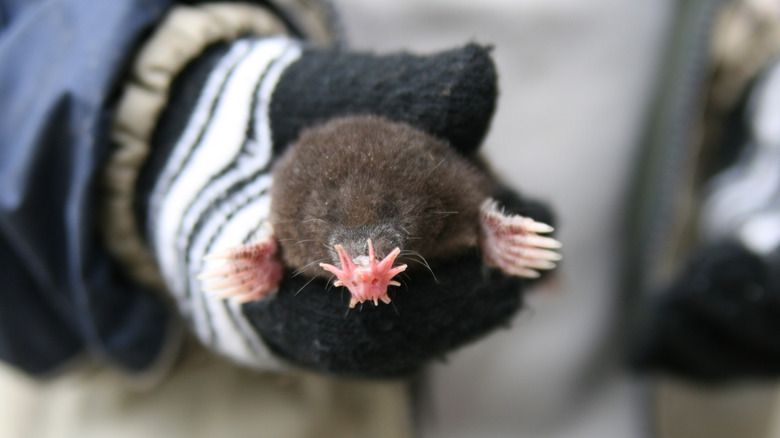
Star-nosed moles are widely believed to have the most precise sense of touch of any mammal, which is why there is no better animal to take inspiration from when designing a touch-oriented robot. The "star" of their nose is actually a cluster of 22 tentacle-like "rays" that move around in a blur, capable of touching up to 12 different objects per second. The moles use this to find food, as they have incredibly fast metabolisms and can eat as much as 15% of their body weight in just 10 minutes. They are almost eternally on the hunt for foods like earthworms, with their starry noses doing most of the searching.
Each ray of the mole's nose is made up of microscopic sensory organs called Eimer's organs, named for the 19th century biologist Theodor Eimer, who first discovered them on European moles. So, star-nosed moles aren't the only ones with these special touch organs, and they likely evolved from other moles that had less complex noses. The star-nosed moles we know possess around 25,000 Eimer's organs per nose. This totals to approximately 100,000 nerve endings in the star-nosed mole's nose. Compare that to human hands, which have just 17,000 nerve endings.
How Eimer's organ inspired a robot
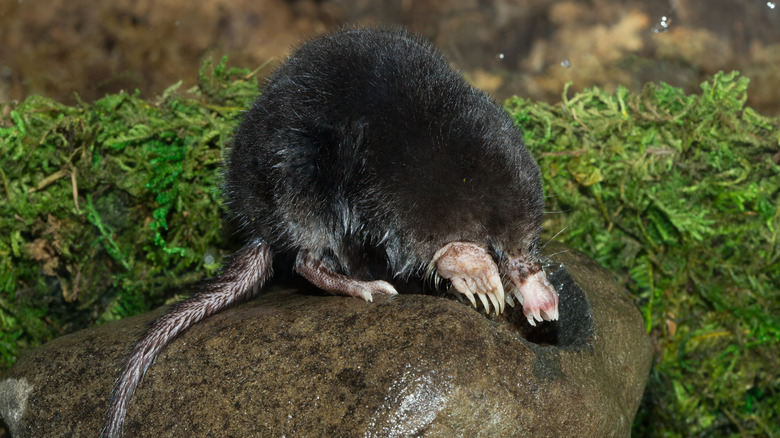
The concept robot proposed by the roboticists at the University of Southern Denmark takes inspiration from Eimer's organ specifically. The organ is made up of three main sensory receptors. At the base of the Eimer's organ, there is a nerve ending that registers very basic touch information, like the locations of obstacles or the presence of vibrations from subterranean prey. The second sensory receptor is called a Merkel cell, which is attached to a different nerve, and transmits slightly more complex information about the shape of objects through sustained contact with the rays of the nose. The third, and most complex sensory receptor is unique to moles alone. It contains a dense cluster of nerve endings directly below the skin's surface. This incredibly sensitive feature is the key that allows star-nosed moles to sense microscopic textures.
The University of Southern Denmark research team came up with an innovative and surprisingly simple approach to replicating the function of Eimer's organs. They designed a flexible, fluid-filled tube with pressure sensors on either end. When the flexible cover encounters any pressure from exterior forces, it displaces the fluid inside the tube. The pressure sensors at either end of the tube register this displacement, which triggers a sense of touch. Obviously, this is nowhere near as complex as the touch of a star-nosed mole, but it's a first step towards a new approach in robotics. It turns out the best inspiration for robots just might be in nature.