

How Long Do Owners Say Google Nest Cameras Typically Last?
We may receive a commission on purchases made from links.
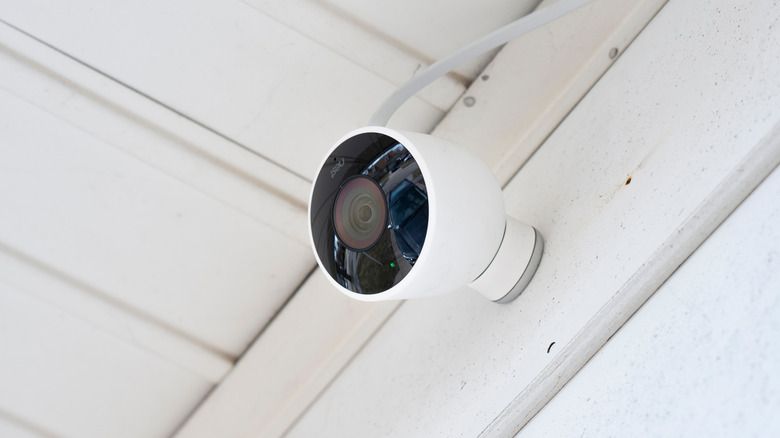
Google's Nest line of products is generally solid, and the same is true of the well-reviewed Google Nest Cam. Packed with features and easy to set up, if you're in the Google Home ecosystem, all versions of this camera are a no-brainer. However, a piece of tech can receive rave reviews but still fall apart after a few years, so the real question is: how long should a Google Nest camera last?
Good news. Just like video doorbells can last five years or longer, Nest cameras seem to last about the same. According to many online users, Google's cameras can last anywhere from four to five years. Granted, there's some nuance to the whole lifespan, as you can find owners who claim their cameras looked brand-new after five to six years (even seven in some cases), while others complain about theirs dying after three. Horror stories and tales of indestructible smart cameras are both extremes you should take with a grain of salt. Unhappy customers are simply more likely to raise pitchforks in Reddit threads, while those with bulletproof cameras will defend the product using nothing but their own experience.
Still, getting four to five years isn't a bad average. This is especially true when you consider that the Google Nest camera is relatively cheap. Getting a few years out of a $170 piece of equipment (one exposed to the elements, mind you) is solid with a capital S, right?
What are common failures on Google Nest cameras?
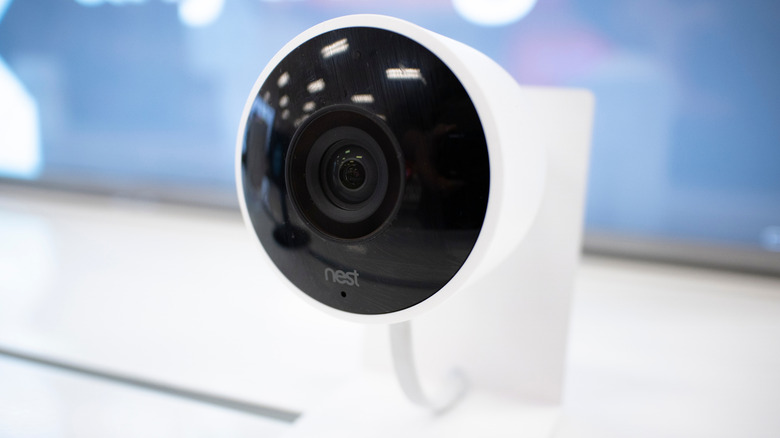
Though online complaints don't mean your camera will bite the dust in the same way, they're still worth looking at to see whether there's a pattern in these early failures. For starters, a few people say their devices stopped working randomly. In some cases, that surprise death came with an even more surprising resurrection, when the camera started working again. Those particular failures, unfortunately, remain unexplained.
A common pain point (at least with the powered cameras) seems to be the power cord itself. Plenty of unlucky owners complain about the outer layer of the power cable disintegrating. While the damage looks suspiciously like a rodent made the tasty insulation rubber its treat, it's more likely to be UV damage. Apparently, even though it's an outdoor camera, the manufacturer clearly didn't use a UV-rated cable; evidence of that could be that Google replaced the camera under warranty for one user who had this happen.
Other than a bunch of out-of-the-blue failures and disintegrating power cables, there aren't many glaring issues. Some complain about the battery-powered cameras losing charge after a few years, but that's not that uncommon (unless it dies after 18 months, as it did for one Redditor). Battery-powered devices, unfortunately, have a finite lifespan, and there isn't much you can do about it, except opt for a wired model.
Can a Nest camera be repaired?
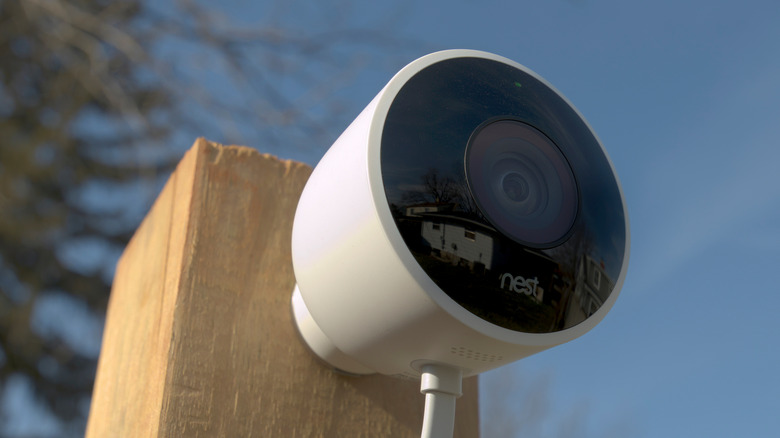
You can fix most common issues, including connectivity errors and glitches, by restarting the camera. For wired cameras, unplug the power adapter, wait about 10 seconds, then plug it back in. Battery-powered models (including the type with the floodlight) are a bit different, but the process is just as simple: plug it in, hold the restart button on the back of the unit for five seconds, and you're set.
What about the disintegrating power cable that the users complain about? If the cable itself is fine but the coating has fallen apart, users recommend taping it with heat shrink tubing, which, believe it or not, is UV-resistant. If the cable is toast, you can order a replacement from Amazon for about $30, so no big deal if you're skilled with a soldering iron.
Battery failures, on the other hand, are very unfortunate for one reason: the battery isn't replaceable. While there is a detailed iFixit guide that makes it seem like a simple operation, it doesn't mention that doing so ruins the factory weather seal. In other words, if you make any unauthorized repairs, prepare for condensation to get inside the camera. It's perfectly reasonable not to be happy with this, which is why it's better to use the wired model and not worry about the battery. Alternatively, you can opt for something cheaper that you won't miss as much when it's gone. For instance, the Tapo C310 is considered one of the best outdoor security cameras, and it costs around $30.