

What Is GLONASS And Why Is It Missing From The Apple Watch Ultra 4?
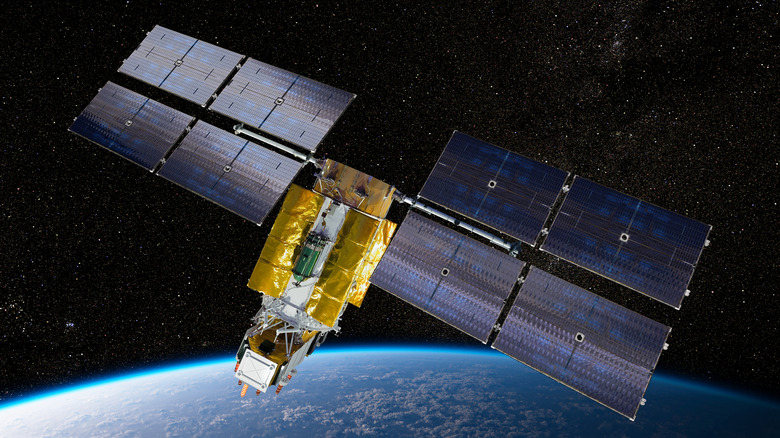
Modern mobile devices come with built-in hardware to help determine their location. However, this hardware needs access to a global navigation satellite system (GNSS) to work, which is where GPS (Global Positioning System) comes into play. GPS is a U.S.-run GNSS that mobile devices leverage for location tracking and navigation, disaster management, and environmental needs. However, it's hardly the only GNSS. As one of the major functions of these satellite systems is defense, all major global powers like to have their own to safeguard their interests. GLONASS, or Global'naya Navigatsionnaya Sputnikovaya Sistema, is a GNSS run by Russia.
It was developed back in the 1970s when Russia was still part of the Soviet Union, and the first satellite was launched in 1982. It's capable of covering the entire globe with its full constellation of 24 satellites. GLONASS transmits standard precision and high precision signals at L1 and L2 frequencies (with some of its newer satellites also using L3 frequencies), though most consumer-grade devices typically only tap into its L1 standard signal to pinpoint their location. Although it's not particularly better or worse than GPS, its performance in higher latitudes, such as areas in the Arctic and Siberia, is certainly one of its highlights. That said, using GLONASS alongside GPS in devices helps achieve better accuracy, especially in urban areas with lots of buildings to interfere with GNSS signals.
Although manufacturers initially didn't include support in mass-market devices, the situation changed when Russia announced a 25% import tax on any devices that only supported GPS and not GLONASS in 2010. Devices that supported both were allowed to enter duty-free, which led to quick GLONASS support, and Apple became one of the first big-name brands to add support, starting with the iPhone 4S.
Apple skips GLONASS in Watch Ultra 4
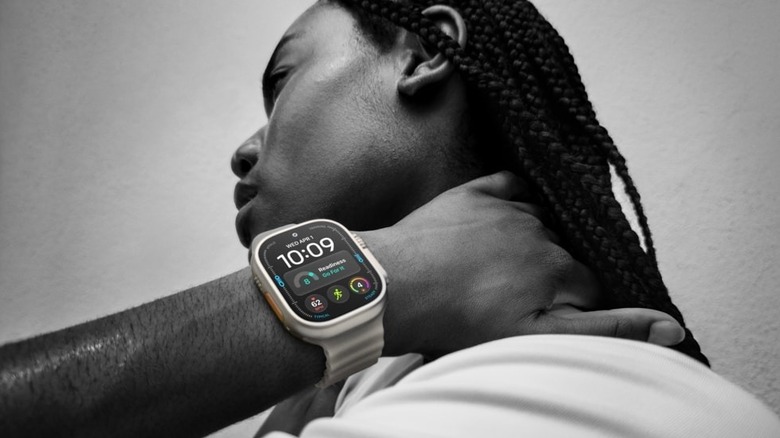
Since the iPhone 4S, Apple has added GLONASS support in all its mobile devices, including the various Apple Watch models. However, the Watch Ultra 4, one of the latest additions to the company's smartwatch lineup, surprisingly lacks GLONASS support despite supporting GPS and other GNSS systems like the EU's Galileo, Japan's QZSS, and China's BeiDou. Although Apple hasn't officially said anything about why GLONASS support is missing, MacRumors speculates that the dual GPS frequency support for the Ultra 4 makes using GLONASS less useful. As mentioned, most consumer-grade devices read only the single L1 frequency of the GLONASS signal, but a dual-frequency setup needs both frequencies for error correction. This means GLONASS's single L1 frequency is not very useful.
MacRumors adds that another possible reason for this is the use of a different signal architecture by GLONASS, which complicates calculating hardware timing delays and can cause positioning errors. The legacy GLONASS satellites rely on Frequency Division Multiple Access (FDMA) signal architecture in which each satellite has a different frequency channel, which causes different signal propagation delays for each satellite. As a result, hardware manufacturers have to calibrate for this delay for each satellite or risk causing positional errors. Most other GNSS systems use CDMA architecture with the same frequency for each satellite, with the same delay for each satellite. It is likely that Apple doesn't want to deal with all this, and the GLONASS L1 signal is anyway not very helpful in the Watch Ultra 4's dual-frequency setup. Moreover, as Apple doesn't currently sell its devices in Russia, it doesn't have to worry about the country's GLONASS requirement.