

Texas's New Plastic Roads Could Solve A Big Problem With Heatwaves
Texas may have found a novel way to make its roads more resistant to damage from blistering heat. Even better, the method could give discarded plastic a new purpose, reducing how much of it ends up in landfill while we continue to look for other, better ways to dispose of it. The process involves mixing plastic into asphalt to make the road material more flexible and heat-resistant, creating a mixture that's less likely to crack in extremely hot conditions.
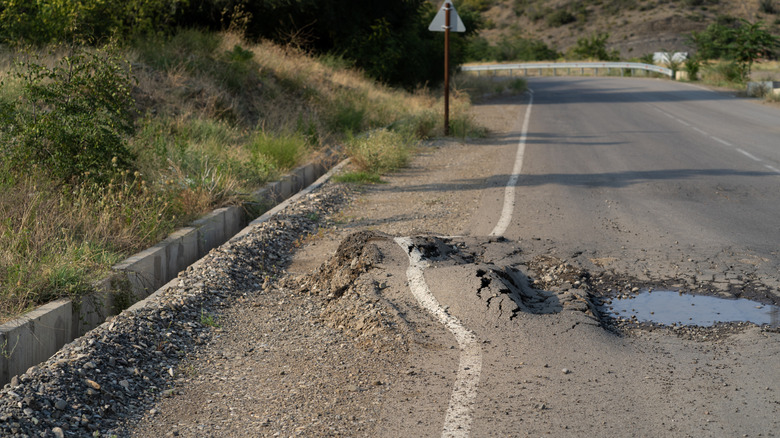
Texas needs a solution as roads face increasing risks from extreme summer heat. Temperatures can exceed 100 degrees Fahrenheit, while the asphalt can get even hotter. As temperatures rise, asphalt softens, making the surface of the road more vulnerable to the pounding of heavy vehicles. The stress can cause the softened road to deform, causing cracks and ruts. During the record-breaking heat of 2023, parts of Texas saw temperatures rise to 110 degrees Fahrenheit, with the extreme conditions causing roads to buckle and crack.
The idea to mix recycled plastic into asphalt is the work of researchers at the University of Texas in Arlington (UTA). The team is already testing the material in sections of UTA parking lots, and also on a stretch of road about a mile long in Rockwall, a city near Dallas, where it's using around 4.5 tons of recycled plastic. The process involves cleaning and shredding the plastic before mixing it into the asphalt at high temperatures. It then melts and bonds with the asphalt binder, a thick, sticky substance called bitumen. The processed plastic replaces around 8% to 10% of the bitumen, creating a mixture that helps the asphalt better withstand extreme heat and heavy traffic.
Plans for plastic roads
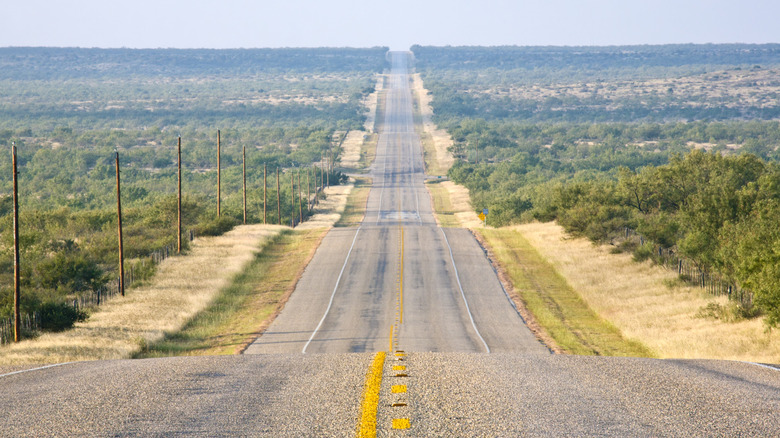
Promisingly, the test road in Rockwall has been holding together well, remaining damage free on days when temperatures exceeded 100 degrees Fahrenheit, but it's still too early to know how the material will perform over many years. UTA's team has also helped implement and evaluate a road made with asphalt and recycled plastic in Dhaka, Bangladesh. Built in 2023, the road has been exposed to hot temperatures and plenty of traffic. During a prolonged period of extreme heat in 2024, the road held up well, while other comparable roads suffered damage.
Given the promising results, the team at UTA wants to take its technology to more places. It's also testing different plastic blends to see if it can make the material even more durable, while at the same time assessing its cost and environmental impact. In the long term, it hopes to commercialize the material, and with that in mind has filed for a patent.
Using plastic that would otherwise end up in landfills shows that the potential benefits of the material extend well beyond just making roads tougher. UTA's method of replacing some bitumen with recycled plastic could also lower the demand for new petroleum-based materials. If the resulting roads stay in good shape for longer, it would also mean less frequent maintenance — and perhaps less need for road-repairing robots like the one being developed in the U.K. — potentially lowering costs. But as of now, these are potential benefits rather than certainties. The team also needs to know how the material performs over many years, and whether the economics make sense before recycled plastic starts being added to asphalt routinely.
Another country has more experience with plastic roads
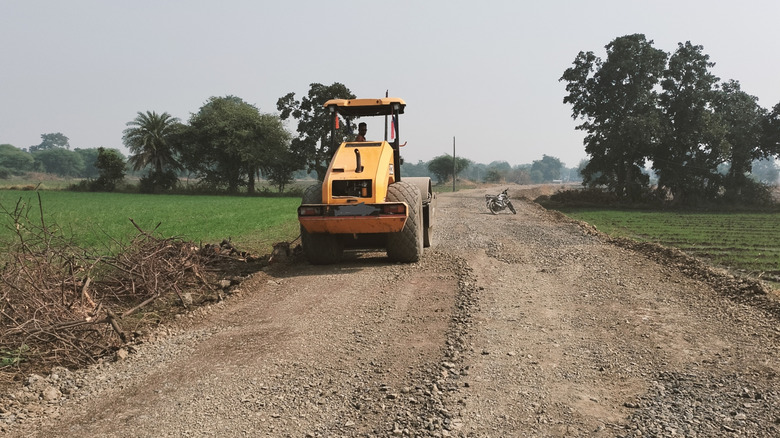
Texas and Bangladesh aren't the only places to experiment with plastic for road building. India, for example, has been using discarded plastic in road construction for more than two decades, although its approach differs from the one being tested in Texas. Rather than mixing melted plastic directly into the bitumen, India's dry process involves shredding the waste and heating it with stone aggregate, allowing the plastic to melt and coat the stones before the bitumen is added. The method has been used for roads across India, with the government reporting that 43,700 kilometers (about 27,000 miles) of roads using plastic-waste technology have been completed under its rural road program up to the summer of 2025.
There's also evidence that the roads can hold up well. A recent government-backed evaluation found plastic-modified roads suffered less cracking, potholing, and other damage compared to conventional roads, while maintenance could generally be delayed by around a year. But that doesn't mean the technology is proven everywhere. While India does have decades of experience using plastic in roads, researchers say there's a lack of long-term data documenting how they perform. Still, India's experience suggests that UTA could be onto something, offering a glimpse of what wider adoption might look like.