

What's The Strongest 3D Printer Filament?
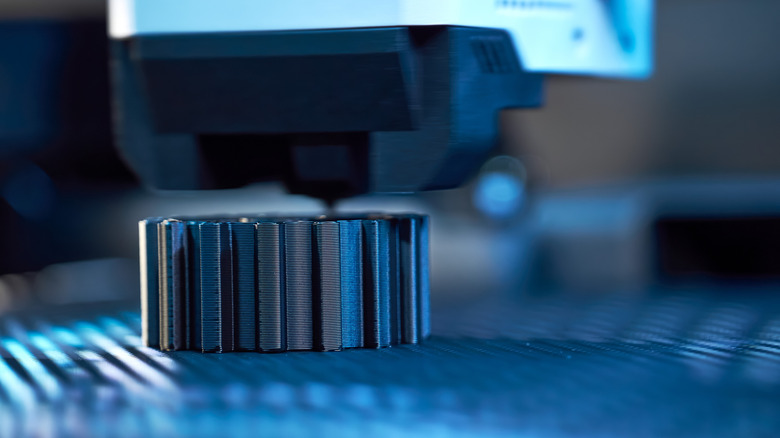
Anything you make with a 3D printer, from a figurine to a modular part, will be as strong as the filament you use. Use a weaker material with low tensile strength, and the piece will be relatively flimsy and/or fragile. Of course, that's okay depending on what you're creating, but if you need something tougher, it makes sense to spring for stronger filament materials. But what are they? Which 3D printer filament types can make the strongest pieces?
The short answer, based on tensile strength alone, is carbon fiber nylon (PA12 CF), a composite material, followed by polycarbonate (PC). But because tensile rating doesn't determine strength alone, and other factors matter, it makes sense to take a closer look. They may be the strongest, but that doesn't mean they're ideal for every job.
Carbon fiber nylon has a rated tensile strength of 70 megapascals (MPa) or about 10,152 pounds per square inch (PSI). It's an excellent choice for durable prints and pieces, as it benefits from nylon's resistant properties but has carbon fiber's light weight and toughness. However, because small pieces of carbon fiber are embedded in the filament and are abrasive, it can cause significant wear and tear on even modern printers. Moreover, while the material resists warping during printing and cooling, its stiffness also makes it brittle. So it's not ideal for pieces that need to be impact-resistant or that will be subject to vibrations and other notable applications. Carbon fiber nylon isn't very flexible either. You can really see that, even though it's so tough, Carbon fiber filament isn't the top choice for every job.
Polycarbonate is another strong choice for tough prints
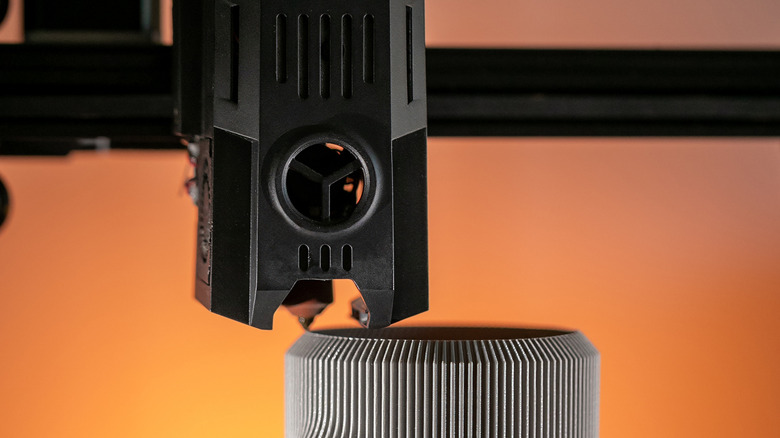
With a tensile strength of around 67 MPa (9,800 PSI), polycarbonate filament is a close second to the nylon composite. It also has a few properties that the composite doesn't. It's tough and durable and has high impact resistance. Both materials can withstand heat up to 300 degrees Fahrenheit, meaning they'll hold their shapes fairly well even at extreme temperatures. But that also means both, including polycarbonate, require higher printing temperatures. You'll need a printer capable of nozzle temperatures from 500 to 572 Fahrenheit, and heated bed temperatures between 176 and 230 Fahrenheit.
Polycarbonate's incredible strength and durability come from its slight flexibility, as it's much less brittle and has much better impact resistance than nylon. However, it's only available in a limited selection of colors (usually transparent, black, or white). The higher temperatures required nearly eliminate the formation of complex or highly detailed shapes and edges. It is ideal for practical parts and simple shapes, not for items with a lot of fine detail, like toys or figurines with complex elements. You'll also probably need some heavy-duty printer tools at your workstation to work with and shape the polycarbonate material after it's done drying.
Polycarbonate is a good choice for individual parts and mechanics, hinges, components, molds, housings, and multi-piece assembly projects. By comparison, Carbon fiber nylon can make similar modular parts, like camera mounts, spool rollers, latches, and pieces with less detail. Other unique 3D printer filaments exist, but none are as strong as carbon fiber or polycarbonate.
What do you turn to when you need more flexibility?
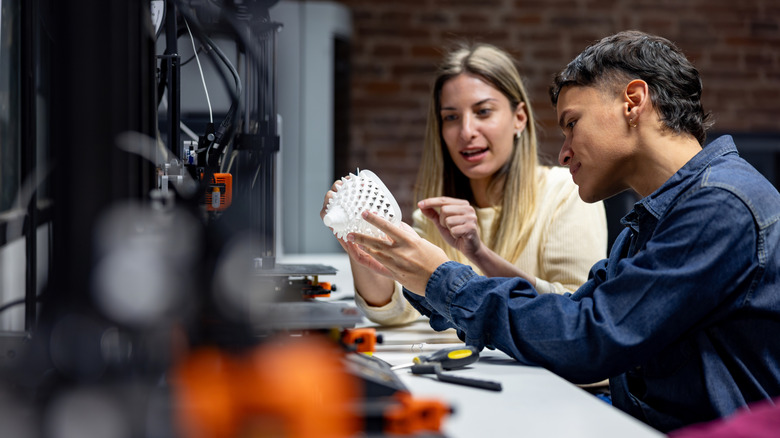
Strength is an interesting word to pin down when it comes to printing filaments, because it can mean many different things. Do you want the part to withstand physical pressure? Do you want it to resist heavy impacts or high temperatures? Or do you want it to withstand breakage? These questions refer to different types of strength: physical toughness versus flexibility. For extra flexibility, thermoplastic polyurethane (TPU) is the better choice.
It's tough in a different way, and because it's so flexible, it's not easy to break. It has a tensile strength between 20 and 100 MPa, but even at the high end of that range, the material isn't rigid or stiff, so it's not suitable for parts, pieces, or components where that property is integral. In addition, it doesn't require high temperatures to print or form, nor does it have any extreme development properties. You can use virtually any printer, but it will take longer to print because it forms at cooler temperatures and requires slower printing speeds. TPU is a good choice for apparel and shoes, accessories, cases, and other components like watch straps, cable ties, or small tools.
With materials ranging from carbon fiber nylon to TPU, understanding how to care for the filament will go a long way toward successful prints. Store it appropriately, use high-quality sources, and follow other tricks of the trade.