

How Long Do Owners Say 3D Printers Typically Last?
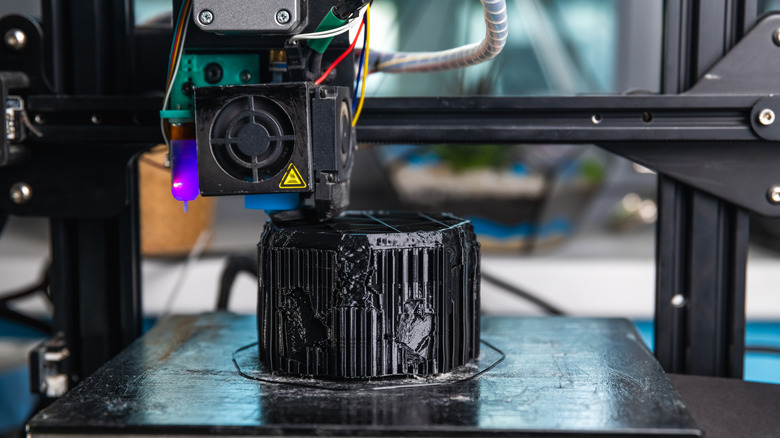
As they've become more commonplace in recent years, most hobbyists confirm that 3D printers have grown more reliable. Hardware advancements and the fact that the end results depend on the operator's skill aside, you can now even get plenty of mileage out of some affordable 3D printers available on the market. Lower-end Elegoo stuff, for instance, allows you to start making some impressive creations for as low as $220, which is an absolute plus for the entire community (the more the merrier, after all). While $220 is affordable, you don't want to be throwing money into the wind, no matter how little. So, what is the life expectancy of a 3D printer?
It's a tricky question. There are too many manufacturers to count and too many variables that may skew the figures. Still, users say that most printers will work (read, print) for at least 1,000 hours of use, including affordable ones, before you need to take your first TLC steps, such as replacing the nozzle. On the other hand, others claim that the "amortization period," when you'll have to replace parts, starts at between 1,500 and 3,000 hours. Good news, either way, as some report that they accumulated as many as 10,000 hours on their machines.
In terms of age, owners say that most printers can last between three and seven years. Many Redditors revealed they had 10-year-old 3D printers still working fine. Of course, some of those machines include expensive specimens like the Prusa Mk2S, but it seems that affordable printers are equally as robust. Case in point, plenty of users say that their Bambu Labs A1 (an entry-level device) worked fine for multiple years, with many going long past 1,000 hours.
What will you have to replace on a 3D printer?
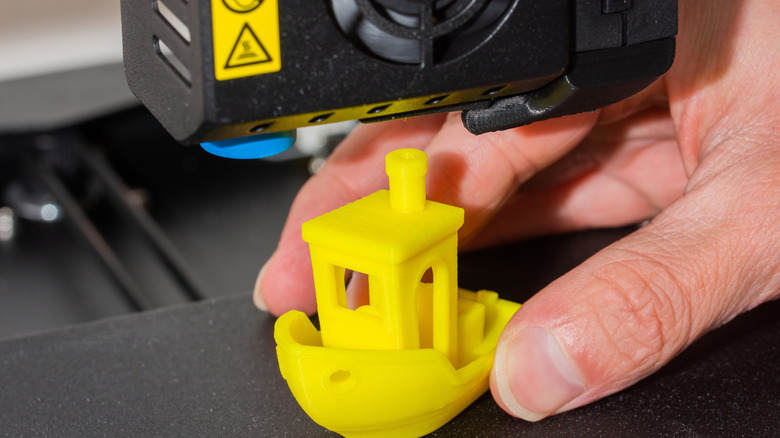
Take that Prusa Mk2S with 10,000 hours under its belt as an example. Most likely, it's still alive, but it did have work done, so to speak. Almost a Ship of Theseus, the owner claims they've replaced over five extruder carriages, multiple sets of ball bearings, and two PEI sheets. This is probably what you'll experience too if you stick to one machine.
Fortunately, as one Redditor points out, many machines are modular, so a decent number of people never see their printer kick the bucket because they replace the moving parts. Of course, the lifespan for individual parts will vary. For instance, you might have to replace the nozzles after a few months, while other "consumables" like belts can easily go for over a year. Community members say that you should frequently check the tension of the belts and tighten them, if needed, while also stressing that lubricating the axles is necessary to keep things operating properly. Other than that, bearings can wear out, and so can flex wires, controller chips, or a slew of other components that are for the most part replaceable.
All in all, it seems that the wider 3D community isn't worrying that much about the lifespan of individual machines. You may even end up acquiring a variety of printers, because that seems to be super common in the hobby. To paraphrase a wise enthusiast, there's a likely chance that you'll want a new machine before your old one dies. That is, unless you buy low-quality printers that users recommend you avoid like the plague, as those are more likely to fall apart after a few months. But if you go with a recommended brand, you're probably in the clear for the foreseeable future.