

Pebble Time 2 Review: Nerds Just Want To Have Fun
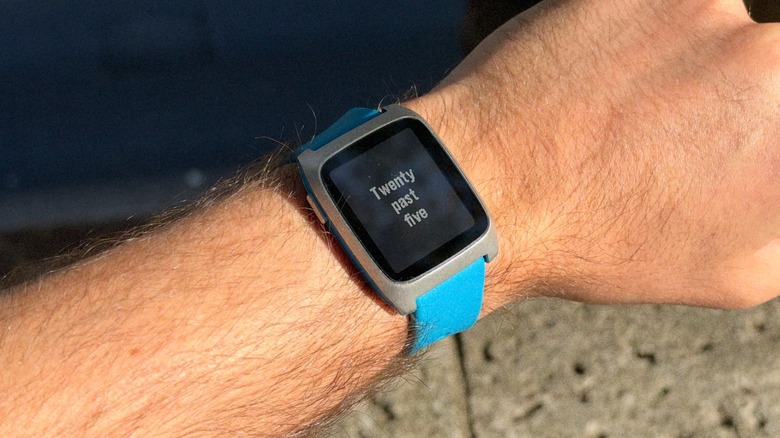
At CES 2026, we had a chance to talk to Eric Migicovsky, the CEO of the original Pebble, who now runs Core Devices. Migicovsky is responsible for the return of Pebble smartwatches, as well a brand new AI smart ring called Index 01. Earlier this year, we discussed this upcoming ring in addition to the Pebble Round 2 and Pebble Time 2 smartwatches. He described the new Pebbles as "really good at telling the time," as they're not looking to usurp the likes of the Apple Watch, Garmin Venu, or Pixel Watch.
Over the past month, we've been testing the Pebble Time 2 to see whether or not they can recapture the magic of the original Pebble from the mid-2010s. We also wanted to figure out if this wearable makes the right compromises between smart features and analog capabilities.
After getting to know Migicovsky a bit better and sharing with him the frustrations that came along with having an Apple Watch on my wrist constantly buzzing, dinging, and alerting me, I couldn't have been more excited than when IFA 2026 arrived and I decided to leave my Apple Watch at home and trade it out for the Pebble Time 2 as my daily watch in Berlin. No traditional analog watch, no Apple Watch Ultra 2: it would be me and Pebble Time 2 for the entire week — and no charger, because I refused to take Pebble's proprietary charger. It went well, and also taught me a few lessons.
Design and watch faces
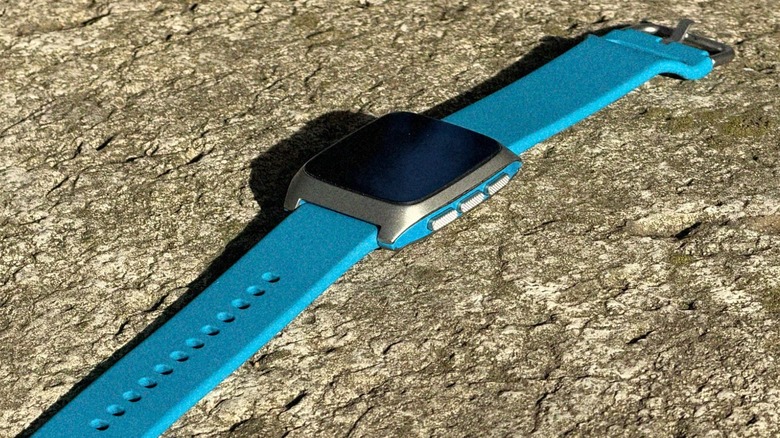
With a 1.5" 64-color e-paper always-on display, the Pebble Time 2 watch features a rectangular design that makes it look retro. It can be controlled by tapping on the touchscreen, but it also has four physical buttons that allow you to go back in a menu, scroll through the notification center and settings, and check your data. On the back, the watch features some basic health sensors to track your sleep and heart rate.
Available in black or silver, what makes the Pebble Time 2 shine is not its colorful silicone bands but the thousands of watch faces you can add to it. In fact, one of the highlights of the revived Pebble watches is the community developing creative watch faces. I immediately fell in love with an option that would only kind of tell me the time, showing "It's About 11" instead of 10:58, for instance. I thought it was cute and clever, and it also served as a fun conversation starter.
Because Apple only gives users access to a limited number of watch faces, I started wearing analog watches, such as Mr Jones Watches' A perfectly useless afternoon. The hour hand has been replaced by someone chilling in a pool. Meanwhile, a duck floats around the perimeter as the minute hand. This sense of play is similarly present on the Pebble Time 2.
Features
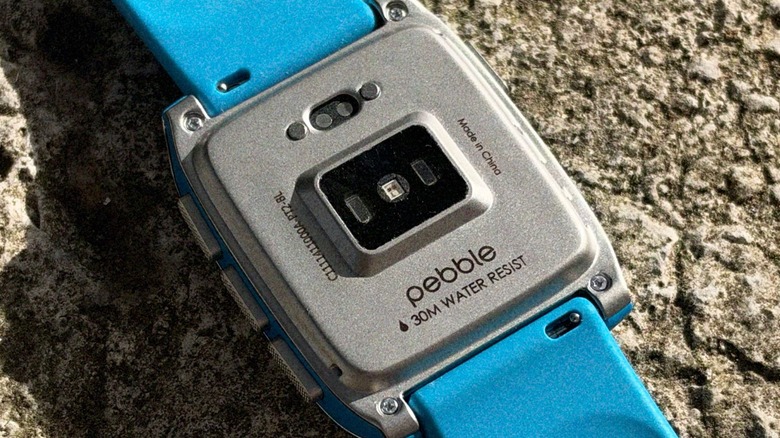
While the Pebble Time 2 is technically a smartwatch, it isn't nearly as full of features as any Apple Watch or Galaxy Watch. That said, it is indeed smart, capable of showing notifications from your phone, counting your steps, measuring your heart rate, and recording every time you go on a walk. You can check your calendar, set a timer, control your music, and use the Timeline feature to see how your day is shaping up. While the watch has plenty of tools at its disposable, the e-paper display helps remind you that you shouldn't be glued to your watch, no matter how appealing your watch face is or how full your calendar might be.
Core Devices is also very clear about what Pebble Time 2 is not: it's not a fitness wearable and it doesn't try to do everything, as it can't work with digital wallets or AI assistants. In a similar vein, when I wore the watch while sleeping, it would only give me basic heart rate readings, meaning I wasn't getting all the data I'd come to expect from wearing an Apple Watch to sleep. As such, there was no compelling reason to sleep with the watch on.
One of my favorite features of the Pebble Time 2 was Quiet Time, which could be activated by long-pressing the single button on the left side of the watch. After all, whenever my iPhone was too close, I would get the notification there and a second later on the Pebble Time 2, which made me anxious in advance. I also loved the little mouse animation which showed that my smartwatch would not buzz every five seconds with a new message.
Battery life
Core Devices promises around 21 days of battery life before charging the device becomes necessary. If you have a less dynamic watch face or you turn on the Battery Saver mode, the smartwatch can last over a month without charging. For someone used to an Apple Watch, this is an unthinkable amount of time. I was already using the Pebble Time 2 before IFA, put it on a charger just to be safe, and after using it every day for a week in Berlin, the battery was still over 70% when I got home.
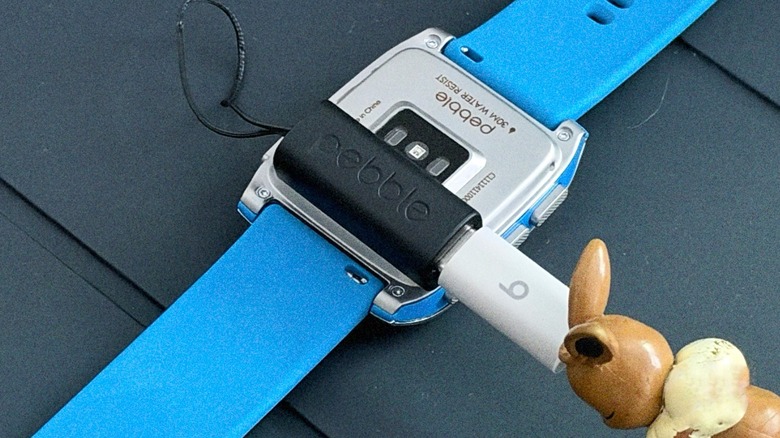
The only downside, as is the case with most smartwatches, is that it relies on a proprietary charger. The Pebble Time 2 comes with a tiny adapter that connects to a USB-C port. I had a bit of a hard time getting it to charge all the way to 100% because it would eventually disconnect due to the way it was sitting on the table or moving slightly on its own.
Since the magnets aren't very strong, charging the watch wasn't nearly as easy as I expected it to be. Beyond that, since the adapter is tiny and you rarely need to use it, it feels like someone (me) could easily lose it around the house (I found it after it went missing for a day).
Who is the Pebble Time 2 for?
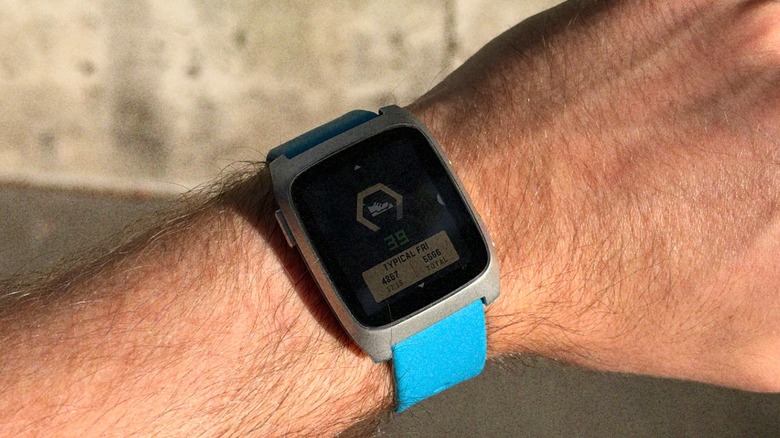
Unlike an Apple Watch review, which focuses heavily on all the features and technology, the Pebble Time 2 has a different goal in mind. This watch isn't going to win anyone over with advanced sensors, a flashy design, or access to countless apps. As a matter of fact — and Migicovsky emphasizes this — the Pebble watches are made for those who already know the brand, know what to expect from its products, and don't necessarily want a tiny computer on their wrists at all times.
However, if you weren't around for the Pebble frenzy of the early 2010s, how do you know if the new Pebble is right for you? Well, you should know that this smartwatch comes with several shortcomings, especially if you're an iPhone user. The Pebble Time 2 is already (intentionally) limited compared to most of its competition, and since Apple doesn't offer the best integration between the iPhone and third-party watches, the experience becomes even more limited.
The Pebble Time 2 sits in a weird position where it's the perfect smartwatch for those who want a retro digital watch with a modern twist, which is connecting to your phone and offering some health sensors. In the end, the Pebble Time 2 isn't going to be for everybody, as I realized it's not for me. I'd rather go full analog or just have an Apple Watch on, personally.
Conclusions
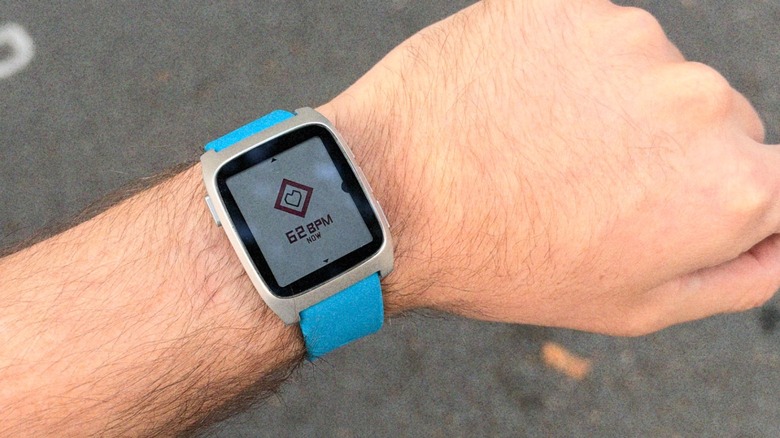
Now available for $225 on rePebble.com, the Pebble Time 2 is an ode to the good old days of Pebble. While Eric is trying to update his iconic brand for this decade, Pebble still feels like an exclusive club, full of passionate people who have been eagerly waiting for new models. If you're a member of that club, or if you just want to escape the incessant notifications and data gathering of more advanced wearables, there's plenty to like about the new Pebble.
For me — someone who's trying to rely less on an Apple Watch after work hours or gym sessions — I found a healthier balance by simply not using a watch or opting for an analog watch instead. The Pebble Time 2 sat in an awkward space in between. It didn't quite allow me to fully disconnect, and it also didn't offer all the capabilities I want from a smartwatch.
While I'm not the target audience, Pebble customers know what to expect, and they're the ones this revival is for in the first place. However, if you want a true smartwatch, the answer is not the Pebble Time 2. But not everyone needs a fully-featured smartwatch.