

Are Right Angled USB-C Chargers Better Than Straight Ones?
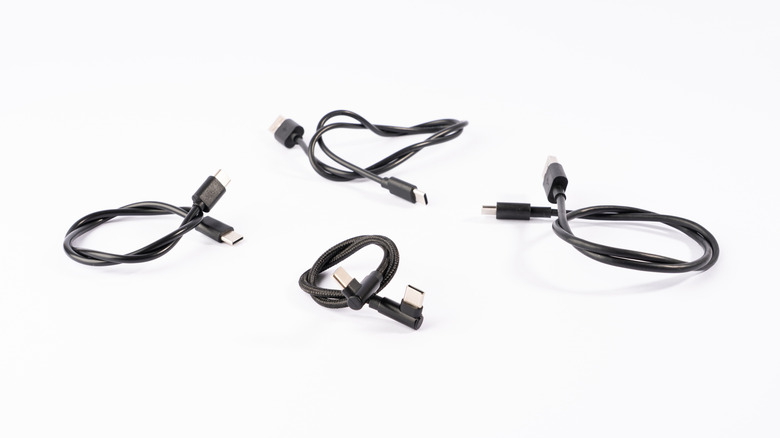
Stretching might be good for you before and after a workout, but you wouldn't want to strain an electrical wire, much less a USB-C charging cable. Sure, you can bend a new cable out of shape and expect it to work just as well as it did prior to being wrung out. Ideally, though, you'd want to minimize that kind of behavior where you can help it. Barring that, you'd hope your cable is constructed to withstand the sharp edges you might not be aware of.
That said, you do have quite a bit of choice when it comes to USB-C cables. They range in length from 6 inches to 6 feet, and they come in all sorts of colors like red, purple, orange, or blue. They also support USB 2.0 to USB 4, which is great because dealing with USB versioning is a painful annoyance.
Even the cable connectors come in different flavors. You can choose cables with a 90-degree offset connector on either end, for example, or convert your existing ones with adapter stubs. There are even cables with swiveling connector heads for full flexibility.
But are these sorts of accessories worth your money? Well, we do have confidence in right-angle adapters and cables with embedded 90-degree connectors as well-known brands like Cable Matters and Ugreen make them and are highly-rated. Their usefulness, however, comes down to your situation, and what spatial constraints you face either in a fixed setting or where moving parts are involved.
The best
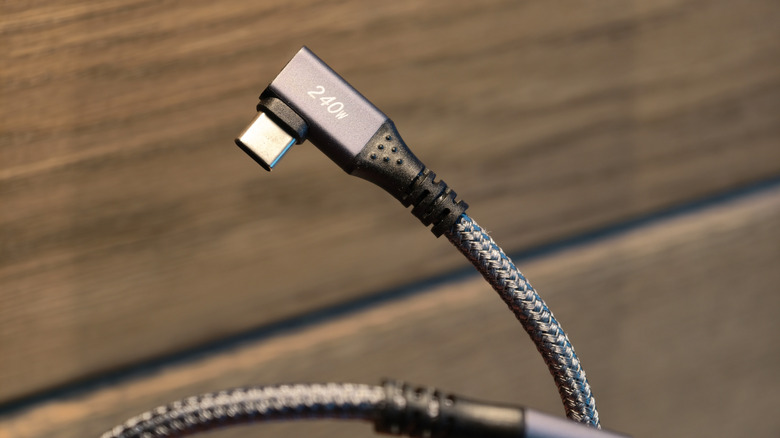
Right-angle adapters can make the biggest impact in situations where the cable sticking out would otherwise suffer from the stress of being bumped or pulled in any direction. The cabling nearest to the connector heads already experience a lot of stress when jacking into a port, or when the cord moves around. Moreover, they can be fragile because the individual power, data, and ground lines come are soldered right to the edge of the tiny circuit board where the leads running to the USB-C connector are. So, if a right-angle adapter or connector head can help relieve that, especially in places where the connector head would otherwise bump up against a wall or stick out so far it's begging to be tripped over. Ultimately, less stress on the components means you are effectively making your USB-C cable last longer.
I personally use a 6-inch USB-C cable with its 90-degree connector plugged into a camera mounted on a DJI RS Mini series handheld gimbal. The angled head helps keep the cable and the data connection it's carrying out of the way of the lens while also letting me toggle recording and zoom from my gimbal's touchscreen. The cable runs pretty straight from both heads, so the sensitive bits of wire aren't being tugged too harshly, even when the gimbal head pans and tilts wildly. You might find yourself in a similar situation with your gear where 90-degree USB-C connectors can solve a problem.