

How A Man Tricked Google Maps Into Naming A Road After Him
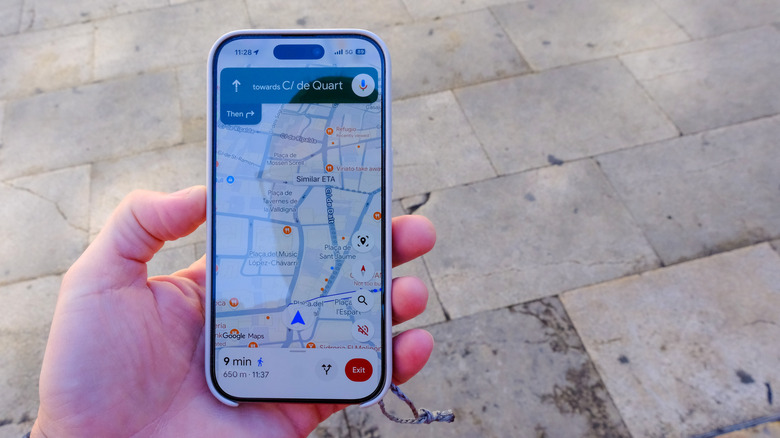
While Google Maps is generally a valid source of information, some hiccups might occasionally slip past busy moderators. Case in point: When a man in Beijing fooled everyone from government officials to navigation apps and got his name listed as a street. In 2013, Ge Yulu, a Beijing-based artist, discovered a street in the Chaoyang district that lacked a street sign due to a mix-up during rezoning, so he had the idea to put up a sign naming the street Ge Yu Lu, which made sense to locals since "Lu" — part of his name — also doubles for the word "road" in Chinese.
The guerilla art was so effective that, by 2015, the new name ended up in official records, and shortly after, all the relevant map apps, including Google Maps. Eventually, both the sign and map listings were corrected. This prank may not be as crazy as when police in Spain found evidence in a murder case on Google Maps, but, regardless, Ge Yulu got to experience what many budding artists can only dream of: having a street named after them, even if it was for just a while. Although it's impossible to point to an exact reason why all the map apps failed to catch the incorrect street name, it seems that there are several ways to add or rename elements on a mapping app.
How did this mistake slip through the cracks?
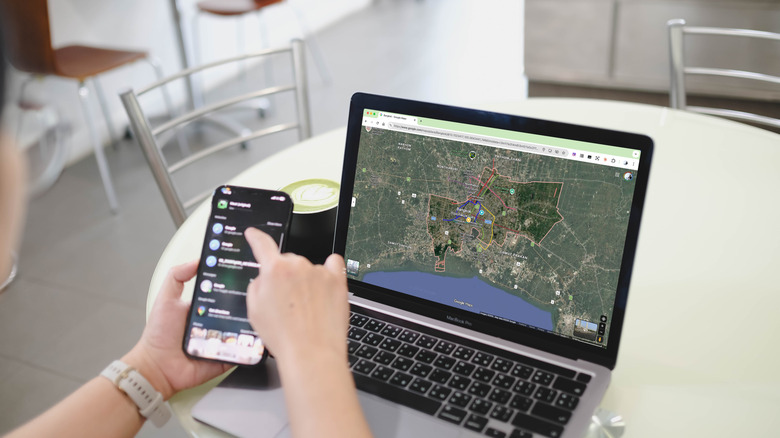
Much like the Lake Ontario/Lake America drama, which resulted in a new navigation app dethroning Google Maps, governments are able to make name changes. Interestingly, though, it's also really easy for users to contribute to maps by tapping or clicking on the plus icon at the bottom of the page. From there, you can edit incorrect road names or even add and draw a road that Google may have missed. Of course, the criteria for self edits getting published is generally strict, and Google uses human moderators and machine learning algorithms to bust incorrect or outright fake content.
In this case, though, Ge Yulu's trick was first recorded by Baidu (Google's Chinese counterpart), which uses machines and humans to verify street naming info. Since the street sign looked official, it was likely very hard to catch the mistake. And once the street name was recorded by Baidu Maps, it eventually made its way to other mapping apps, including Apple Maps, Google Maps, and AutoNavi. By 2017, signs for Ge Yu Lu were removed, but Beijing's street name slip-up might be one of the more interesting footnotes in Google Maps history, including the time a user accidently discovered a meteorite crater.