

How Long Does It Take For A Smart AC System To Pay For Itself?

We may receive a commission on purchases made from links.
It's not unreasonable to consider your return on investment for expensive products that promise to give you some monetary benefit. Smart air conditioner (AC) systems are a solid example, as manufacturers claim they'll help reduce cooling and energy costs through efficient climate control system management. But dollar for dollar, how long does it actually take for these systems to pay off, at least in terms of recouping initial costs?
As it turns out, not very long. But it also depends on quite a few things. When calculating average annual savings, it takes about one to two years for you to recoup the full costs of a smart thermostat, depending on the price, but that's also without any additional installation costs or fees. If you install the thermostat yourself, then the cost of the device will likely be earned back within that time frame. If you need substantial additional hardware or accessories, the initial costs will be much higher and take longer to recoup, likely tacking on a few more years.
Energy Star and the Environmental Protection Agency estimate smart thermostat savings at 8% of heating and cooling annually, which works out to about $50 per year. However, that number can vary by system. Google estimates savings of 12% to 15% for Nest devices, which would stretch your savings to $130 to $150 per year. Ecobee estimates its users can save 26% on average (over $200 per year). Given a Nest Learning Thermostat 4th Gen costs $280 at full price, and an ecobee Smart Thermostat Premium kit is $260, it would take a couple of years to recoup those costs. Since smart thermostats can last between seven and ten years, you would also more than double your investment at those prices over the life of the device.
Not so fast ... there are a lot of variables

Those costs and savings apply to the smart thermostat alone, and only in the case that you already have an AC cooling or heating system. Overall costs vary based on the smart thermostat you choose, your local power rates, and additional fees or expenses. For example, if you purchase the smart thermostat and have a professional install it, that will add significantly to the overall cost. And certainly, if you're installing a new AC system, including a compressor and air handler, that's going to balloon the costs, as well.
A smart HVAC system doesn't necessarily require a whole new heating and cooling setup. You need the smart thermostat and energy-efficient hardware, whether that's an air conditioner or heat pump. If your existing hardware isn't energy-efficient, or if it's failing, that's when you might consider a full replacement. A high-efficiency HVAC system can cost $20,000 or more, on average. It can be more expensive for high-end hardware and depending on where you live. Meanwhile, a whole-home heat pump can cost around $5,000 for the unit alone, and $10,000 to more than $20,000 for the entire system, new ductwork included.
There's also the point that smart AC systems and smart thermostats bring a host of additional benefits that can improve your life. Energy savings, personalized automations, away or vacation modes for when you're not home, and remote access are a handful of those advantages. Convenience and peace of mind are two things you can't really put an accurate price on. There are other devices you can pair with an air conditioner or cooling system to improve efficiency, as well, but of course, they also add to the overall price.
You won't actually get any money back in your pocket
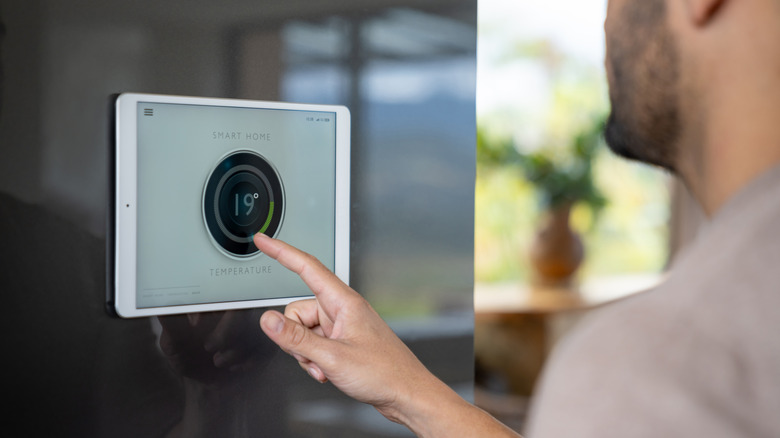
It's important to talk about the savings for a smart AC system or smart thermostat installation. When discussing where they actually save you money, it's worth noting you usually won't really get anything back in your pocket through rebates or incentive programs. Smart AC and climate systems merely work more efficiently than traditional setups when consuming energy. They do this by both reducing the amount of power required to operate and better utilizing the power they do consume through smarter, more automated applications.
A Nest learning thermostat, for instance, learns your habits over time and better understands what temperatures you prefer. It then adjusts schedules on the fly to reduce energy demand without making things uncomfortable for you and your family. It might set the temperature limit a half a degree higher to save a few cents one day, and over the long term that saved money adds up because it's running your cooling or heating system less often.
It's also not a guaranteed benefit. It depends on how you're using the smart thermostat and whether you have the specialized modes enabled. If you're using the thermostat by setting temperatures manually, you'll only really benefit from the energy-efficient hardware versus smarter integrated modes. That doesn't mean the new equipment isn't worth it, just that your mileage may vary, as it does with most technologies of this caliber.