

Avengers Endgame: Encore's New Ending And Post-Credits Scenes (Full Descriptions)
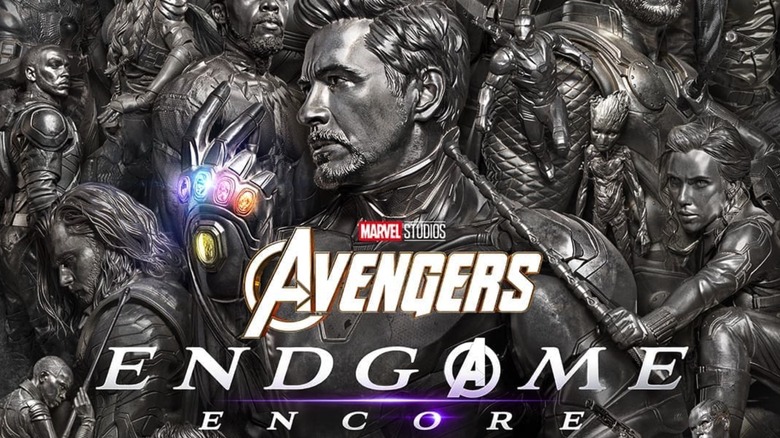
Article includes spoilers from "Avengers Endgame: Encore"
The first "Avengers: Doomsday" trailer disclosed some of the surprises Marvel has in store for the next installment in the "Avengers" franchise, including a glimpse of Robert Downey Jr.'s Doctor Doom, the next big villain the world's mightiest heroes will face after defeating Thanos (Josh Brolin) in "Avengers: Endgame." The reveals don't stop with the trailer, as the re-release scheduled to hit theaters on September 25, titled "Avengers Endgame: Encore," features a new ending and several post-credits scenes that connect directly to "Doomsday."
Fans who want to experience "Endgame: Encore" fresh in theaters, bookmark this article for later. That said, we discuss how the movie's events tie into some of the MCU stories Marvel released since "Endgame," which become important viewing ahead of "Doomsday." We also recap the ending of the original movie, when the Avengers teamed up for the fight of their lives in "Endgame," performing a so-called "time heist" to undo the events of "Avengers: Infinity War" and restore all the life that Thanos had erased in the universe.
By travelling back in time, the Avengers learned that any action in the past would create a branched timeline instead of altering the future. The movie ended with the heroes prevailing, but the victory was only possible after a massive sacrifice, as Iron Man (Robert Downey Jr.) died. Steve Rogers (Chris Evans) retired from the Captain America role, passing the shield to Sam Wilson (Anthony Mackie).
Avengers: Endgame Encore's new ending
The final scene in the original "Endgame" gives audiences the seemingly perfect ending for Rogers: Steve's finally gets that dance with Peggy Carter (Hayley Atwell) at some point in the late 1940s. This is right after Old Steve handed Sam the new Captain America shield. During their short chat, Old Steve told Sam that he had a life after he finished putting the Infinity Stones back. He teased that he got married, without revealing his wife's name. The dance scene teases that Steve married Peggy and grew old with her.
Since that ending, MCU fans have been dying to find out what Steve did after "Endgame," how he finished his mission, and where he retired. Some believed Rogers married Peggy in the past of the main MCU timeline (Earth-616), though Marvel confirmed that Steve created a branched reality. Several TV shows that followed "Endgame" explored the multiverse and the different realities. The "Endgame: Encore" ending alters that dance scene.
As Steve and Peggy dance, there's a knock on the door. Rogers hides, and when Peggy asks the stranger whether she can help him, the visitor answers that it's the other way around; he can help them both. Loki (Tom Hiddleston) is then revealed, and Steve comes out of hiding. This is the Loki who escaped earlier in the movie and went through a massive arc throughout the two seasons of the "Loki" series on Disney+. Loki saved the multiverse, reorganized the Time Variance Authority (TVA), and allowed the multiverse to thrive while watching over it. In addition to "Loki" and "Endgame: Encore," fans new to the MCU should watch "Captain America: The First Avenger" to see why the dance scene is so important.
Hulk, meet Doctor Doom!
The "Loki" TV show taught fans how the multiverse works. Initially, the TVA would destroy alternate timelines, like the one Steve created by meeting Peggy. Under Loki, however, the multiverse was allowed to flourish. "Doomsday" leaks and theories indicate that Doctor Doom may blame Rogers directly for what has happened to him, as Rogers deciding to stay in the '40s may have set in motion events that will lead to the demise of the multiverse. The "Endgame: Encore" ending does not confirm this, but the film's credits scenes give glimpses of Doom and the start of the multiverse collapse.
The first post-credits scene features Bruce Banner (Mark Ruffalo), who is live-blogging his life. He's living in self-imposed confinement in a military facility two miles underground. There, he's experimenting with a new gamma treatment, telling fans that his recent Hulk incident was the first in a decade. That event is likely the transformation that happened in "Spider-Man: Brand New Day" when Jean Grey's psychic control brought a dangerous version of Hulk back.
As Banner tells this story, the electricity flickers before the audience hears Doom's voice, saying he has come to "collect" Banner. The audience can't see, but hears Banner transform into the Hulk before the two depart. What's left behind are green magical markings, teasing Doom's presence. To understand Hulk's evolution, MCU fans may also want to watch "Avengers: Age of Ultron," "Thor: Ragnarok," and "Avengers: Infinity War."
Iron Man's 'clang' isn't what we thought it was
The original "Endgame" didn't have any post-credits scenes after the ample epilogue that included Tony Stark's funeral, the meeting between old Steve and Sam, and the Steve and Peggy dance. The movie was the conclusion of the "Infinity Saga," and Marvel didn't need any teasers for the then-unannounced "Multiverse Saga." However, at the end of "Endgame," viewers heard a series of "clangs," or metal being struck by a hammer.
For longtime MCU fans, this was an unmistakable ode to the first "Iron Man" film, the movie that started Marvel's successful MCU run. In it, Stark hammers his first Iron Man armor in a cave in Afghanistan. This film is mandatory viewing to understand how it all started. "Avengers Endgame: Encore" changes that Iron Man teaser, turning it upside down. The "clang" is still there, but it no longer represents just a link to the past. Marvel added visual flashes to the scene to show Doctor Doom creating his own metal mask.
The scene teases that the "Endgame" events have something to do with the evolution of Doctor Doom. Like Stark, who created his first armor to escape and survive, Victor von Doom does the same thing. "Endgame: Encore" does not explain how Doom got his facial injuries, but the "clang" scene shows that he's preparing for battle. The scene is possible because the same actor plays both Iron Man and Doctor Doom, but it should not be perceived as proof that the latter is just an Iron Man variant from a different reality that may have turned into a villain.
The first witnesses of the multiverse collapse
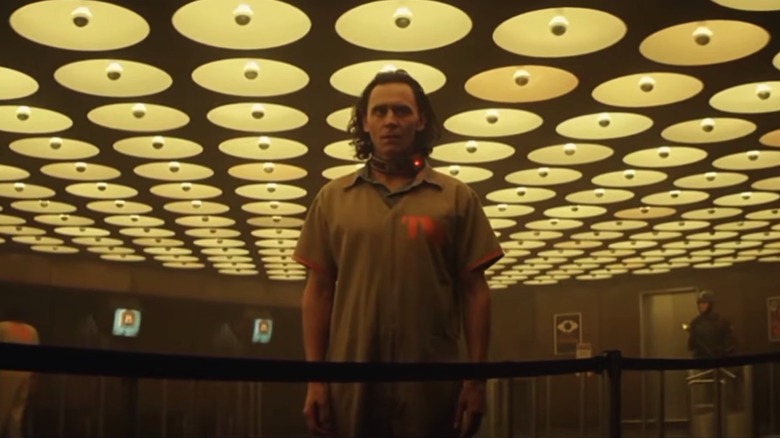
"Endgame: Encore's" final post-credits scene takes place at the TVA, the organization that Loki leads after the events of "Loki" season 2. Audiences see Mobius (Owen Wilson) coming to work on a regular day with a coffee in hand. An image of Loki, as the employee of the month, is seen on the wall. Soon after Mobius arrives, Casey (Eugene Cordero) tells him that universes Earth-10005 and Earth-1127 are about to collide. This is likely an incursion, an event described in "Doctor Strange in the Multiverse of Madness," which takes place after characters in a universe mess with time and reality.
Mobius initially tries to minimize the situation, but Casey informs him that the two realities are at war, firing missiles at each other. It's unclear how such an event may happen, and the scene doesn't explain it, but other TVA employees tell Mobius, Casey, and OB (Ke Huy Quan) that up to 3,000 similar events are occurring rapidly. OB concludes that the multiverse is collapsing, then the scene cuts to black.
Fans of Fox's "X-Men" and "Deadpool" movies, including "Deadpool & Wolverine," will recognize Earth-10005 as the universe where these mutant stories occurred. While it's unclear what universe Earth-1127 is, it's clear from the first "Doomsday" trailer that the Fox X-Men universe is going through some cataclysmic event, likely the incursion teased in this credits scene. To understand how the multiverse works, fans should watch "Loki," "Doctor Strange in the Multiverse of Madness," and "Deadpool & Wolverine."
How it all connects to Avengers: Doomsday
While the MCU has been telling the "Multiverse Saga" story, the overarching villain has hardly appeared. Kang (Jonathan Majors) was the original villain of the upcoming "Avengers" movies, but Marvel fired the actor. The pivot to Doctor Doom meant Marvel couldn't feature the villain extensively. Doom appeared in the MCU for the first time last year, in the "Fantastic Four" movie, which takes place in a different reality. The modified ending of "Avengers Endgame: Encore" and the credits scene help establish the imminent threat of Doctor Doom, even if neither the main MCU reality nor the audience is fully aware of the danger.
The "Multiverse Saga" has mainly followed the characters in the Earth-616 reality, but it did flesh out the multiverse story in TV shows ("Loki" and "What If...?") and some movies ("Spider-Man: No Way Home," "Doctor Strange in the Multiverse of Madness," "Deadpool & Wolverine," and "The Fantastic Four"). But while the MCU characters have been adjusting to their post-"Endgame" lives, Doom has been setting plans in motion to enact his mission.
The "Endgame: Encore" scenes clarify all that, teasing that Doom isn't just powerful, by being able to kidnap Hulk, but that he may have been exploring the multiverse to find those responsible for his tragedy. Rumors say that Doom lost his family, in addition to sustaining massive injuries, following the Avengers messing with time and reality in "Endgame." The TVA, which sits outside of time and can observe every instance of every reality simultaneously, can observe the start of the multiverse collapse and try to correct course. That's probably why Loki comes to help Steve, who is already confirmed to appear in "Avengers: Doomsday" on December 18.