

Are Mesh Wi-Fi Routers More Secure Than Regular Ones?

Tech enthusiasts often champion mesh Wi-Fi networks as one of the best options for home Wi-Fi. Their systems of syncing satellite nodes give you consistent coverage, dead-simple scalability, and reliable multi-device handling. However, an important consideration in any network is security. So, do mesh networks offer a security advantage over traditional Wi-Fi networks?
As long as the router and all nodes are getting firmware updates, no, the security of a mesh Wi-Fi system is not inherently better than that of a regular Wi-Fi router. Mesh Wi-Fi systems do have advantages worth considering, but, in most cases, security isn't one of them. Vulnerabilities have been found in mesh networks, but not at a rate or severity level significantly different from that of regular Wi-Fi routers. That's not to say, though, that there aren't serious considerations to take into account before making a purchasing decision, since mesh Wi-Fi has its disadvantages, too.
Mesh Wi-Fi security controls aren't enough for some

Depending on your needs, mesh networks may, in fact, have a security drawback in their convenience. Like most regular Wi-Fi routers, mesh systems are usually designed with a default security configuration to meet the needs of the average home's requirements. Some people, though, have a need for more fine-grained security controls, and those settings unfortunately aren't always available in mesh systems. Most mesh systems are designed to be especially convenient and accessible for everyday customers who just want a plug-and-play solution.
To avoid confusing those people, some settings are hidden by default in the network management interface and sometimes aren't accessible at all. That can include advanced security options that power users or people with unique threat models often want. If there are Wi-Fi security settings you know you'll want to adjust when you set up your network, you should read reviews for the best-ranking Wi-Fi mesh systems that mention those settings. For example, if you know you'll want several guest networks, you should find out if the system you're considering offers guest networks, and how many. Do some research before either investing in or completely writing off the mesh Wi-Fi option.
Normal Wi-Fi security guidelines apply
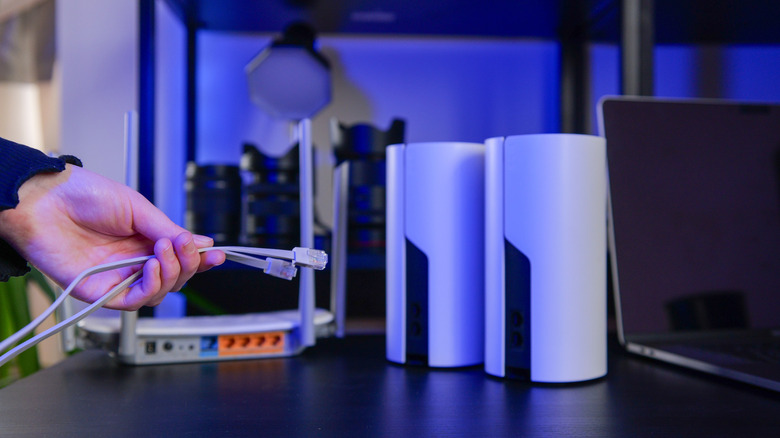
Whether you go with a regular Wi-Fi router or a mesh Wi-Fi array, the most important security factor is that you go with a model that meets relatively recent Wi-Fi standards and is manufactured by a trusted, reliable brand. It's of supreme importance that all access points, whether they're mesh satellites or traditional extenders, are getting regular firmware updates. That requires that all satellite nodes are well-placed so that the entire network can be upgraded simultaneously.
There's also other security advice you've probably heard before but is worth repeating even in the context of mesh Wi-Fi networks. Change any default passwords to ones that are difficult to guess. Use the latest security protocol (which is currently WPA3), and isolate IoT devices on a separate guest network. You should also consider data privacy policies and features. TP-Link often gets extra scrutiny in that respect because its products are manufactured in China, but even the most reliable mesh Wi-Fi routers from well-known U.S. brands often have poor privacy practices, too. As always, reading reviews that thoroughly vet the privacy and security claims of router manufacturers is important.