

Merlin Vs. Raptor: How Do These SpaceX Rocket Engines Compare?

SpaceX has established itself as a key commercial rocket builder. The company's Falcon 9 rocket has set multiple world records, including flying the same booster 10 times, and has flown over 680 missions to space. SpaceX's gigantic Starship rocket, which is still under development, has also already set a number of world records thanks to its size. Both rockets have been groundbreaking, and neither would have been able to do so without rocket engines.
The Falcon 9 is powered by Merlin engines, which are fueled by rocket-grade kerosene and liquid oxygen. These were SpaceX's first rocket engines and use an open-cycle gas generator combustion cycle. The Falcon 9's booster houses nine Merlins, and the second stage has a single Merlin vacuum engine with an enlarged exhaust section and expansion nozzle for optimized flight in space. A sea-level Merlin produces about 190,000 pounds of thrust, and the Merlin vacuum engine can produce up to 220,500 pounds of thrust.
The Raptor, which was built for the Starship program, is a full-flow staged combustion engine fueled by liquid methane and oxygen. The Starship houses 33 Raptors in the Super Heavy booster, while the Starship orbiter has three sea-level Raptors and three Raptor vacuum engines. Now in its third iterative design cycle, the Raptor is significantly more powerful than the Merlin with 617,000 pounds of thrust.
Two different design philosophies
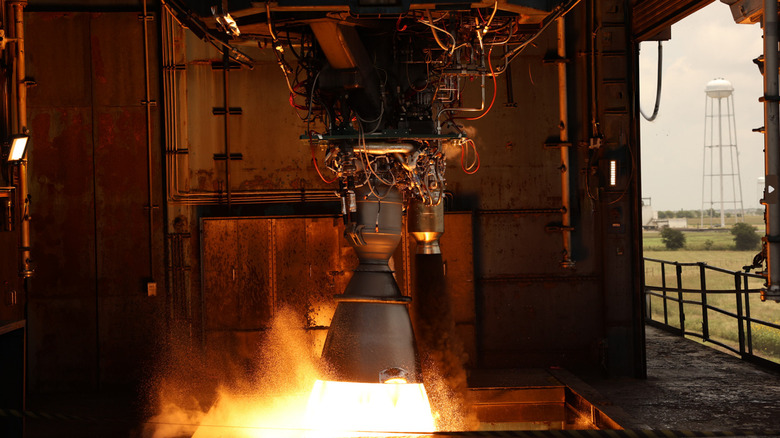
When SpaceX designed and built the Merlin, it was based on industry foundations already established with gas-generator rocket engines. SpaceX's founding engineers had experience with rocket engine design before starting on the Merlin, and they focused their attention on creating a gas-generator engine that was optimized for performance, reliability and reusability. As is customary with SpaceX, which treats its rocket launches like software updates, the SpaceX team iterated on the development of the Merlin, and it eventually became exactly the kind of revenue-generating workhorse the company needed.
The Raptor was a riskier project that pushed the boundaries of rocket engine design. It's completely different from the Merlin, being a full-flow staged combustion engine, which descries how these engines convert propellant into thrust. It is one of just a small handful of full-flow staged combustion engines in existence globally, and the only example ever to fly successfully. The Raptor presented significant engineering challenges, but SpaceX took it on and created a unique engine that should support multiple reuses on the Starship.
Reusability and quick turnaround times
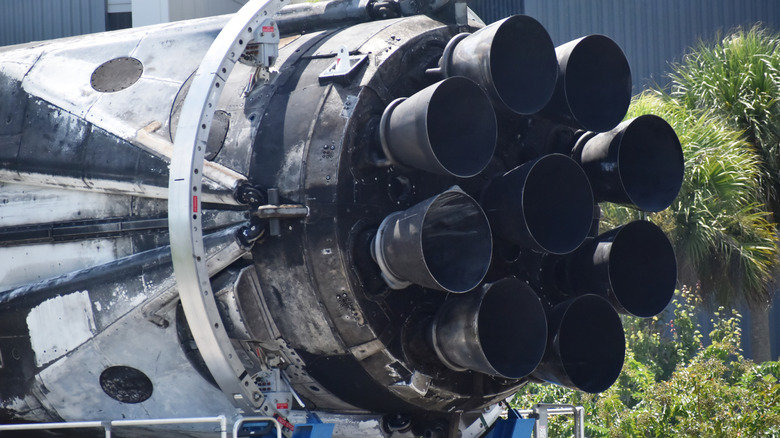
The SpaceX Merlin and Raptor rocket engines were engineered with reusability and rapid turnaround time at the core of their designs. Both engines have proven that they can be flown multiple times. SpaceX flew a Falcon 9 booster for a record 36th time in July 2026, and while the Raptor hasn't had the chance to prove its reusability quite yet, Starship Flight 7 did contained a previously flown Raptor engine.
Merlin engines require careful post-flight inspections that involve cleaning the engines of soot buildup. The turnaround record for the fastest relaunch of a Falcon 9 booster is nine days. The Raptor was designed to improve upon this significantly, and eventually match commercial airline-level reusability. SpaceX wants to refly them without the detailed post-flight inspections required for the Merlin. The goal is to immediately refuel and launch Starships equipped with Raptor engines once they come back from space. The Raptor's design and clean-burning methane fuel should enable this, but only time will tell if the engine achieves this reusability goal.