

How Do Rockets Avoid Hitting Satellites And Space Debris During Launch?
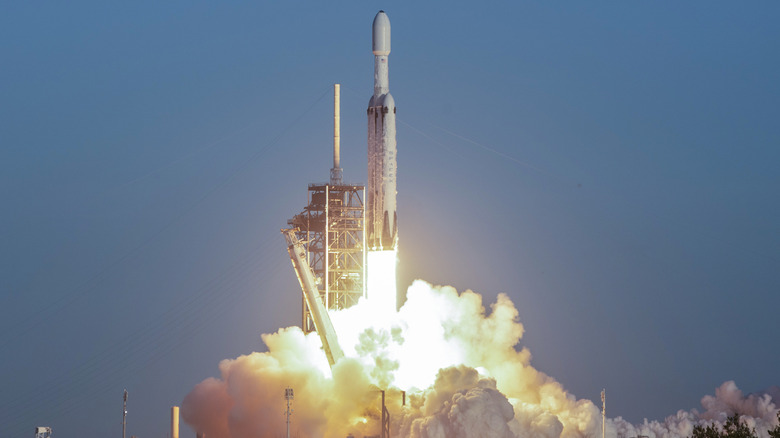
With the advancements made in spaceflight, it has become easier and cheaper for companies to launch satellites into low Earth orbit (LEO). Rockets like SpaceX's Falcon 9 have driven down the cost of getting satellites to orbit and have been launching satellites at an incredible cadence. SpaceX's Falcon 9 rocket can be turned around for a fresh flight in under two weeks. At the time of writing, more than 3,200 individual payloads (including rideshare payloads) have reached orbit in 2026 alone.
With so many new satellites going to space, LEO has become so congested that spaceflight entities globally have to track both active satellites and space debris to avoid hitting them when launching into space. Launch times and rocket trajectories are calculated based on mission parameters, but also to avoid collisions with objects in LEO. The calculation of the launch time and trajectory is central to how rockets avoid space debris, as a rocket in the launch phase cannot abruptly change course to avoid objects in space.
The International Space Station (ISS) has performed orbital debris avoidance maneuvers, but this isn't always effective against small pieces of debris. Spacecraft can perform avoidance maneuvers only after the launch phase, which is why launch planning is so important. The U.S. Space Force's 18th Space Defense Squadron (18 SDS) monitors satellites and space debris on an ongoing basis specifically to help avoid collisions, and shares this data with space launch entities globally. Launch providers like SpaceX can use this data to maintain awareness of satellites and space debris when planning mission launch parameters months in advance.
The risks of satellite or debris strikes
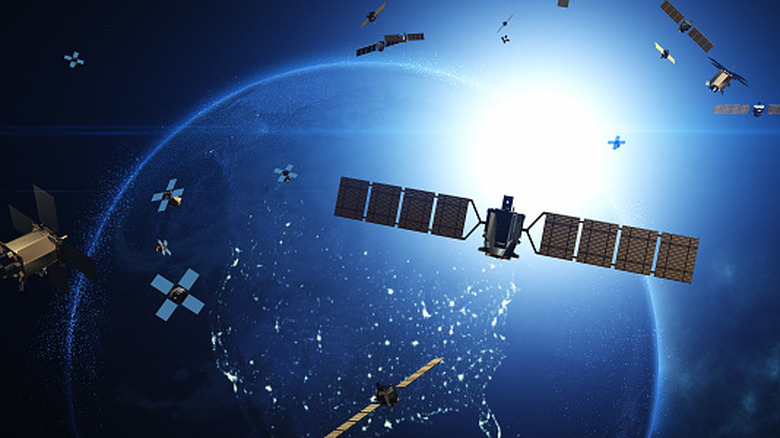
The reason governments and commercial spaceflight companies put so much energy into avoiding debris strikes is because of the fallout it could cause. When astronauts are onboard, it could be a matter of life and death. Not only would a debris or satellite collision destroy the payload being launched, but it could send secondary debris toward surrounding satellites, or even the ISS depending on the altitude of the impact.
In the long term, primary and secondary collisions in LEO could cause widespread orbital debris, rendering specific orbits completely unusable. This is called the Kessler syndrome. Accordingly, several concepts have been studied to try to dispose of space junk to mitigate this risk. Debris strikes can be life-threatening to astronauts traveling in space. 2024's Polaris Dawn mission had to be delayed and receive new launch parameters designed to mitigate the possibility of debris strikes, as the crew would be travelling through higher-than-normal altitudes where space debris impact risks were higher.
The mission was scheduled to launch when known debris was out of the way, and a trajectory was planned that would keep the crew out of harm's way. NASA has documented space debris impact damage on the Space Shuttle, with a particle as small as 0.06 inches estimated to have impacted the it at around 20,000 miles per hour during the STS-118 mission, illustrating just how much energy a small piece of space debris can have, and it can be lethal if it were to strike an astronaut.