

There's A Big Problem With Building Data Centers Underground
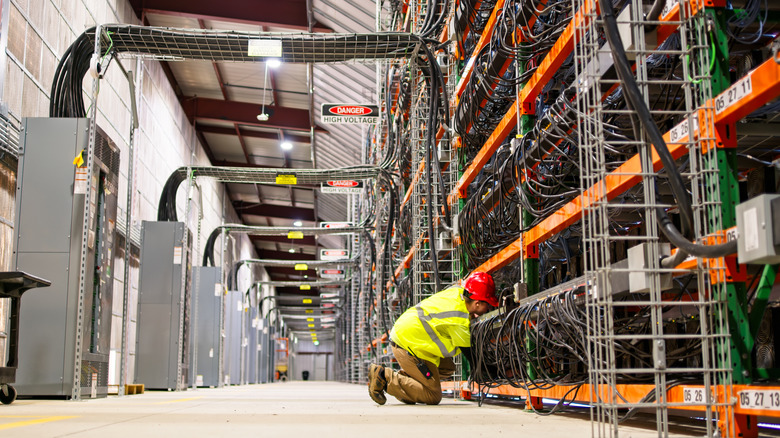
Data centers have become the necessary evil we all have to deal with for the sake of rapid AI advancements. However, they're problematic, and most regular people are very much against them for obvious reasons. Data centers are so loud that their noise may carry for a mile, and they may also drive up local utility costs, take up precious land, and waste water reserves. So, why not put them underground? That would theoretically solve most of these issues.
If only it were that easy. Though the UAE has considered fortifying its own data centers with guns and burying some underground, that's basically a means-to-an-end solution due to the dangers of Iranian attacks. In normal circumstances, the project would just end up costing more, as you'd need to create a strong shell that can take the weight of all the soil above. That's not even accounting for drilling, insulation, and waterproofing. Then, these facilities wouldn't be easy to scale up because it would require additional blasting or drilling, meaning companies are unlikely to put down the cash for something that will make people happy at an additional cost and loss of scalability.
The biggest challenge, though? Maintaining solid air quality. When you're underground, complications with the air can add up quickly. As such, the data center would require some expensive systems to get the same environment that's practically a given above ground, so add the expensive humidity control and ventilation system to an already hefty bill. In the end, it's all much more feasible than making orbital data centers, but far too tricky for companies to seriously consider it.
In which case can building underground work?
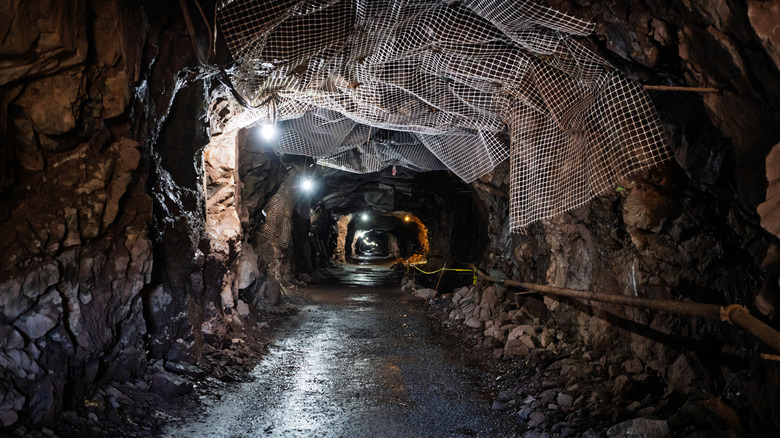
The good thing about underground data centers, theoretically at least, is they'd save operators money on cooling because there's no sunlight. They could also resort to geothermal energy, so it wouldn't waste as much electricity. It truly seems like a magic bullet when you lay it all out — if only the construction costs weren't so high. Well, new AI data centers can be built inside existing underground structures, which automatically solves the brunt of the issues, and we have real-world examples that attest to how well it can work.
For instance, there are a few data centers operating out of abandoned mines in the U.S., which makes them super secure by design. The best part is, they're not expensive to build and maintain. Plus, the temperature in the mines, and more importantly, the humidity, are sometimes bordering on perfection. Unfortunately, there aren't that many mines that are both close to a power source and already have the necessary connections, so it's not as if companies can move to the mines in droves, Fallout style.
In a perfect world, profits would be secondary to preservation of our natural resources. Ultimately, the reason why there isn't a huge push to find better solutions is that it's simply more expensive than just taking a piece of land and constructing a data center. Plus, the alternatives we have so far are all difficult to pull off. Data centers aren't built in Antarctica because it's too remote and doesn't have a power grid, despite the naturally cool air making it seem like a perfect solution for the AI boom. Until we figure something out, we'll all probably have to contend with effects of new facilities popping up, sadly.