

The Reason Building Data Centers In Antarctica Isn't A Solution For The AI Boom
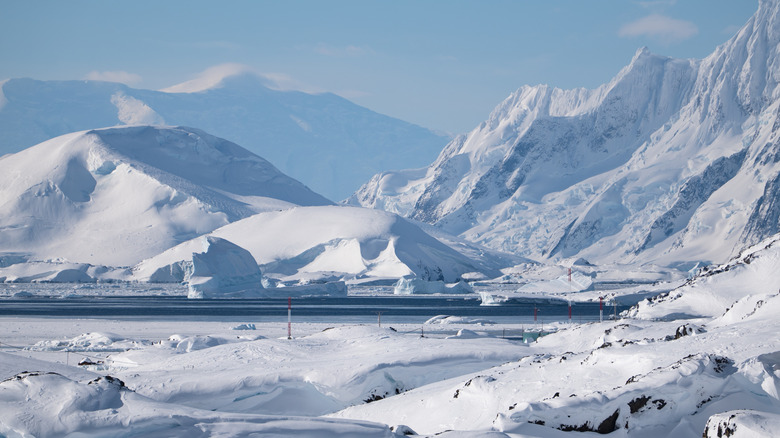
One of the most frequent concerns about the increased construction of data centers is their cooling systems. The projects have drawn particularly heavy pushback in rural areas because, aside from helping build new AI technologies, data centers use a lot of electricity and water to power and cool their equipment. If cooling is the problem, and people don't want data centers near them, then theoretically, an optimal solution would be to build a data center in a cold place with few people around, such as Antarctica.
The concept has some merit, as there are already a handful of data centers located in chilly places like Finland, Sweden, and Iceland. However, attempting to build even a single data center in Antarctica would present far more problems than it would solve. The most pressing of these issues would be Antarctica's lack of manmade infrastructure, the dangerous conditions that come with working there, and overall environmental concerns.
Cold-climate data centers draw in cold air for natural cooling

The majority of data centers working on AI-heavy operations have to be built near sources of water, as water is part of how companies keep their equipment operating within safe temperatures. This is usually accomplished through evaporative systems, also known as closed-loop cooling. These systems use pipes filled with water to carry heat away from the computers and to an evaporator tower.
Building a data center in a cold locale does help offset the need for cooling because the ambient air from outside the facility can naturally lower temperatures, rather than siphoning away water. This approach does still consume resources like electricity to power fans, but it can be a more environmentally-friendly setup. Considering the viability of this approach, it's fair to assume that constructing data centers in a sparsely-populated area like Antarctica would be the perfect solution. However, it's much easier to build data centers in a cold place that still has people living in it, like Finland, than the icy dunes of Antarctica.
Antarctica lacks infrastructure and is a highly protected area
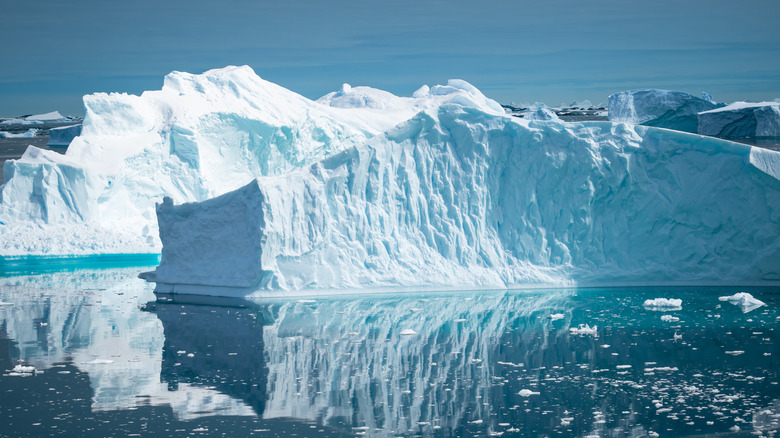
Technically speaking, Antarctica does have at least one data center already, appropriately called the IceCube. However, it is mostly designed as a research outpost. Attempting to construct a full-scale data center complex would be a very different undertaking.
For starters, water isn't the only public resource that data centers need. They also need sources for both the computers and the fans. Antarctica does not have a modern power grid either, with research outposts mostly relying on locally-provided power from diesel generators. The continent also doesn't have an undersea internet cable like the rest of the world, meaning it wouldn't be able to easily provide services to people in other countries. That pretty much defeats the purpose.
Even putting those matters aside, Antarctica's bone-chilling cold and lack of resources make it a dangerous place to live and work. That means attempting to construct a massive data center and have people work there would be even more difficult and expensive.
In addition to the practical concerns, Antarctica is a highly-protected territory, governed by multiple international treaties that prohibit military activity, waste disposal, and commercial activity. The mere notion of building a data center in Antarctica would likely require environmental impact studies and diplomatic negotiations, delaying any actual construction by years.