

Why Doesn't NASA Use More Reusable Rockets?
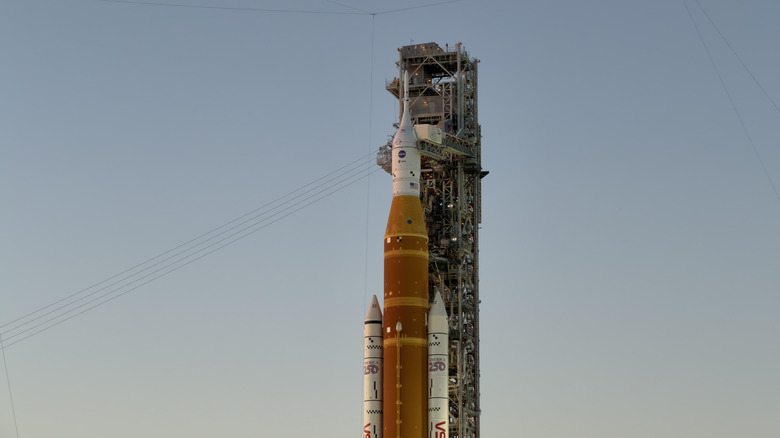
The future of spaceflight is here, so they say, and looking at things on the surface might make it seem like NASA is falling behind companies such as SpaceX in terms of innovation. NASA's Space Launch System isn't sustainable, since just one SLS rocket cost about $4 billion to produce. Meanwhile, SpaceX treated its rocket launches like a series of software updates, and its now-famous Falcon 9 rocket demonstrated a turnaround time of just 13 days. The economic feasibility of SpaceX's model is clear: Falcon 9 can theoretically be refurbished over 30 times. That's massive considering that the production cost of a single rocket is in the ballpark of $30 million. So, why doesn't NASA use and produce more reusable rockets?
Technically, the space agency is already using them (even the Falcon 9 made by SpaceX) and has been doing so since 2019. The Double Asteroid Redirection Test in 2021, which was powered by Falcon 9, and the PACE Earth sciences mission from 2024 are just two examples. The partnership seems to be fruitful, as NASA is also expected to use some of that SpaceX magic for multiple missions in 2027, including launching the JPSS-4 weather satellite and the Compton Spectrometer and Imager.
Why not develop its own rockets? Well, NASA never did. It would rely on contractors. For instance, the pricey SLS rocket was produced by a bunch of companies. Even the iconic Saturn V used in the Apollo launches was constructed by the likes of Boeing, Douglas Aircraft, and IBM. If NASA were to hypothetically build its own reusable rockets, it wouldn't be economically feasible for the agency, as it simply doesn't have enough launches to justify all the costs.
How much is SpaceX charging NASA?
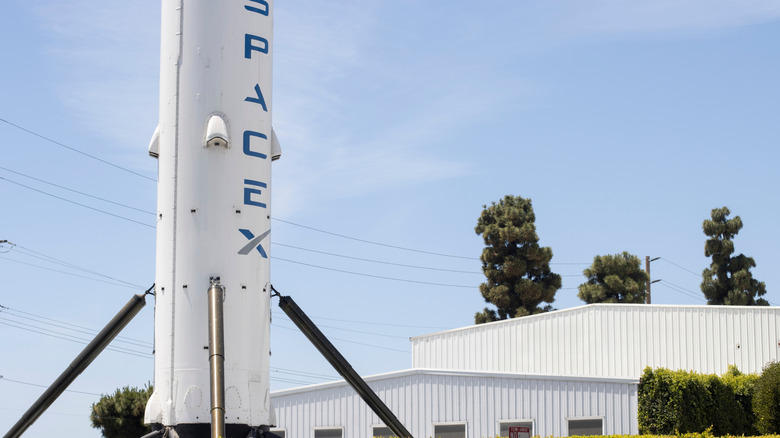
Despite SpaceX rockets working as advertised, NASA unfortunately doesn't benefit from using them in terms of cost-cutting. Launching just one Falcon 9 rocket costs SpaceX approximately $20 million, but of course, since it's a commercial business, the company charges outside entities north of $70 million per launch — one of the loudest cha-chings that ever cha-chinged. Even then, NASA's total can run higher when a mission has special payload requirements. How much?
It depends. On some missions, NASA paid out $62 million for the Falcon 9, and on some, it got proverbially taken to the cleaners. In 2024, for example, the bill skyrocketed to $178 million, inflation-adjusted. However, that mission used the Falcon Heavy variation of the rocket, which helps explain the increase. This is nothing compared to the Atlas V that NASA used over a decade ago to launch the Lunar Reconnaissance Orbiter in 2009, which cost the agency over $200 million, inflation-adjusted. Overall, SpaceX's developments in the field are a net positive, as we're getting close to commercialized space travel. NASA will have to wait a few more years until it benefits from the invisible hand of the market taking hold of the industry.