

Elon Musk Is Planning To Retire One Of SpaceX's Most Popular Rockets — Here's Why
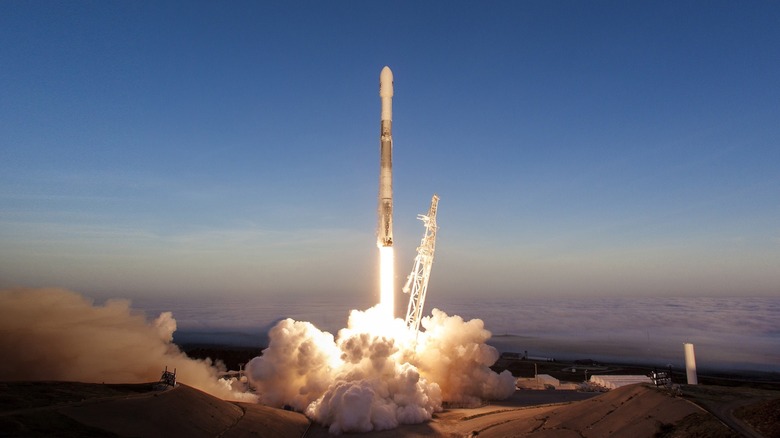
SpaceX's Falcon 9 rocket is a true workhorse, performing the vast majority of the spaceflight company's orbital missions since its first launch in June 2010. Since then, the two-stage rocket has carried numerous astronauts to the International Space Station (ISS) and launched thousands of Starlink satellites into low-Earth orbit, alongside a slew of private crewed missions and other satellite launches for government agencies and private companies. Its success has been driven primarily by Falcon 9's reusability. Rather than discarding the rocket's first stage after each flight, SpaceX developed a system that enables the first stage to land upright about eight minutes after launch. Following technical checks and refurbishment, SpaceX is able to fly the same boosters on multiple missions, helping to reduce the cost of getting payloads into orbit. But according to SpaceX chief Elon Musk, the Falcon 9's days could soon be numbered.
Posting on X in the summer of 2026, Musk said that once SpaceX's next-generation Starship rocket is flying reliably multiple times a week, it will be better to redirect the company's engineering and manufacturing capacity toward getting the Starship launch frequency to several times a day, and then gradually bringing the Falcon 9 program to an end. Such a move will mark a major shift for SpaceX, with the Starship ultimately taking over the role that the Falcon 9 has played for more than a decade.
What is Starship and how will it replace the Falcon 9?
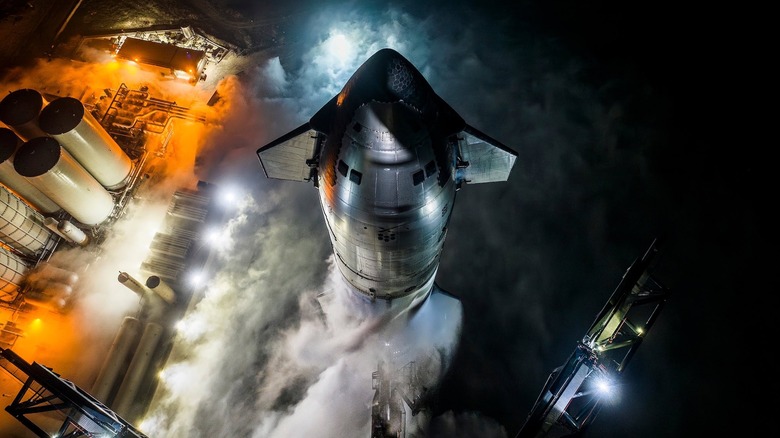
Like the Falcon 9, SpaceX's Starship rocket comprises two parts — in the Starship's case, the upper-stage Ship and the first-stage Super Heavy booster. But the similarities largely end there. While the Falcon 9's booster generates around 1.7 million pounds of thrust at launch, the Super Heavy generates about 18 million pounds, making it the most powerful rocket ever launched. The Starship dwarfs the Falcon 9 in size, too, standing at about 408 feet against the Falcon 9's 229 feet.
The Starship's first test flight in April 2023 ended in an explosion just a couple of minutes after liftoff from SpaceX's Starbase facility in southern Texas. The spectacular ending wasn't entirely surprising, as SpaceX uses test flights as a major part of the development process. Subsequent Starship tests have seen the rocket fly for longer, eventually reaching the point where the first-stage Super Heavy has been able to make a controlled return to the launch site minutes after liftoff, paving the way for reuse. The astonishing maneuver involves two giant mechanical arms on the launch tower "catching" the booster just feet above the ground.
As of September 2026, the Starship remains very much in the development phase, with SpaceX continuing to refine the rocket through repeated flight tests. In July 2026, it flew for the 13th time, deploying 20 next-generation Starlink satellites that are too large for the Falcon 9. While the Ship made a controlled landing in the Indian Ocean as planned, the Super Heavy was unable to make a controlled return, entering the Gulf of Mexico at speed. But the test provided SpaceX with plenty of data to help it refine the rocket's design as it works toward making a fully reusable vehicle for crew and cargo missions.
It could be a while yet before the Falcon 9 is retired
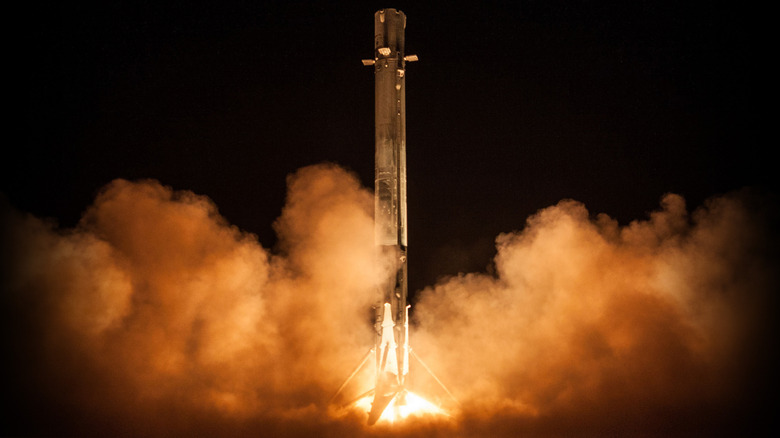
As Musk said in his social media post, he wants to reach a point where the Starship is launching several times a day. Those missions could involve deployments of Starlink satellites, or numerous satellites for future Earth-orbiting data centers. The Starship is also expected to send crew and cargo to the moon as part of NASA's Artemis program, which hopes to build a permanent base on the lunar surface. Such an endeavor will involve launching extremely heavy payloads to orbit. The Starship can carry more than 100 tons to orbit, while the Falcon 9's payload capacity for low-Earth orbit is around just 23 tons, a statistic that gives us a clearer idea of why Musk is talking about retiring the Falcon 9.
Beyond moon missions, the Starship could also be used for crewed missions to Mars. Humans have yet to set foot on the red planet, and it's well known that Musk's ultimate goal is to send a crew there. He's even talked about building a self-sustaining city on Mars, though much has to happen before there's any chance of it becoming a reality.
For the time being, however, the Falcon 9 will remain an essential part of SpaceX's launch operation. This could remain the case for at least the next several years as SpaceX engineers continue with the challenging task of readying the Starship for operational missions. Whatever the future holds for the Starship, the Falcon 9 has well and truly earned its place in spaceflight history, becoming the first orbital-class rocket to achieve routine booster reuse while also helping to transform the economics of orbital spaceflight.