

The 5 Best Phones For Seniors With Parkinson's Or Arthritis

The smartphone market has plenty of options aimed at seniors in all price ranges. Such phones usually have a simple design and are helpful for older adults who may need features like appointment reminders, navigation while traveling, and immediate emergency contact options. However, if an older person has arthritis or Parkinson's disease, even using a smartphone aimed at seniors might be a frustrating experience. "They may experience challenges with holding the device, typing, swiping, pressing small buttons, or using pinch-to-zoom features," Anna Hicks, M.D., Administrative Director of Age-Friendly Services for AdventHealth in North Carolina, told BGR in an exclusive interview.
The best phones for seniors with Parkinson's disease or arthritis include the RAZ Memory, RAZ SmartVision3, Jitterbug Smart5, Jitterbug Flip 3, and Samsung Galaxy A17. These phones offer important features like large control buttons, which can help seniors with Parkinson's disease press the right button when their hands aren't steady from tremors, Hicks said. They also attempt to help arthritic seniors who have painful finger joints and limited hand strength.
Having phones that offer voice commands, dictation features, the ability to enlarge the icons on the screen, and similar features allows the smartphone to be a helpful tool, according to Hicks. "People who experience challenges with hand and finger coordination may benefit from a smartphone with a larger screen and accessibility features," she said. Hicks suggested that seniors and their families consider their specific needs and potentially speak with their occupational therapists or doctors before picking a phone.
The RAZ Memory Cell Phone helps seniors with tremors
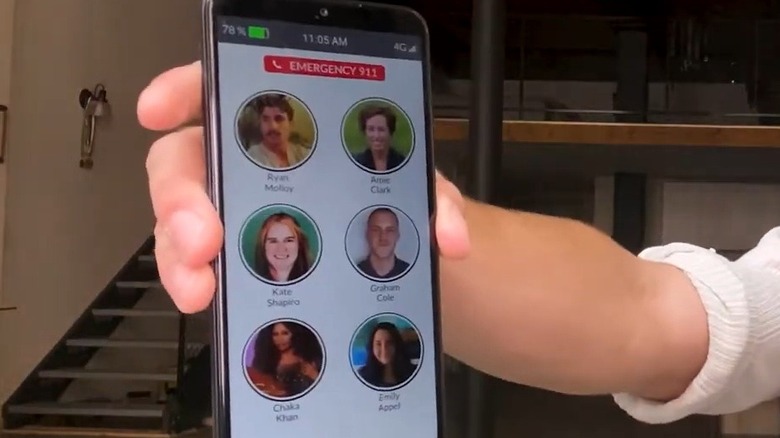
Some seniors who have Parkinson's disease can experience tremors. The tremors "may make it more difficult to hold a smaller device steady or perform precise movements," Hicks said. The RAZ Memory Cell Phone ($369) has a design that simplifies making on-screen selections when hands aren't completely steady. It includes a mode that increases the size of the on-screen buttons, potentially making it easier for someone with mild Parkinson's disease to make an accurate selection. However, because it doesn't use physical keys, it's probably better for someone with arthritis, who may struggle to press physical keys.
The RAZ Memory Cell Phone, which is compatible with all three major cellular networks, received an update for its hand tremor mode late in 2025. The update also gave it improved contrast for people with vision issues and larger keypad buttons, icons, and numbers. People with Parkinson's disease or arthritis will probably want to take advantage of the phone's Auto Answer feature, which means seniors do not have to press a button to answer the phone. Instead, it will automatically answer the call and switch to speaker mode, greatly simplifying things for the user.
The SmartVision3 is for seniors who prefer a physical keypad
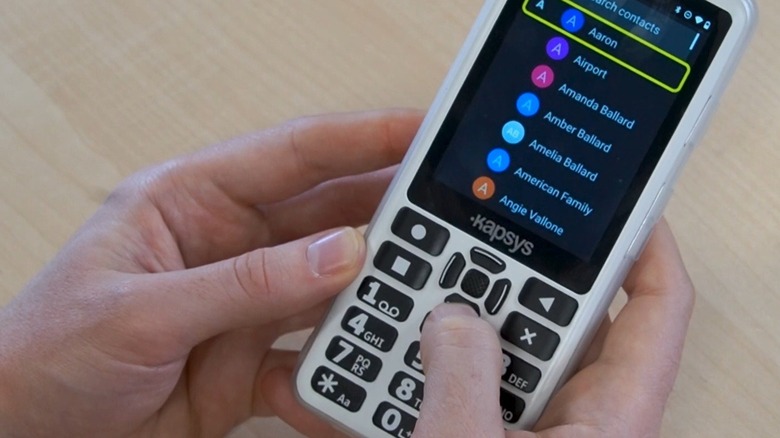
Hicks said a smooth glass screen on a smartphone can be challenging to use for some people with Parkinson's disease, as they may struggle with pressing the on-screen buttons. The RAZ SmartVision3 cell phone gives users a tactile keypad that has large numerical buttons and directional buttons to control the screen. The SmartVision3 ($599) is primarily made for people with vision impairments, but many of these same features can benefit seniors with Parkinson's disease. Seniors can switch between using the touchscreen and the navigation buttons, depending on how they're feeling. Arthritis sufferers may struggle with pressing the physical keys on this model.
As an additional helpful feature, users can control the phone through Google Assistant and voice commands instead of the keypad buttons or touchscreen. Just press a button on the side of the phone to activate Google Assistant. You can use Google Assistant for managing calls, dictating text messages, or playing audiobooks. "People who experience challenges with hand and finger coordination may benefit from ... accessibility features such as voice commands [and] voice-to-text dictation," Hicks said.
A big screen on the Jitterbug Smart5 is easier to navigate
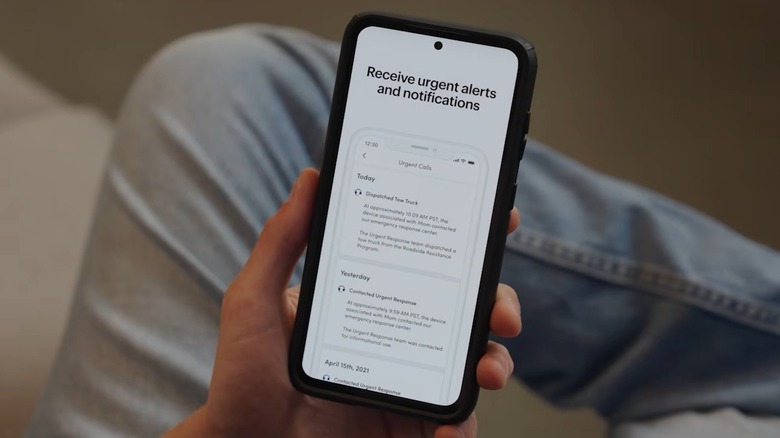
People suffering from arthritis may experience shaky hands, pain, stiffness, and a reduced range of motion, Hicks said. This can make it challenging for them to press physical buttons on a flip phone. If arthritis sufferers have mild tremors, they might be able to have success using a larger-than-average touchscreen for controlling the phone, like the Jitterbug Smart5 smartphone ($120).
It measures 6.6 inches in height, and its screen stretches to the edges of the phone. An average-sized smartphone has a height between 6.06 and 6.34 inches. Those who have mild Parkinson's disease might also appreciate the larger-than-average device because hand tremors "may make it more difficult to hold a smaller device steady," Hicks said.
The Jitterbug Smart5 includes access to Google Assistant, giving those with arthritis options for controlling the phone's features via voice commands. It's important to note that Lively was listed as one of the phone carriers to avoid, according to Consumer Reports, because of a below-average customer satisfaction rating. However, if you like the features found with the Smart5, you might not mind using Lively, which is the phone's only compatible cellular service provider.
Use the Jitterbug Flip3's large backlit buttons accurately
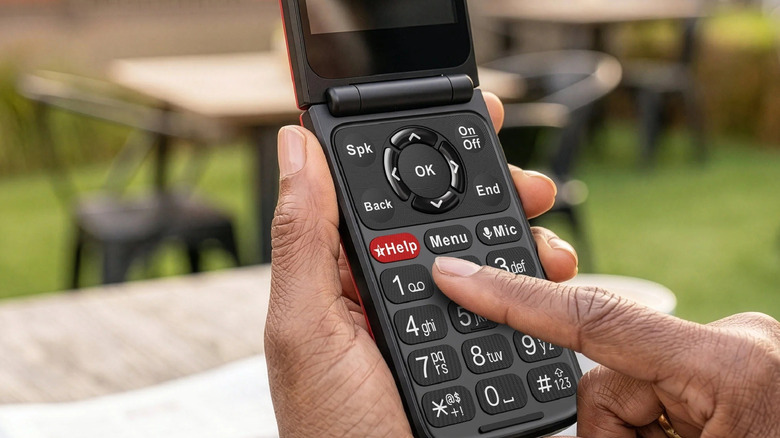
For those with Parkinson's disease who struggle to hold a thin smartphone, the Jitterbug Flip3's design can be a big help. It has a grippy material on the edges and back of the phone, allowing seniors to feel more confident when holding and using it. "A secure phone grip, protective case, or adjustable stand may also make the device easier to handle and help prevent drops," Hicks said. The Jitterbug Flip3 ($80) is yet again only compatible with the Lively cellular service network.
The Flip3 has a larger body than some other flip-style phones, meaning the buttons are larger and easier to press accurately for someone with Parkinson's disease. However, these buttons may be problematic for someone with arthritis to use. Additionally, the buttons all have backlighting, which can help seniors make accurate selections in low light. Although some people with hand tremors may appreciate being able to fold the phone open or closed to answer or hang up (instead of pressing a button), some people with arthritis may lack the hand strength to complete this action without dropping it. Unfortunately, "there is no one-size-fits-all solution," Hicks said.
The Galaxy A17's built-in optical IS helps stabilize photos
Some seniors with Parkinson's disease or arthritis may want a more traditional-looking smartphone that excels in taking photographs. The Samsung Galaxy A17 ($250) includes a 50-megapixel (MP) main camera that features optical image stabilization (IS) technology. Optical IS uses hardware adjustments to balance out any unintended hand movements when shooting photographs that could lead to blurry images. Optical IS is common in cameras for pricier smartphones, so it's a nice option to have it available in a budget smartphone that punches above its price bracket.
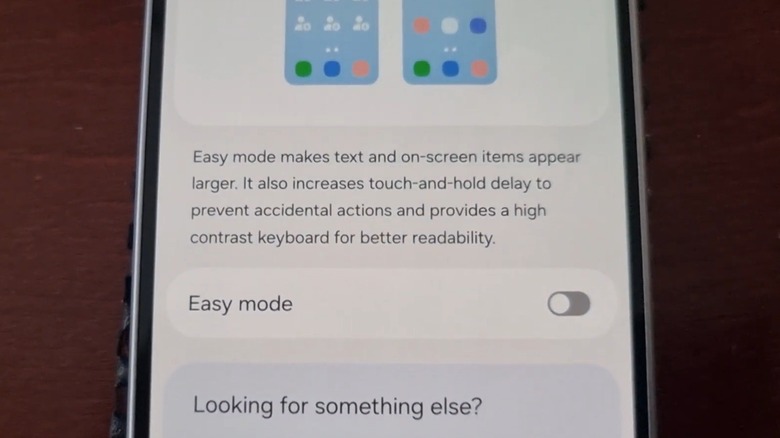
Additionally, the Galaxy A17 offers what Samsung calls Easy Mode, which should make it easier to use for people with either Parkinson's disease or arthritis. Easy Mode allows you to enlarge icons and fonts on the screen, making it easier to select the items you want, even if you are suffering from pain or tremors in your hands. You can also customize the settings to change the sensitivity of the touchscreen on the A17, which is helpful for people who may struggle to make accurate touch selections.