

China's Antarctic Base Gets Half Its Power From Renewables And Is On Track For 100%
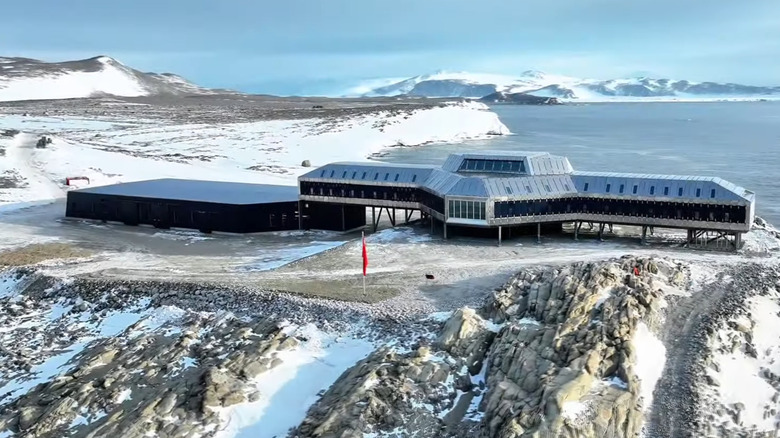
Most Antarctic research stations rely heavily on diesel. When temperatures drop and winds pick up, crews need the comfort of heat and electricity. Most stations have an established diesel system in place, making it a reliable energy source. But getting the fuel there is costly and inefficient. At China's Qinling Station, diesel is shipped in from more than 6,200 miles away. China is now turning to renewable energy sources that will replace 220 tons of diesel every year at Qinling Station alone.
Replacing diesel isn't easy. Conditions in Antarctica are brutal. Much of the continent is high altitude, where thinner air and lower pressure keep temperatures extremely low. The snow reflects sunlight, making it hard to warm the air near the ground. Most research stations are along the coasts, where temperatures reach 40 degrees Fahrenheit during summer, then plummet to 40 below in winter. The U.S. has struggled to install renewables at its three year-round stations. McMurdo Base gets 11% to 15% of its electricity from a wind farm shared with a New Zealand base.
Despite the long odds, Qinling Station gets more than half of its electricity from renewables. The system even works during the harsh polar night when the sun never rises above the horizon. At Qinling, night can last 97 days, which means no solar generation for more than three months. Yet, during that time, Qinling still receives around 50% of its electricity from renewables. The research station relies on a diverse energy system made up of 26 solar modules, 10 wind turbines, hydrogen energy, lithium-ion batteries, and a smart grid system that uses AI to predict energy needs.
How China's Qinling Station makes renewable energy work in Antarctica
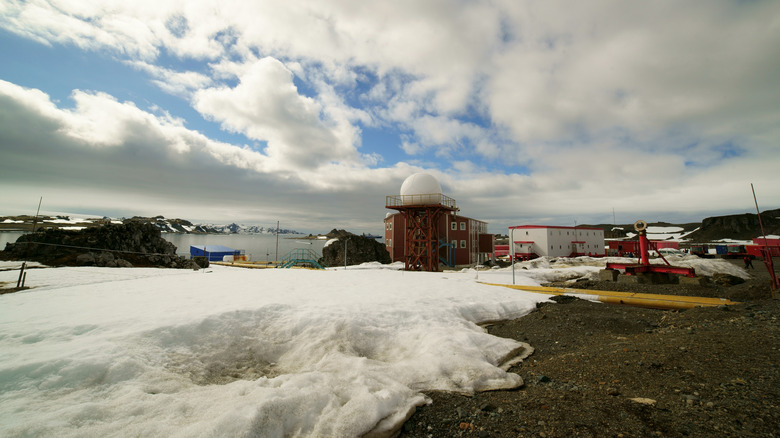
Antarctica is changing. With the rise of global temperatures, ice is melting, exposing more of the continent. It's revealing new parts of the world scientists have yet to explore. New discoveries are why more than 30 countries have research stations there. Green energy sources that don't rely on slow intercontinental deliveries could give those programs an advantage. It's why China plans to have all five of its Antarctic research stations running on 100% renewables by 2035. Qinling Station shows us how that's possible.
Qinling is built for these conditions. Its wind turbine blades are made from a strong, lightweight carbon fiber that doesn't become brittle in extremely low temperatures. That cold can deform a standard solar system's framing. Qinling's solar system uses fiber-reinforced plastic that changes temperature more slowly, keeping framing in shape. Even the batteries are made from frost-resistant lithium titanate that are kept warm inside thermal casing. And when solar and wind fall short, a hydrogen system can take over for two days, converting stored hydrogen into electricity.
The Antarctic push for renewables is reflective of China's national energy goals. Renewables supplied 42% of China's electricity in 2025, while the country continues adding wind and solar capacity. China has created so much green energy that some electricity goes unused. That kind of excess energy would be welcome in the Antarctic. Getting every Chinese research base to 100% renewable power will be difficult. Belgium's seasonal research station Princess Elisabeth Antarctica runs entirely on wind and solar, but just during the Antarctic summer. China will have to find new ways to power its stations without diesel through the dark polar night.