

Why Do Budget Android Phones Have Thick Bezels?
We may receive a commission on purchases made from links.
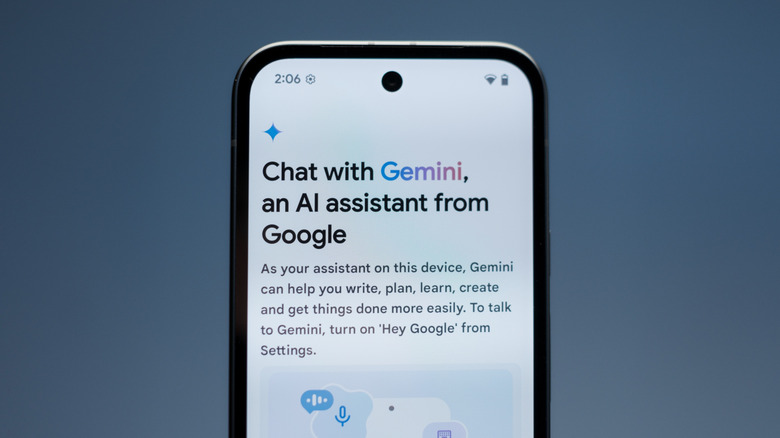
Humans are visual creatures. Many are also pursuing a sort of social status, and when you combine these two, it's no surprise why we want things to look good. It's the same with phones. Nowadays, these things represent an extension of ourselves and are perhaps the only accessory almost all people carry around, so they have to be pleasing to the eyes, right? Fortunately, there are plenty of affordable Android phones that scream high quality and look more expensive than they are. The problem is, so many of these budget smartphones have those thick bezels that instantly give away their price range. Samsung is super famous for this. Take the Galaxy A26 as an example: It feels and generally appears premium, but it still has an oversized display chin (at least by today's standards) that automatically distinguishes it from the main Galaxy line. The same goes for Google's A-series Pixels, seen above. What gives? Is this a marketing tactic?
Believe it or not, it's a technical limitation. To bring down the price of a budget phone, manufacturers have to make a few sacrifices, and the display is just one of them. Flagship phones from all the top major Android brands have the luxury of using flexible OLED panels that can bend at the bottom to connect to the motherboard. Budget phones, on the other hand, generally use rigid OLED or LCD panels with large connectors that have to be hidden by a thick bezel. Sadly, a flexible display costs as much as 100% more to manufacture than a regular panel. Hence, that ugly notch is something you just have to accept when you get a smartphone that leans more toward the wallet-friendlier end of things.
Are there budget phones without the bezel?
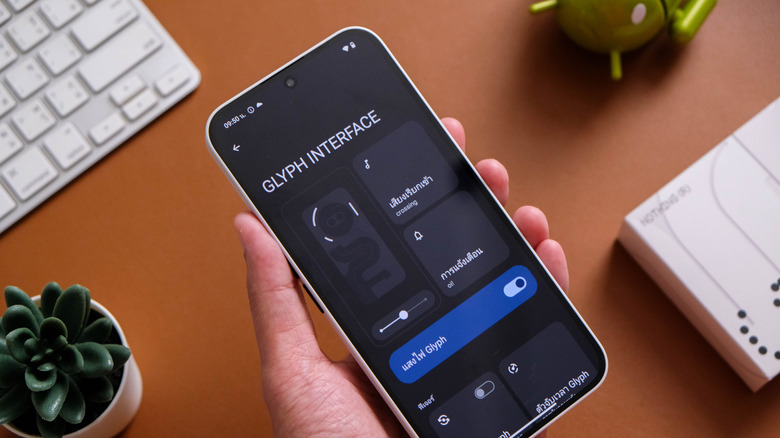
Though you will still find ugly bezels on budget phones in 2026 and beyond, some affordable phones have successfully gotten rid of them. For instance, the well-reviewed Nothing Phone (2a) may seem ancient, as it was released in 2024, but it still looks more premium than it has any right to. Apart from the attractive and unique design, there's no bezel to give away the secret that it costs around $320 on Amazon.
Another cheap Android phone with no bezel that is quite a looker is the recent Motorola Moto G. For a little less than $300 on Amazon, Motorola's budget device looks quite expensive. However, you'll have to be okay with just 4 GB of RAM and a camera that has the underwhelming character of a wet rag.
Perhaps the best phone you can get if you care about appearances may be the Xiaomi Redmi Note 15 Pro, which, sadly, doesn't work with all U.S. carriers. If that's not a dealbreaker for you, for just $359, you can get some powerful specs, a solid camera, and most importantly, a screen with a flagship-grade, super-thin bezel. Since many manufacturers are slowly getting rid of this ugly dark spot on the display on cheaper phones, who knows — maybe Google and Samsung will do so too at some point in the future.