

Can You Clean Speakers With A Lint Roller?
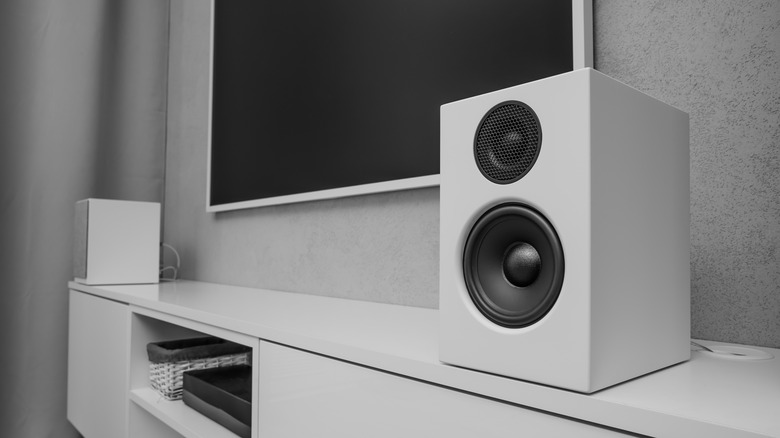
Dust, lint, hair, and other specks of particle residue are inevitable features of life at home and work. These small nuisances can be your tech's mortal enemy, however, especially if you fail to regularly clean your devices and their surroundings. Large amounts of residue buildup can particularly affect your home speakers, which will experience reduced sound quality thanks to the muffled, sound-reducing wall it creates. To some, it may not be clear how to remove dust from your speakers safely like you would other electronics. An ingenious, yet unconventional way to clear dust and fabric residue from your speakers involves another common household object: a lint roller.
Applying a lint roller to your home theater's audio gadgets is as easy as it sounds. In the same way you'd use it on your clothes, just roll the lint roller over the front of your speaker — the speaker grille — and continue until it's clear of residue. The end result should be your same old speakers, but with clearer sound. If you aren't in possession of a lint roller, alternative cleaning utensils you could use to get a similar result include soft-bristled brushes, an air compressor, a dust cloth, or vacuum cleaner equipped with a soft brush piece. Regardless of which you choose, you should be able to clear away any residue and get back to good-quality listening with ease.
There are different ways to clean your entire speaker
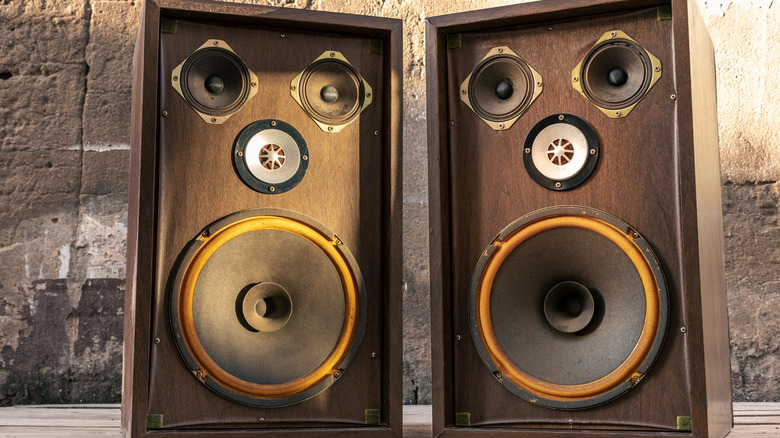
Routine cleaning is a crucial habit you should pick up if you're looking to improve your external speakers' overall sound quality and ramp up your home theater system. While using a lint roller is a quick and easy way of tidying up your speaker's grille, it may be more tedious and less efficient to try cleaning the entire unit with it. You could, instead, resort to other means, including a microfiber cloth with wood-safe cleaner, a soft brush, compressed air, or contact cleaner. Other chemical cleaners should be fine to use, so long as they're alcohol- and ammonia-free. It's also advised not to spray the cleaner directly on the unit, and instead apply it to the cloth you use.
Some speaker owners and audiophiles have concocted their own home-brewed cleaning materials and substances for refreshing their speakers. One Reddit user recommends an unconventional, yet apparently effective, mixture. "I use a soft cloth and a mix of 50% purified water and 50% white vinegar to clean most of my equipment," they said. Another user suggested an unusual but efficient cleaning vessel. "There's these arts and craft cotton balls you buy for making that little poof at the end of a Santa hat," the user said. "If you go through bag after bag of cotton balls like I do, they're awesome since they're machine washable and fluff right back up in the drier to be used again." Regardless of whether you choose a standard or tested-and-approved unconventional method, your speakers should still show a pleasant sparkle and shine and crisp sound quality after detailing the exterior and taking a lint roller to the grille.