

In 2002, Al Pacino's Only Sci-Fi Movie Predicted The Future With Eerie Accuracy
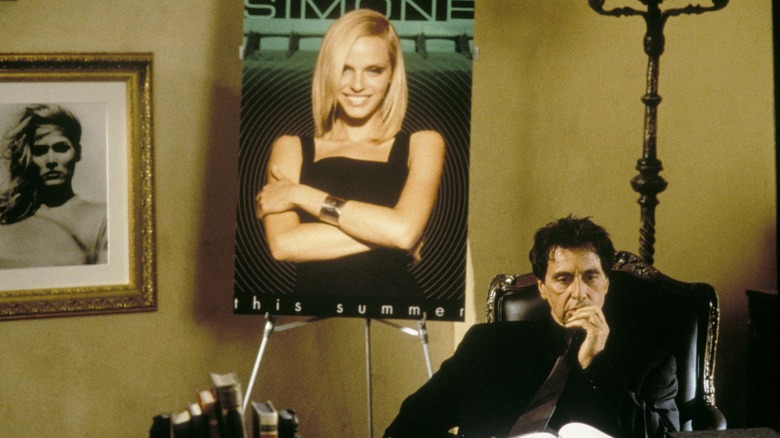
Writer-director Andrew Niccol (who delivered one of the best sci-fis of 1997) may not have struck gold with his 2002 satire "S1m0ne," starring Al Pacino (the actor's only sci-fi role), but he did manage to predict a certain aspect of the future of artificial intelligence.
The film follows a fading Hollywood director, Viktor Taransky (Pacino), whose new movie is in jeopardy when its female star Nicola Anders (Winona Ryder) decides to quit the production, leaving the picture unfinished. Taransky has no idea what to do, and on top of everything, he learns from his executive-producer ex-wife Elaine (Catherine Keener) that his contract with the studio won't be renewed. The solution comes out of nowhere when an old friend visits him, telling him about an advanced computer program capable of creating an artificial woman. Taransky dismisses the whole thing at first, but when his friend dies, leaving him his creation, he studies it and soon realizes he can create the perfect AI-generated actress to finish his latest movie. He names her Simone (played by Rachel Roberts), and with her essentially virtual existence, the game of lies begins as Taransky has to make the public believe she's real, after she wins an Oscar for her performance and becomes a superstar.
"S1m0ne" was met with lukewarm critical response and mild commercial success upon release (grossing over $19 million worldwide at the box office against its $10 million budget), and it was quickly forgotten. But due to the rise of AI in movies in recent years, it's become somewhat relevant again as the movie that forecasted the first AI actress ever, Tilly Norwood.
S1m0ne might've been a silly satire, but its premonition became true two decades later
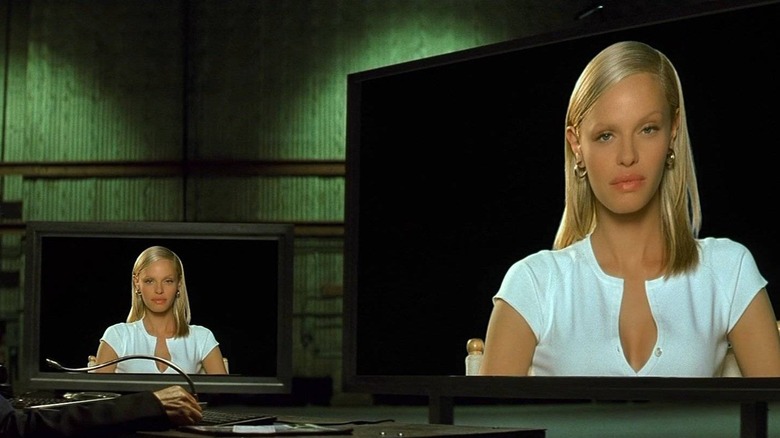
In 2025, the tech company Particle6 Group's AI division, called Xicoia, created the first-ever AI actress named Tilly Norwood. Unsurprisingly, the technological phenomenon created a ton of controversy when Norwood premiered in a comedy sketch called "AI Commissioner." As The Guardian wrote in 2025, "Her existence alone is enough to fill the pit of your stomach with a sense of untameable dread for the entire future of humanity, but that's Hollywood for you," adding that "it's also pointless and creepy and — most damningly of all — relentlessly unfunny to watch." Since that eerily disturbing sketch, a similarly off-putting music video titled "Take the Lead" with Norwood singing was also released in March 2026.
In 2002, Niccol might've aimed for an implausible and absurd comedy, but 24 years later, the core of his story has sadly become a seemingly never-ending nightmare of what AI can and will do in the foreseeable future. Undoubtedly, it's a threat to human creativity and everything genuine we hold sacred in the world. Not to mention the immense danger it poses to the livelihood of millions of people who work in creative fields and have a very legitimate fear of being replaced by AI for financial reasons. In the early aughts, we could laugh at something like "S1m0ne," but in 2026, Niccol's vision feels like an early blueprint of something frighteningly real that's now here, while our laughter has long disappeared. But perhaps it's not too late to stop Hollywood from giving awards to a bunch of codes and numbers that resemble human beings that aren't real — even if they do exist.