

Here's How US Recycling Companies Are Turning Old Wind Turbine Blades Into Cement
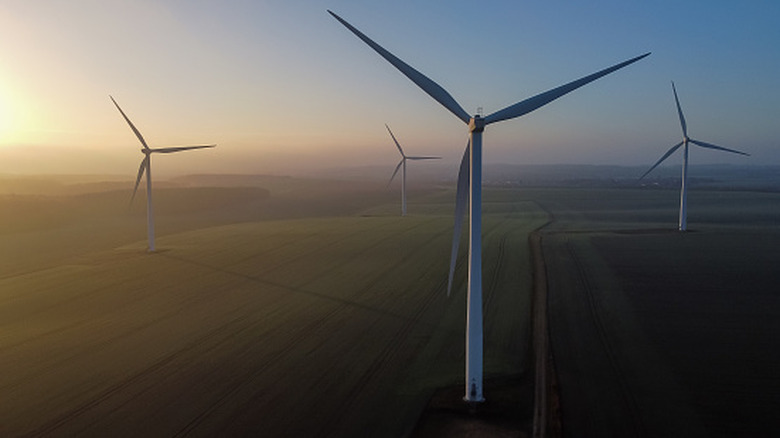
Wind turbines are great for generating clean energy, but they have a life cycle of, at most, around 20–30 years. Most of the turbine is recyclable, and old turbines are even a source of rare earth minerals necessary for producing a wide range of electronics, as well as precious metals like silver and gold. However, wind turbine blades aren't easy to recycle, as they are made from fiberglass, a material that is difficult and expensive to break down. Fortunately, recycling companies have found a variety of ways to recycle around 85% of a wind turbine blade, one of which is turning it into concrete and cement.
By breaking down turbine blades, it's possible to recover materials and fibers that are useful for concrete production. One of these is silica, which can serve as a substitute for the sand and clay used to make cement. A study published in 2024 concluded that fibers from wind turbine blades can strengthen concrete. Similarly, cut up blades can replace rebar, the steel rods used to improve durability.
Using wind turbine blades to make concrete and cement (which are different) is a great way to keep them out of landfills. While they last decades, many blades are replaced sooner due to damage or technological advancements and end up in the trash due to high recycling costs. The number of defunct turbine blades are going to rise in the coming years as existing wind farms age, so a solution like this that prevents pollution while cleaning up one of the biggest drivers of CO2 emissions is a great step.
How recycling wind turbine blades can reduce concrete's massive carbon footprint
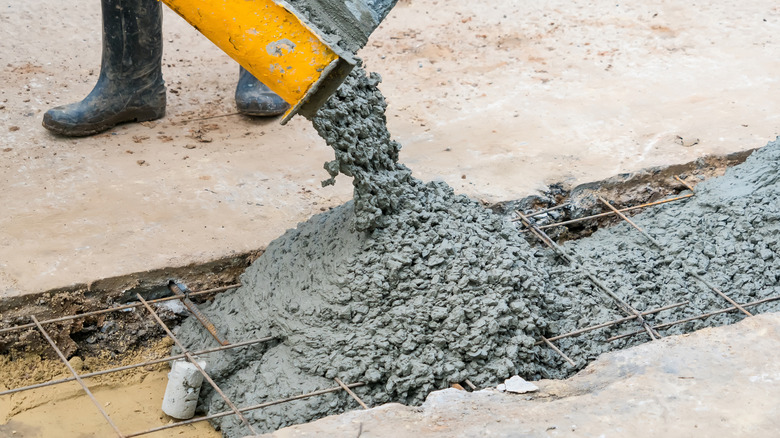
Concrete is the world's most used material, but producing it is terrible for the environment. It's responsible for around 7% of all CO2 emitted globally, making it a major factor for why the building and construction industry accounts for over a third of all emissions. Much of that comes from heating limestone to make cement, which releases carbon from both the fuel lighting the kiln and the limestone itself.
Using materials obtained from breaking down wind turbine blades can reduce carbon output at various stages in the cement making process, sometimes dramatically. In addition to substituting new material for existing ones, parts of the blade can also replace coal as a kiln's fuel source. That reduces concrete production's CO2 emissions by around 27%. Using blade pieces instead of rebar can reduce that stage of the process' emissions by a whopping 90%.
The rapid growth of wind energy infrastructure means, eventually, current equipment will need to be replaced. As a result, the matter of what to do with decommissioned turbine blades will become more pressing. Expanding the capacity for blade recycling will allow concrete producers to reduce the material's exorbitant carbon footprint, giving these tools for clean energy a new life.