

Here's How Much OLED TVs Cost In 2016 Vs. 2026
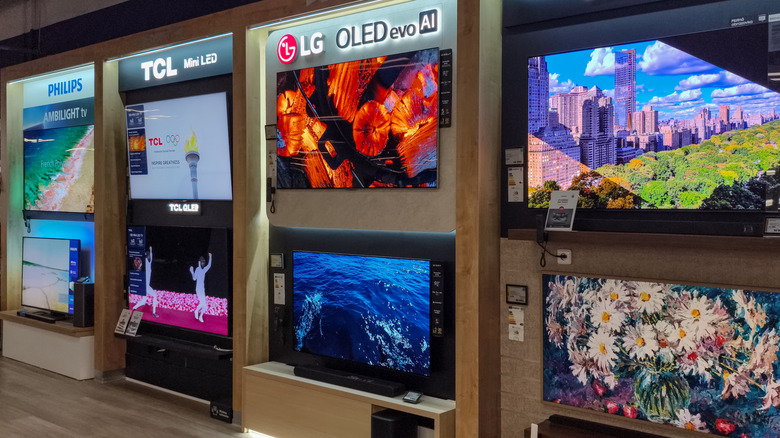
Organic Light-Emitting Diode (OLED) TVs make for absolutely gorgeous displays, with striking colors and inky blacks, but they've consistently been among the most expensive televisions on the market since their inception. Even budget OLED displays are priced higher than other TVs, so upgrading to an OLED in your living room is a big decision.
Newer OLED models might seem like they're just as outrageously expensive as the first consumer OLED TVs, but that's actually not the case. While OLEDs are still among the priciest TVs on the market, flagship models and huge display sizes are much more obtainable than they were a decade ago.
For example, LG's flagship 77-inch G6 OLED was priced at a whopping $24,999 in 2016. If you want the brand new 2026 iteration of the G6 at the same size, you'll only have to spend $4,499, or maybe even less thanks to the frequency of OLED sales these days. The display technology has improved significantly in the ten years separating these two models, but the price is now essentially one-fifth of what it used to be. Adjusting for inflation, the price difference is even more impressive.
Why are OLED TVs so expensive?
While prices have dropped comparatively over the years, OLED TVs are still some of the most expensive displays on the market. There are several reasons why OLED TVs are so expensive, but it mostly boils down to how delicate the OLED manufacturing process is.
The TV-making procedure starts with a gigantic sheet of mother glass that is cut into the various sizes you see on showroom floors. Each batch will have a few bad apples that don't meet quality standards, and delicate OLED panels are much more prone to error. When OLEDs first hit the market, the low yield rate from each batch kept OLED prices sky high. Now that manufacturers have had time to research and adjust, more panels survive, and prices keep dropping.
Prices aren't the only thing affected, either. Size has also changed considerably over the last decade. In 2016, LG didn't even make OLEDs larger than 77 inches, and the only other C6 sizes available were 55-inch and 65-inch variants. Now, this year's C6H is available at up to 83 inches for $5,299, and the G6 goes up to 97 inches at $24,999 — the exact same price as a 77-inch G6 from 2016.
Are budget OLED TVs worth buying?
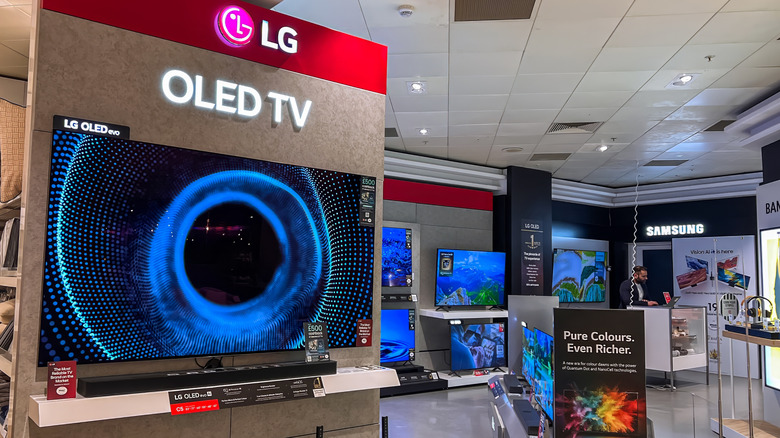
All the advancements in OLED technology have also led to price cuts for budget OLED models, which are still gorgeous even without the high-end specs of a flagship line. OLED technology has come so far in the last 10 years, in fact, that new budget OLEDs can outperform older flagships. It should be noted, though, that even old OLEDs often outperform new mid-level LED/LCD models, and that's just one perk of buying an older used OLED TV.
In 2016, LG's cheapest OLED was the 55-inch B6, priced at $3,999. LG's cheapest OLED in 2026 is the 42-inch C6 at only $1,399, and you can get a 77-inch B6 for just $2,000. That's a significant upgrade in both size and picture quality for half the price.
Don't let the idea of a budget OLED fool you into thinking these TVs are lacking in features, either. Even at smaller sizes, newer OLEDs have benefits that even the 2016 flagships were missing. HDMI 2.1 ports are standard on most OLEDs today, for example, while even the best 2016 OLEDs didn't support variable refresh rate or 4K/120-hertz output. High Dynamic Range (HDR) performance is also on another level with newer OLEDs, with budget models regularly having great peak brightness.