

4 Reasons Upgrading To An OLED TV Might Not Be Worth It
If you've been thinking about upgrading the main TV in your house, you may be deciding between an OLED or LED-LCD model. In many home theater circles, you'll be encouraged to choose the former; when it comes to near-perfect black levels, rich colors, and pixel-perfect performance, it's hard to beat an OLED TV. But at the end of the day, the model you purchase needs to make sense for you.
OLED models are pretty remarkable, but are also known for a handful of quirks that may dissuade you. Classically, OLED screens look their best in a dark room with controllable lighting, which might be the exact opposite of the space you want your new TV to live in. There are a few other reasons upgrading to an OLED TV might not be worth it, so we've assembled a list of common drawbacks to keep in mind that you might not be aware of.
We should also make it clear that we here at BGR absolutely love OLED TVs; it's just that TV makers have yet to give us a perfect 4K HDR set that will work flawlessly wherever you decide to wall-mount it. And until that day arrives, it pays to be realistic about what works and what doesn't.
Brightness matters more than perfect blacks
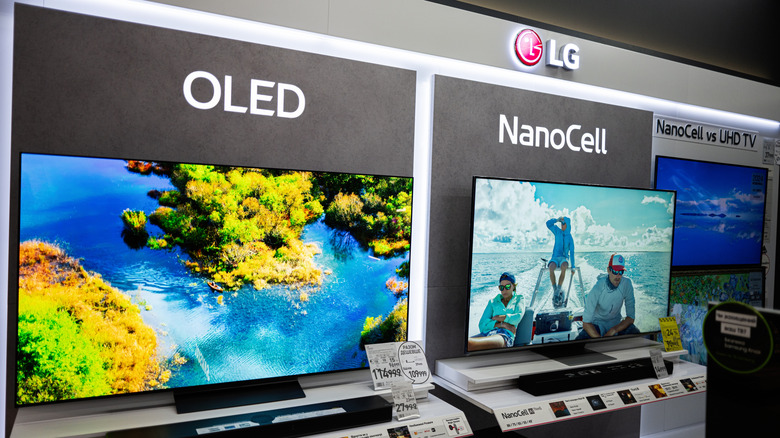
Daylight and other sources of ambient illumination have always been a struggle for TV screens. But in our 4K HDR era, LCD and OLED manufacturers are pros when it comes to glare reduction. Many panels have an anti-reflective coating that minimizes ambient light, but LED TVs have one major advantage: they can get brighter than the light source they're attempting to overcome.
In 2025, Hisense (the best cheap TV brand, according to customers) released a flagship 4K Mini LED — the U8 ULED — that hit around 5,000 nits at peak brightness. One rung below, the Hisense U7 could still hit 3,000 nits. Brands like Samsung and TCL make bright LED TVs that hang around the 1,500-nit mark. Even at 1,000 nits with a touch of glare reduction, LED-LCDs often outshine the competition.
This doesn't mean that OLED TVs can't get bright; many midrange and premium models typically hit from 600 to 800 nits at peak brightness, which is impressive for TVs with zero LEDs or chassis bulbs. Still, afternoon sunlight has an easier time affecting an OLED screen than it does an LED-LCD. If you know your living room gets bright, fight brightness with more brightness — not inky black levels.
Burn-in is less common, but still not irrelevant
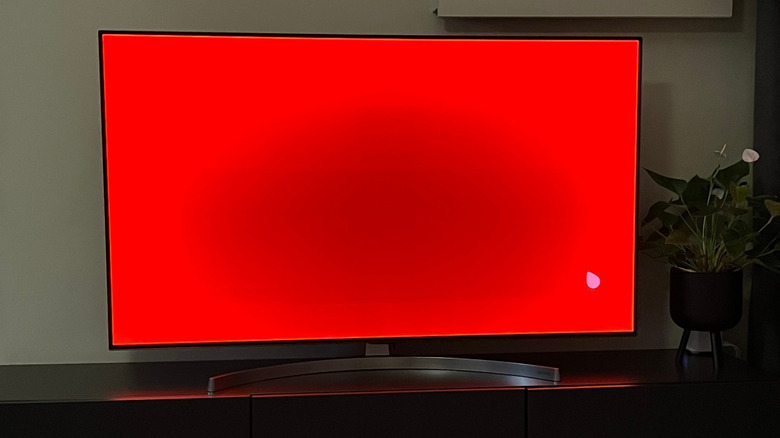
When OLED TVs hit the mainstream, consumers started talking about burn-in and image retention more than ever before. While all TVs are susceptible to these panel phenomena, it's true that OLEDs are a bit more susceptible than LCD. Due to the organic makeup and self-emissive nature of OLED pixels, certain cells may degrade at a faster rate than others. Once OLED pixels are compromised, the damage is often permanent, resulting in the discoloration and faded imagery we know as burn-in.
Do yourself a favor and ask the important questions now: Does your household regularly leave static images up on the TV screen? Do you watch a ton of news and sports, which usually feature non-moving banners and logos during broadcasts? Even a video game reticle can cause burn-in when displayed for too long, and your inanimate OLED TV can't tell you when it desperately needs a break.
Fortunately, OLED manufacturers have gotten very good at preventing burn-in from starting. Brands like LG use automated pixel cleaning to cleanse the organic diodes regularly, and you'll typically be able to perform a manual cleanse by heading into your TV's picture settings. Still, if you know for a fact that your loved ones aren't going to be as diligent about shutting the TV off as you are, an LED-LCD might be a safer purchase.
OLED screens leave less room for error
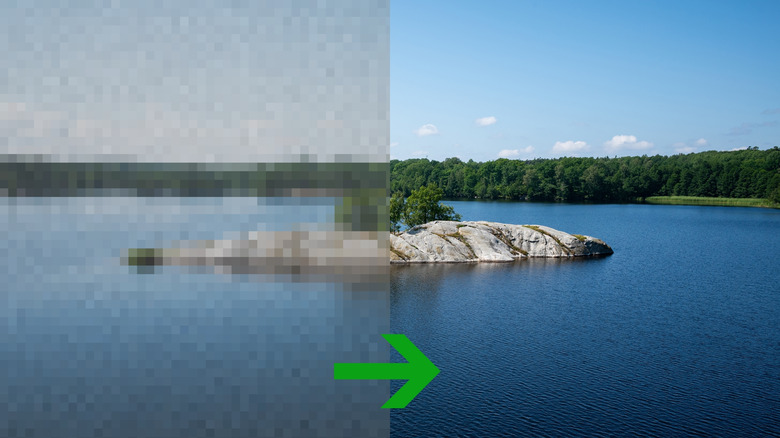
OLED TVs can be rather unforgiving when it comes to low-bitrate content. On the one hand, you really can't buy a TV without upscaling capabilities, but even the best processing won't completely rid your screen of artifacts. If you spend a lot of time streaming movies and shows at 1080p resolution or lower, an OLED panel may overreact when upscaling. Instead of cleaning up the image, your TV may inadvertently highlight picture noise, macro-blocking, and color banding.
Pixel precision is the name of the game with these TVs, and a lot of the time, that simply translates to "there's nowhere for this picture defect to hide." Because LED-LCDs have true backlighting and less contrast, these TVs tend to do a better job at reducing low-bitrate maladies and hiding any leftover imperfections. Think of it this way: OLEDs are overachievers, while LED-LCDs show content at "good enough" levels.
OLED TVs are also notorious for something called 24 frames-per-second judder. That unrelenting pixel precision affects motion clarity, too, but does so in a way that eliminates motion blur altogether. Movies and shows are typically filmed at 24 fps, but slow, panning shots may appear choppy-looking or stilted when viewed without a bit of blur on an OLED TV. This isn't a flaw, though; the pixel response time is simply too efficient.
Less competition keeps prices high and choices narrow
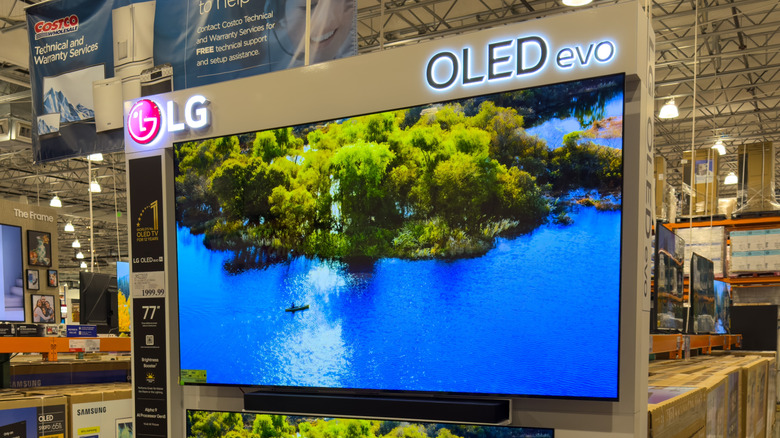
The cost of entry for OLED technology is generally more expensive than what you'd pay to get into a new LED-LCD, even at the budget level. Building an OLED TV costs more than producing an LED-LCD and involves more engineering and materials. That all translates to a higher cost for the consumer, which is why even base-tier OLED TVs — such as the LG B5 Series — start around $1,500 for a 55-inch. Meanwhile, a 55-inch TCL QM7 QLED, one rung below the QM8 flagship, will only set you back $1,200.
Now, imagine what it might cost to get into a 65 or 75-inch OLED TV; prices go up fast, and that's before you even start considering midrange or premium models. Yes, TVs go on sale all the time, and OLEDs are no exception. But even with markdowns, OLED has a tough time competing with LED-LCD pricing. While you may save a few hundred dollars during a sale, you're still paying a premium for all the tech that goes into an OLED set.
There are also fewer OLED TVs to choose from than LED-LCDs. LG, Samsung, and Sony are the main players stateside, but all three companies also make LED models. Brands like Hisense, TCL, and Amazon only make LED-LCDs, and we'd be willing to bet that no in-house TV brands (Insignia at Best Buy, or Onn at Walmart) will be adding OLEDs to their lineups in the future.