

Apple's Latest Parental Control Update Is Causing Problems For Users
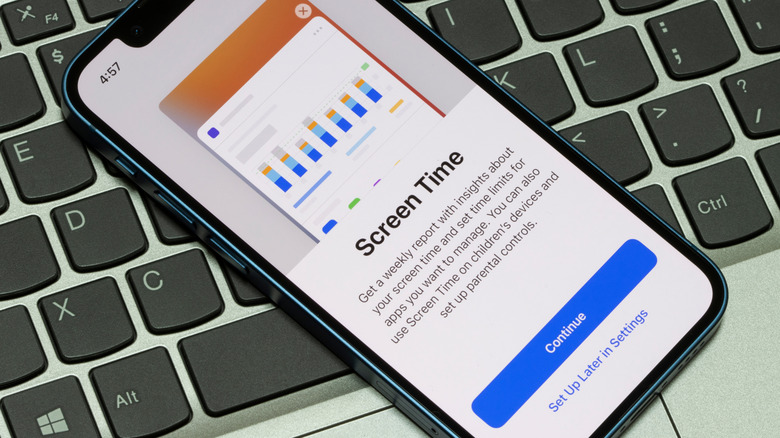
In September 2026, Apple debuted its revamped Screen Time features with the release of iOS 27. The company first showed off the new functionality at WWDC 2026 as part of a push to prove that the iPhone is the best phone for your kids, and the update is supposed to make keeping track of what kids do on their devices a lot easier by introducing new ways to manage the apps and websites they use and how much time they spend on them.
Apple's new Screen Time settings come with a handful of new tools that parents might find handy, including Time Allowances, which lets you put a daily cap on how long your kids can spend in app categories like Social Media, Entertainment, and Games. You can also set up schedules that keep school apps available during school hours and save stuff like games and social media for afternoons and weekends. Additionally, the new Ask to Browse feature means your kid will have to ask you before they can open a new website in Safari.
While this probably all sounds exciting, especially given how much control it puts in the hands of parents all around the world, the update hasn't gone as smoothly as many might have hoped. Even weeks after release, some families still haven't been able to switch over to the new controls.
Every device in your family has to be updated first
One of the biggest problems that people seem to be running into with the new Screen Time features is that it requires you to update all devices in your Family Sharing group to iOS 27, iPadOS 27, macOS 27, watchOS 27, or visionOS 27 before the new parental controls will work. So, if someone in your family hasn't updated their MacBook or Apple Watch, you could be stuck on the old controls until they do. That's been a problem for at least one parent, who is still waiting on their college-aged son to update his MacBook so they can use the new Screen Time features on their daughter's iPhone.
Things get more complicated if your kids are using older hand-me-down devices, too. There are five popular iPad models that won't get the iPadOS 27 update. While they won't get the new controls, they can still use the Screen Time and Family Sharing settings from OS version 26 or older.
Unfortunately, these older devices can still get in the way. One user posted on a forum that even after removing the legacy devices they weren't using anymore, they still weren't able to use the new functions thanks to the fact their Apple Watch SE isn't one of the devices getting the latest update. Another user replied that they ran into the same problem with an Apple Watch Series 6 and got around it by removing the watch from that Apple ID's device list, turning it off, switching over to the new Screen Time, and then signing back in. Luckily, it seems like this worked for the original poster, too, but it is an extra step for users to take.
Bugs have left some users locked out of their apps

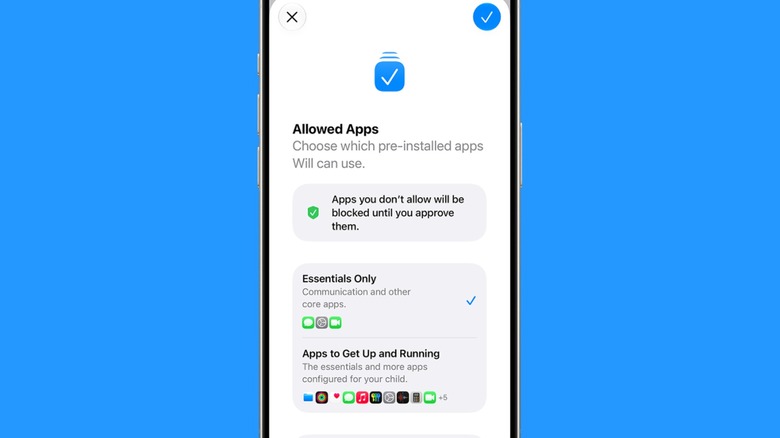
While we've had a mostly positive experience with iOS 27 overall, the new Screen Time hasn't always worked the way it's supposed to, even for families who have managed to switch over. One user noted online that after moving to the new system, their kid's iPad ignored any changes they made in Settings and blocked all of the apps on it, even the ones which they had allowed. They tried starting over from scratch, but the apps remained blocked and had to be approved again one by one.
Time limits also seem to be causing some problems, with one user saying that Screen Time will sometimes block an app after just five minutes, even though their kid is supposed to get an hour with it. They also said the usage reports are inconsistent depending on which device they check them on.
Thankfully, Apple has acknowledged the problems and is working on a solution (via The Verge). Unfortunately the iOS 27.0.1 update that Apple released on September 28, 2026, doesn't appear to list any fixes for Screen Time. If you can't get every device in your family updated, Apple says you can at least keep using the previous version of Screen Time and parental controls. Alternatively, you can try changing the settings directly on your child's device instead.