

Missouri Researchers Are Using MRI-Style Tech To Spot Failing Roads Before Potholes Form
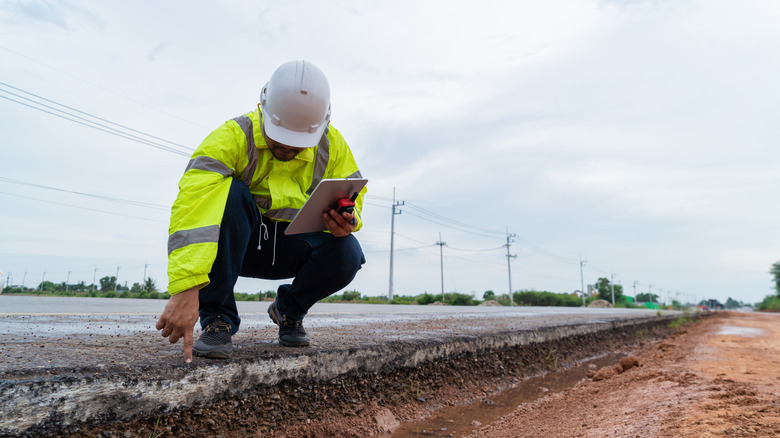
Asphalt roads have existed in the United States since 1870, and there are even robots that can find and repair potholes in our asphalt roads — but we still don't fully understand the chemistry of how asphalt changes due to age and exposure to the elements. If we did, we could better predict when a pothole is about to form and replace the asphalt before a hazard develops. That level of understanding is exactly what researchers at the Missouri University of Science and Technology are trying to achieve.
The research team led by Dr. Klaus Woelk, professor of chemistry at Missouri S&T, started by using a spectrometer to analyze asphalt samples. The spectrometer is able to measure differences in physical characteristics by "exciting" the material through nuclear magnetic resonance (NMR). Asphalt changes and becomes more brittle over time when exposed to oxygen, sunlight, and various types of weather. The technology being developed by Woelk's team could help local municipalities detect these changes on the road and know which parts of the pavement are breaking down.
"It's like an MRI for early cancer detection, but for asphalt failure," Woelk explained. "Our results can help develop standards for asphalt rejuvenation materials. That would be a huge selling point for companies that mass-produce these rejuvenation oils and contract with various transportation departments throughout the country."
The future of sustainability for asphalt roads
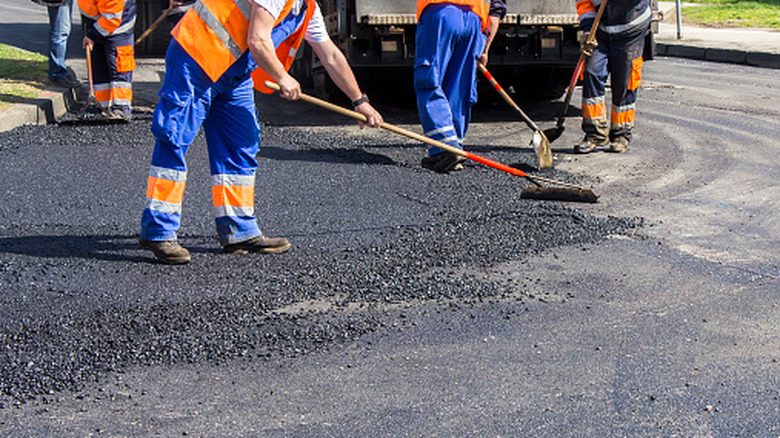
Maintaining asphalt roads is very difficult, not only because of the complex chemistry at play, but also because each road requires different treatment based on regional conditions. "For example, the needs for roads in Minnesota will be very different from Louisiana roads, because the local climate has a huge impact," said Catherine Skaggs, a Missouri S&T student and part of Dr. Klaus Woelk's research team.
This is exactly the reason why Texas developed plastic roads to solve heatwave issues. The extreme heat in places like Texas causes asphalt to soften, which makes it easier for cracks and other deformities to occur under the stress of passing vehicles. In a similar vein, there have even been experiments involving self-healing concrete that may prevent potholes.
However, regular asphalt has stood the test of time for a reason. It's considered the most economical option for road construction, and repairing damaged asphalt is relatively cheap and easy as well. The biggest problem with the sustainability of asphalt is that it develops potholes so quickly. And that's precisely why the research at Missouri S&T is so important — it may lead the way to more sustainable roads and better methods of asphalt rejuvenation.