

The Difference Between CPU Cores And Threads Explained
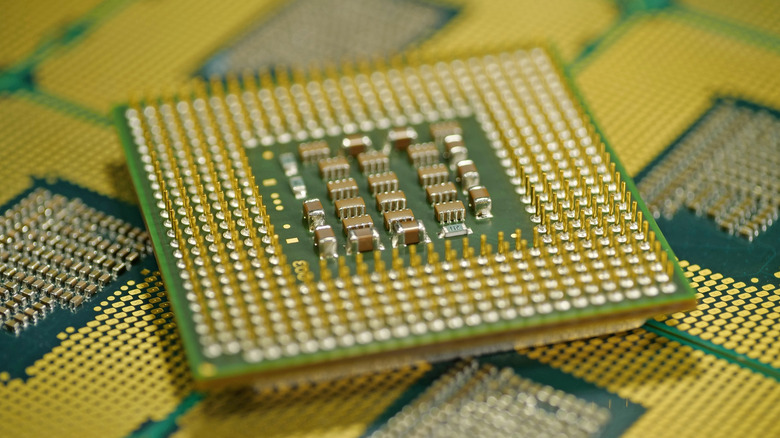
There's an old axiom in computing called Moore's Law, and it comes from Intel co-founder Gordon Moore all the way back in 1965. It was a simple observation: the number of transistors on a chip doubles every two years or so. Decades on, processor die sizes continue to shrink at approximately the same pace: 14-nanometer fabrications in 2016 have gone down to 2nm fabs in 2026. That means more CPU cores can fit in the same space than ever before and, at the end of the day, more cores for the same money (hopefully) is better, right?
Many of us struggle with whether to pick Intel or AMD for our processor, much less figure out the other specs we want, but you might have wondered what the deal is between a CPU core and these things called threads. Simply put, a CPU core is the physical hardware that processes threads, the most basic unit of work in computing. CPU cores can perform simultaneous multithreading (SMT), where, in most cases, such as on AMD Ryzen and older Intel Core processors, they can run two threads at once.
A primer to threads and simultaneous multithreading

A program can be divided into constituent processes, and those can be further divided into threads. When a set of, say, six CPU cores are put to work on processes at single-thread pace, they're able to work on six threads at once. As threads tend to have conditional contingencies such as the completion of another thread, cores will spend time sitting idle before proceeding with a new set of instructions.
In essence, SMT permits cores to work on a different thread once they hit an idle phase on their original thread, where one core ends up working on two or more threads at the same time. On a human scale, imagine a fast food worker assembling a sandwich and putting it in the oven, then turning to fill up a cup of coffee while the sandwich is warmed up. Both parts of what was a single order are delivered in a combined package by one person.
Simultaneous multithread computing has been in active practice as early as 1950 with the Standards Eastern Automatic Computer at the U.S. National Bureau of Standards generally recognized as hosting the first processor that could work on two threads at once. Two is nowhere near the limit, though, as 1956's TX-2 at M.I.T. Lincoln Laboratory (the people who recently brought us laser-targeted sound) could perform on up to 32 threads.
AMD vs. Intel on simultaneous multithreading
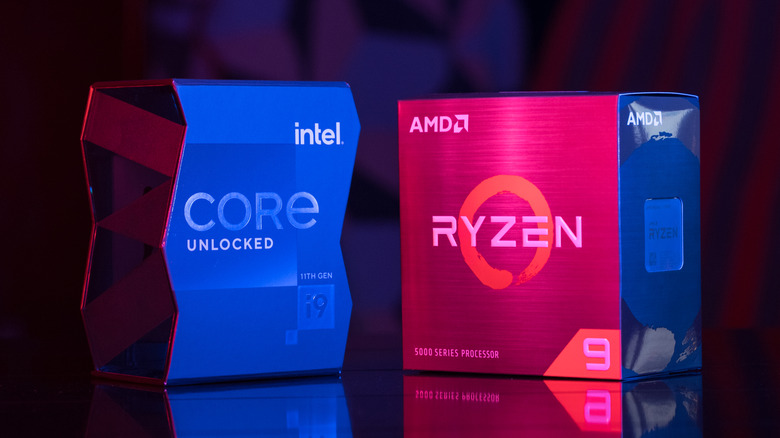
Intel introduced its own take on SMT, Hyper-Threading, with the Pentium 4 processor in 2002 and has included it on most of its processors since 2008. The company announced it would drop Hyper-Threading from its Core series CPUs starting in 2024, as it wanted smaller CPUs that consume less energy and perform better. While SMT contributes to some of the most powerful processors we've seen, it also requires excess resources under the frame of efficiency. The company has since hinted it may bring it back in 2028, at least for its server-level processors.
AMD introduced a unique multithreading method called cluster multithreading in 2011, aiming to deliver speed while also achieving the same goals Intel wants today: space and power savings. CMT, however, wasn't able to produce comparable performance to Hyper-Threading. The company abandoned CMT in 2017 and moved to a more conventional SMT approach with its Ryzen CPUs. Since then, both the Ryzen line and its SMT feature have remained largely the same.