

Which AMD GPU Is Equivalent To The Meta Quest 3?
We may receive a commission on purchases made from links.
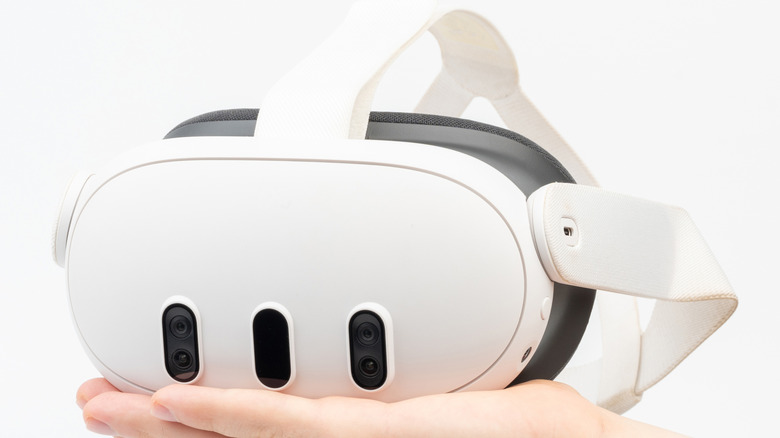
Sure, Meta Quest 3 isn't cutting-edge tech, but it doesn't need to be. It's a strong entry point into virtual reality, about six times cheaper than the Apple Vision Pro and over $400 cheaper than Steam VR. It's also pretty powerful, with a GPU roughly equivalent to AMD's Radeon R9 290 (or around the same as an Nvidia GTX 960, if you prefer).
The Quest 3 runs on the Qualcomm Snapdragon XR2 Gen 2 chipset, with an integrated Adreno 740 GPU and 8GB of memory. It doesn't sound like much, but that's roughly twice as powerful as the older Quest 2, which had a 1832x1920 per-eye resolution compared to Quest 3's 2064x2208 inside a smaller headset. This jump is thanks in part to moving to "pancake optics", with the chipset handling hardware adjustable IPD and display refresh rates hitting up to an extremely respectable 240Hz.
Specifications like this save gamers even more on a capable PCVR gaming rig. I have a Meta Quest 3 alongside a VR-ready PC in the MainGear Zero, but I have zero interest in tethering to my RTX 5090 or RX 9070XT in my MainGear Rush when the Meta Quest 3 does everything it needs to.
Which AMD desktop graphics card matches the Quest 3?
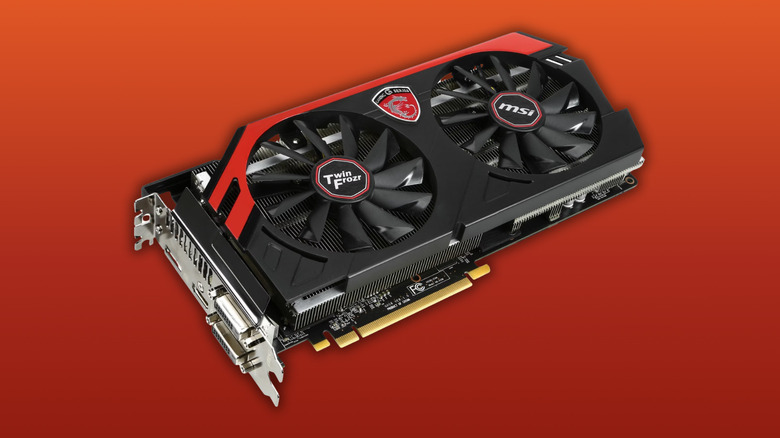
According to Meta's developers, the Quest 3's GPU power matches what a Meta Rift headset needed to run on an AMD-powered machine, which matches the power of the AMD Radeon R9 290. The Radeon R9 290 was a solid graphics card for its time, with 2560 shading units, 4GB of GDDR5 memory and a massive 512-bit bus, delivering 320 GB/s of bandwidth. If none of this makes sense, the Meta Quest 3 runs a GPU faster than a base-model PlayStation 4.
The Radeon R9 290 is a legacy GPU these days, stuck on old Adrenalin 22.6.1 drivers, but it can still run heavy AAA games like Cyberpunk 2077 at 60 frames per second on lower settings. It's also a fantastic example of how quickly technology develops. The PlayStation 4 launched in 2013, and Meta Quest 3 packs a better-performing system-on-a-chip (SoC) at launch ten years later, in 2023.
Just powering this level of performance used to require 6-pin and 8-pin power connectors on a PC graphics card, and now it fits into a comfortable, lightweight VR headset. I'll be looking forward to the day someone figures out how to pack the equivalent of an AMD Radeon RX 9070 XT into a future Meta Quest model, AMD's current flagship graphics card.
A closed ecosystem doesn't need a flagship GPU
On the other hand, matching the performance of a 2013 AMD graphics card might not sound great, but the Quest 3's performance is quite deceptive thanks to its closed ecosystem. The desktop R9 290 required a 275W power supply just to function. The Quest 3 delivers the same graphical output while only needing a built-in two-hour battery.
Developers only have to optimize Meta Quest 3 games for one specific Snapdragon hardware profile, much like a game console. This means they can use Meta's Presence Platform SDKs to get maximum efficiency from this chipset. This optimization lets many Quest 3 games render at 120 frames per second, a level of performance a Radeon R9 290 couldn't match in modern VR titles.
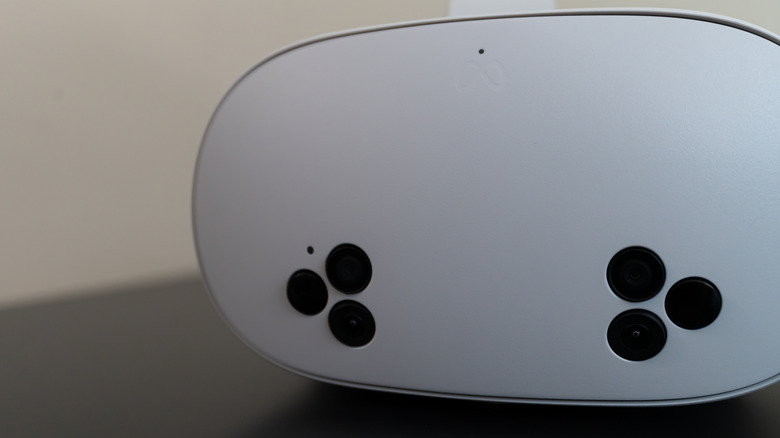
The Quest 3 isn't just rendering gameplay either. It also constantly processes real-time mixed reality data. Games like "Laser Dance" and other essential mixed-reality apps use the Meta Quest 3 to blend virtual elements with a physical play space using the headset's dual 18 PPD color passthrough cameras and depth sensor. This is a major processing task compared to traditional PC gaming.