

5 Smart Home Hubs More Affordable Than Apple HomeView
We may receive a commission on purchases made from links.
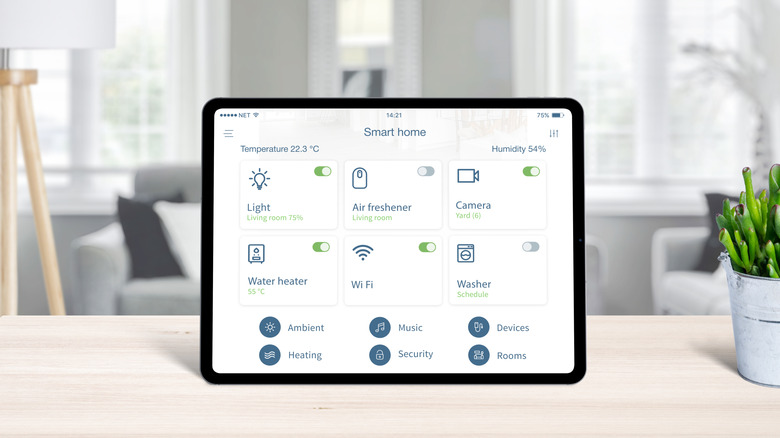
Setting up a smart home often means buying lights, locks, and cameras from a handful of different companies, and then having to figure out how to get all of them working together, usually with the help of a smart home hub. If you're an Apple user and happen to have most of your devices set up in Apple Home, then Apple's new HomeView might be exactly what you've been waiting for. The display puts all of your Apple Home controls on a 7-inch screen, and it can even take FaceTime calls and run Apple's new Siri AI.
As of right now, though, HomeView costs $299, and that's just for the display itself. If you want to put it on the wall, you'll also need to pick up one of the mounts sold separately, which start at $59.95. That's a fairly big price tag for a smart display, and while Apple fans have been waiting for HomeView for a while, that price tag is a lot more than what the company's biggest competitors, Amazon and Google, charge for theirs.
In fact, you can actually find several hubs out there that do the same thing for much less — in some cases even hundreds of dollars less. To top it off, some of those devices even support Matter, which has quickly become one of the primary smart home standards for new devices over the past few years. So, if you're not too keen to drop $300 on Apple's new smart home hub, but still want a hub to run your devices, here are some solid options that come out much cheaper.
Amazon Echo Hub
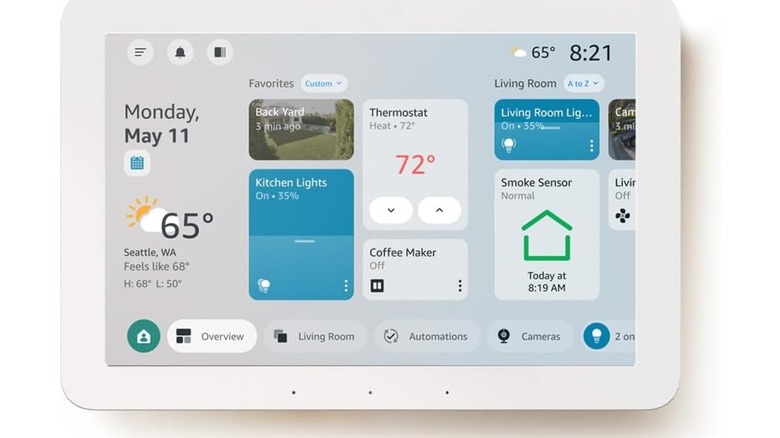
Amazon's Echo Hub is the closest you're going to get to HomeView on this list, and it actually has a slightly bigger 8-inch display. It costs $179.99 at Best Buy and on Amazon, which is about $120 less than Apple's display, and Amazon includes the wall mount in the box — though the counter stand is sold separately.
The Echo Hub supports both Matter and Thread, and it has a Zigbee hub built in. This is great if you already own smart lights that support those standards, as you can just connect them up through the setup process. One Best Buy reviewer said their house was full of Sengled Zigbee lights that stopped working after the Sengled app did, and they were able to connect them to the Echo Hub directly. They even said the lights respond faster now than they did before.
The Echo Hub has a rating of 4.5 stars based on over 100 reviews at Best Buy, with a 4-star rating on Amazon with over 1,500 ratings to pull from. Some owners have noted that the device can lag at times, and the lack of a camera means video calls are off the table, too. Still, for over $100 less than Apple's offering, and the expanded support for different standards that it offers, the Echo Hub is a solid option to look at.
Google Nest Hub (2nd Gen)
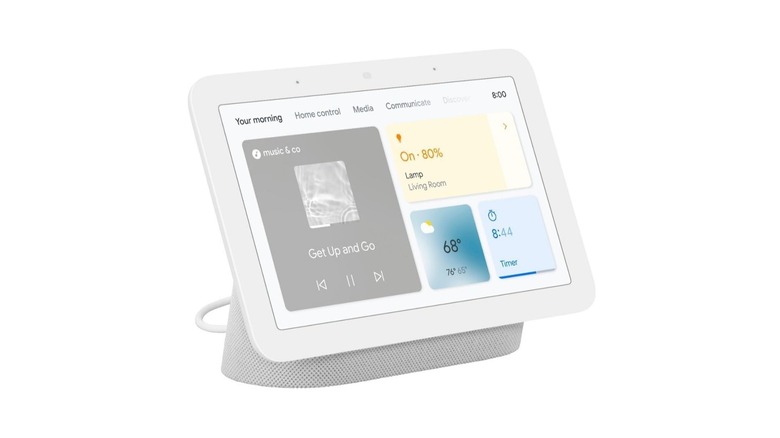
Google's Nest Hub (2nd gen) comes in at just $99.99. Not only is it cheaper, but it also comes with a similar-sized screen and can play music and videos from apps such as YouTube and Netflix. Plus, it will let you control devices compatible with Google Home. Another positive of the Nest Hub is that it has both Thread and Matter support built in, allowing you to rely on several different smart home brands. And while Google Home doesn't need a dedicated smart home hub to be useful, you will need a proper hub if you want to add Matter devices.
If you're already using Google Home in your house, then this particular hub is an easy choice. Not only will you be able to connect it easily to your existing accounts, but the fact that it is $200 cheaper than Apple's HomeView is a big win for your wallet. It also has an average of 4.2 stars on Amazon, with more than 1,000 reviews. Plus, if you're worried about how long it will last, one reviewer noted that their device has been running great for three years so far.
SwitchBot Hub Mini
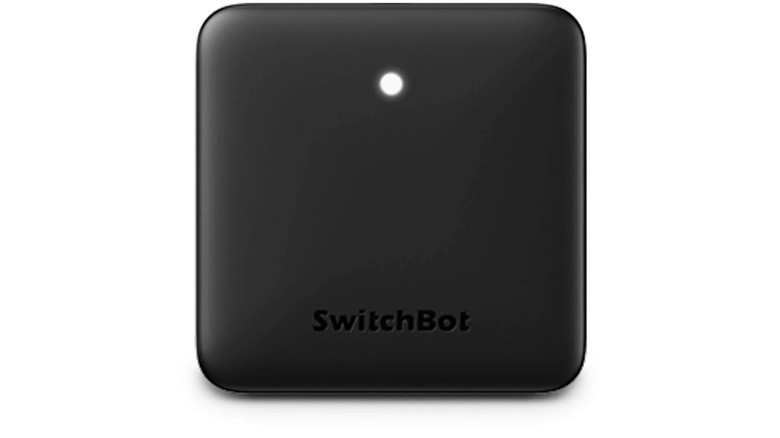
At just $39, the SwitchBot Hub Mini is the cheapest option on this list. This cheaper price does come with some downsides, most notably that it doesn't have a screen or a speaker. Still, it can connect to SwitchBot's other devices across the internet, allowing you to control smart home devices that support it really easily. It also supports controlling some older appliances that still rely on infrared remotes, too.
SwitchBot says that you can teach the Hub Mini the different signals from one of your remotes in about five seconds, allowing you to power off your TV or AC unit using your voice assistant or the app itself. There are a few limitations to keep in mind, of course. The Hub Mini only works with 2.4 GHz Wi-Fi, and it doesn't offer any support for Matter. However, you can purchase the Matter-enabled SwitchBot Hub Mini for slightly more, at $59.99. Reviews are also really positive, with the Hub Mini averaging 4.91 stars from over 60 reviews, but those reviews come from SwitchBot's own store, so there's no third-party retailer to back them up. Still, for $39, it's an inexpensive way to bring a few older devices into your smart home line-up.
Aqara Hub M3
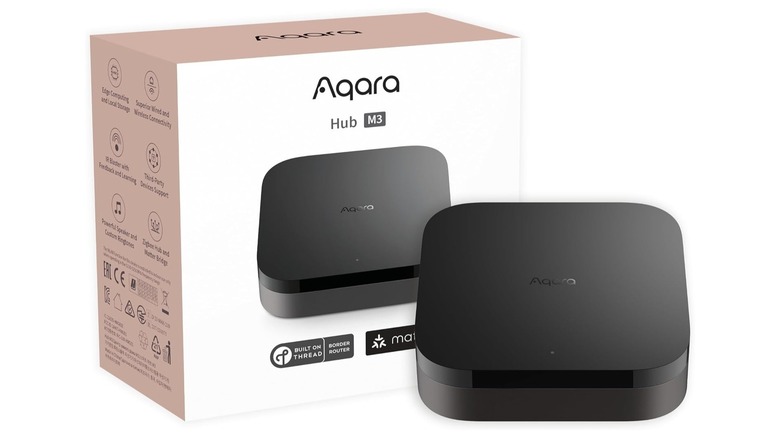
Like the SwitchBot, Aqara's Hub M3 doesn't have a screen, but it's a lot more of a full-fledged hub. The Hub M3 supports Zigbee, Thread, and Wi-Fi, and it can act as a Matter bridge, so devices connected to it can show up in apps like Apple Home and Alexa. At $140, it also costs about $160 less than HomeView.
Additionally, because automations on the M3 run locally, they should keep working even if your internet goes down. One thing worth noting is that the Aqara Hub M3 doesn't include a power adapter in the box, though, so you'll need to use your own unless you plan on powering the M3 over Ethernet. It also doesn't support third-party Zigbee devices. Altogether, the Aqara Hub M3 holds a 4.1-star average rating on Amazon, with more than 1,600 ratings. Users generally have good things to say about the hub's features and compatibility, but one reviewer noted that the setup can take time, especially when connecting multiple ecosystems.
Hubitat Elevation C-8 Pro
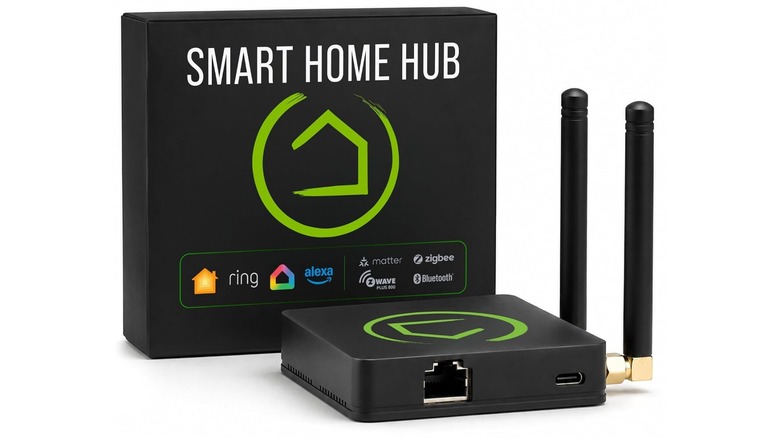
The Hubitat Elevation C-8 Pro is the most expensive hub on this list at $194.95, but it's still about $104 cheaper than Apple's HomeView. It's also the only hub we picked that supports Z-Wave, which can be a big deal if you already have Z-Wave locks or switches around your house. Additionally, it supports Zigbee, Matter, and Bluetooth, and all of your automations run locally on the hub without needing a subscription.
There isn't a screen on the C-8 Pro, so most of the setup is done from a phone or computer. Hubitat's dashboards can be opened in a browser or the Hubitat app, but the C-8 Pro is built more for users who want detailed control over their automations than for anyone looking for a smart display. In fact, reviewers have called the device great at what it does, but not ideal for beginners because of how complicated setup can be. If you don't mind putting in some time, it can be a great hub for the money.
How we chose these smart home hubs
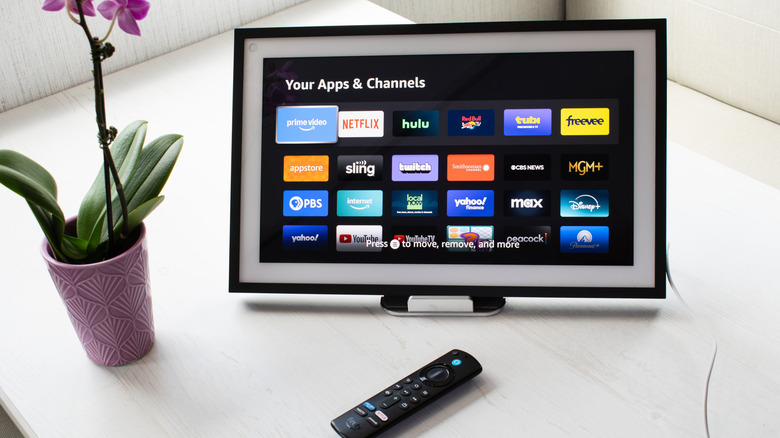
Price was the biggest factor we considered when choosing this list of smart home hubs. Each one had to cost less than Apple's $299 HomeView without being on sale, and it had to be available to buy in the U.S. Customer reviews were also important, which is why we looked for hubs with an average rating of at least four out of five stars, and preferably at least 50 reviews. The Hubitat C-8 Pro falls short of this criterion slightly, thanks to its 3.9-star rating on Amazon, but because it is the only hub on this list with Z-Wave support, we felt it was still worth including.
Finally, we compared which standards each hub supports, including Matter, Thread, Zigbee, and Z-Wave, as well as whether you'd need to buy anything extra to use it, like a stand or a power adapter, as we wanted to make sure users were aware of these criteria as much as possible going into their decision.