

The First New US Lithium Plant In 50 Years Is Using An Unexpected Metal Source
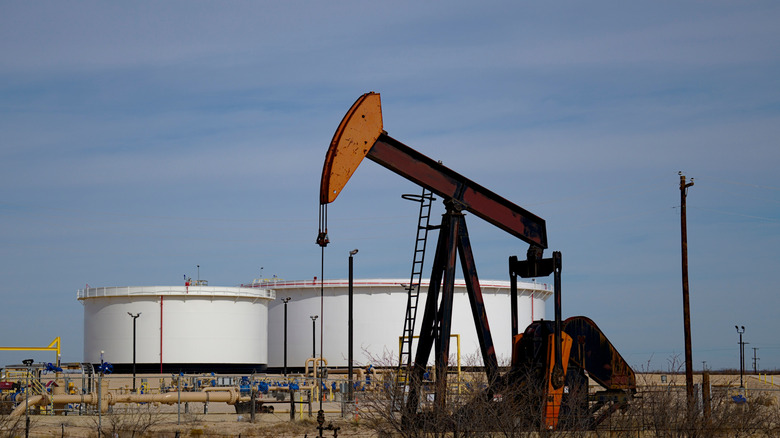
Lithium-ion batteries are way more environmentally friendly than your standard alkalines. Yes, you are still encouraged to recycle your dead batteries, but scientists can extract lithium from a variety of notorious sources. Earlier this year, researchers announced they learned how to use forever chemicals to extract battery-grade lithium, and now scientists can create lithium while cleaning up pollution caused by oil production.
Recently, the U.S. Department of Energy announced that it has teamed up with the Texas-based company Element3 — with support from Oak Ridge National Laboratory (ORNL) — to start a new domestic lithium mining project. Although, perhaps "mining" is the wrong term; it is more accurate to say the project takes wastewater from oil mining facilities within the Permian Basin (an oil field in western Texas) and filters out the lithium chloride it contains. Element3 then uses ORNL proprietary technology to transform the material into battery-grade lithium carbonate.
According to ORNL's calculations, Element3's installation can produce around 3,000 tons of lithium every year. To put that into perspective, in 2022, the sole lithium mine in the U.S., located in Silver Peak, Nevada, was reported to produce around 5,000 tons of lithium annually. And even then, much of the lithium processing took place in foreign facilities — mostly due to cheaper labor costs. ORNL believes Element3 could improve the United States' economic strength and national security while providing "greater energy independence" along the way.
Elementary technology
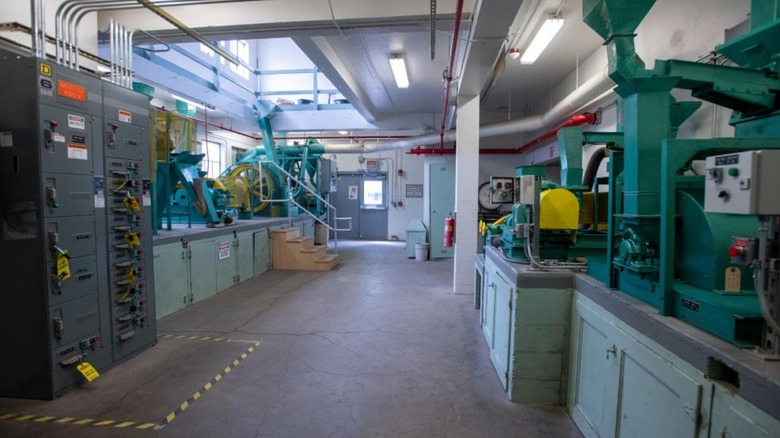
Without the ORNL's downright revolutionary technology, Element3 wouldn't even be a pipe dream. However, it is far from the only tool we have in the field of lithium energy. In summer 2026, scientists published a study demonstrating that an electrochemical bath could reinvigorate aging lithium batteries. Why wouldn't the DOE utilize similar inventive ideas for other industries?
The ORNL and DOE are also heavily involved in a semi-separate project, known as the Minerals to Materials Supply Chain Research Facility, aka METALLIC. Currently, four METALLIC centers are operational, each of which researches how to safely extract and refine critical minerals. While the ORNL technology utilized in Element3 is focused on lithium, METALLIC engineers are working to provide new sources of elements such as platinum, nickel, cobalt, and graphite.
Like Element3's methods of recycling oil production runoff into battery-grade lithium, METALLIC is all about testing new extraction methods — specifically, the technologies that power them and how they can benefit U.S. supply chains and all the suppliers, users, and developers connected to them. All the while, figuring out ways to save as much energy as possible in the process is top of mind. Don't be surprised if this ORNL and DOE collaboration creates the next few novel element extraction techniques.