

New Study Shows Health Of Old Lithium-Ion Batteries Can Be Restored With An Electrochemical Bath

Researchers at Cornell University recently conducted a study that may bring about the latest in a series of new battery innovations that could change the world. As reported by the Cornell Chronicle, the team led by Dr. Vibha Kalra developed an electrochemical solution that can restore up to 95% of a recycled battery's power by regenerating its electrodes. Not only that, but the bath can reportedly improve battery health overall and enable the battery to last longer when reused.
This is a significant breakthrough as the battery market continues to expand. Benchmark Mineral Intelligence reports that global lithium-ion battery demand increased by 29% in 2025 due to growth in the electric vehicle market and other sectors. But even as demand increases, existing batteries are going to waste all too quickly. Let's face it, we're all making mistakes that are ruining lithium batteries in our devices.
The United States generates approximately 180,000 tons of hazardous waste each year just by throwing away batteries (via EARC Inc.), which also creates a huge financial burden for recycling companies. The electrochemical bath devised at Cornell may be an efficient recycling method that could cut recycling costs by 56% and put less stress on the environment overall.
How this electrochemical bath actually works
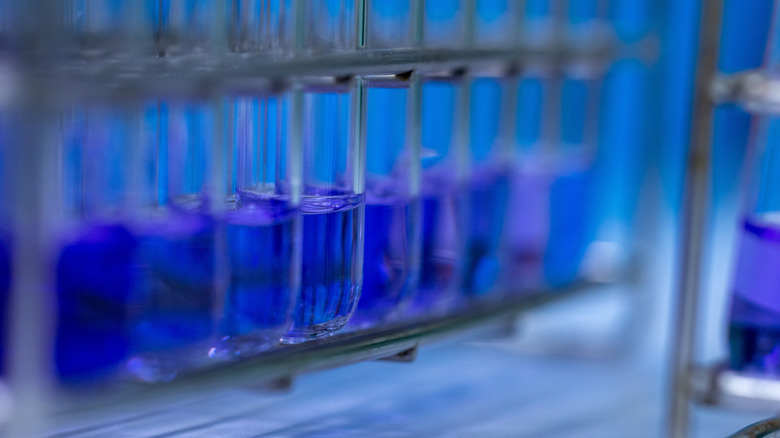
Kalra's team published their research in the Energy & Environmental Science journal, wherein the functionality of the electrochemical bath is explained in detail. In a process called direct electrode-to-electrode regeneration (DEER), a spent battery's electrodes are removed and placed in a bath containing a solution of the chemical solvent 1,3-dimethyl-2-imidazolidinone (DMI). The DMI solution dissolves the solid electrolyte interphase, which is an insulating layer that builds up during battery charging cycles and diminishes its energy capacity.
Kalra summarizes DEER by explaining, "We repair [the electrodes], as is, without shredding or powdering them, and then put them back into a new battery." Needless to say, this is not something you'll be doing at home for your own spent batteries. It's also not something that's ready for widespread industrial use, either. DEER has yet to be demonstrated on industrial batteries, and it hasn't been tested for restoring batteries from other forms of degradation, such as lithium loss.
Until scientists can restore existing lithium-ion batteries on a reliable and consistent basis with these baths, manufacturers may have to turn to new ways of producing battery-grade lithium in order to keep up with demand. But as Kalra points out, "People are realizing you can't just keep making batteries, because you don't have enough material." Research into the restoration of battery health will surely become more essential as time goes on.